She was still flushed from the effort of being born, still furious at the fluorescent lights and the cold air and everything that wasn’t the dark warmth she’d just left. I had her pressed against my chest, listening to her breathe, feeling the impossible smallness of her ribs rising and falling against mine.
Then my phone lit up with his name.
The room contracted. The steady pulse of the monitor, the hiss of the heating vent, the rain dragging itself down the window — all of it compressed into something thin and far away, because Daniel’s name on a screen still had that power over me. Even now. Even here.
Six months since the divorce. Six months of silence.
He broke it from the steps of a cathedral.
“Claire.” His voice had that particular shine it got when he was enjoying himself. “I wanted you to hear it from me. I’m getting married this afternoon.”
Behind him, the wedding was already happening. Laughter floated up like something weightless. Crystal rang against crystal. The whole polished ceremony of a man who had dismantled my life and emerged from the wreckage looking spotless.
I looked down at my daughter’s hand. Her fingers had found my hospital gown and curled around the fabric, holding on with a fierceness that had nothing to do with size.
“Congratulations,” I said.
He let out a short, amused breath. “Still so cold. I’ve missed that about you.”
Cold. I let the word move through me and dissolve. He’d said it when I found the messages on his phone. Said it when I asked him to tell me the truth to my face. Said it every time I refused to crumble where he could see me.
“Why are you calling, Daniel?”
“To invite you, actually.” The pleasure in his voice sharpened. “No animosity, right? Vanessa thought it would be good for everyone. She believes in closure.”
Vanessa.
My former assistant. The woman who’d learned which coffee I ordered and how I liked my meetings scheduled and exactly which smile to wear when she looked me in the eye. While she was spending nights in hotel rooms my husband booked on accounts he told me were empty.
The city beyond the rain-streaked window looked indifferent and cold, the way cities always do when women are quietly falling apart inside them.
“I just gave birth,” I said. “I’m not going anywhere.”
Silence.
Not the triumphant pause he used to deploy before delivering something designed to wound. This was a different kind of silence entirely. This one had a fault line running straight through it.
“I’m sorry — what did you say?”
“I said I just gave birth.”
I could hear his breathing shift. Something underneath the cathedral music, something raw and off-rhythm.
“Whose baby is it?”
The woman I used to be would have flinched. The one he’d walked out on in the courtroom, the one he’d described to a judge as volatile, too emotional, unreliable. The woman he’d stripped of the apartment, the shares, and very nearly her own composure.
But grief has a way of burning people down to something harder.
I smoothed the edge of my daughter’s blanket with my thumb. “You should go back to your bride.”
“Claire.” His voice dropped into a register I barely recognized. “Tell me that child is not mine.”
I turned toward the window, where the rain shattered every streetlight into a hundred wavering pieces.
“You signed the divorce papers without reading them,” I said. “You never did have patience for the fine print.”
I hung up.
For thirty minutes, I sat with her sleeping against me, her mouth making small unconscious movements, her whole body trusting mine completely. The nurse came in, checked my blood pressure, and told me to try to sleep.
I understood what she meant. Rest. As if rest were something you could locate after someone had blown your life open and walked away from the smoke.
Then the hallway outside went loud.
Hard footsteps, two sets, one chasing the other. Voices cutting over each other, urgent and fractured.
The door swung open hard.
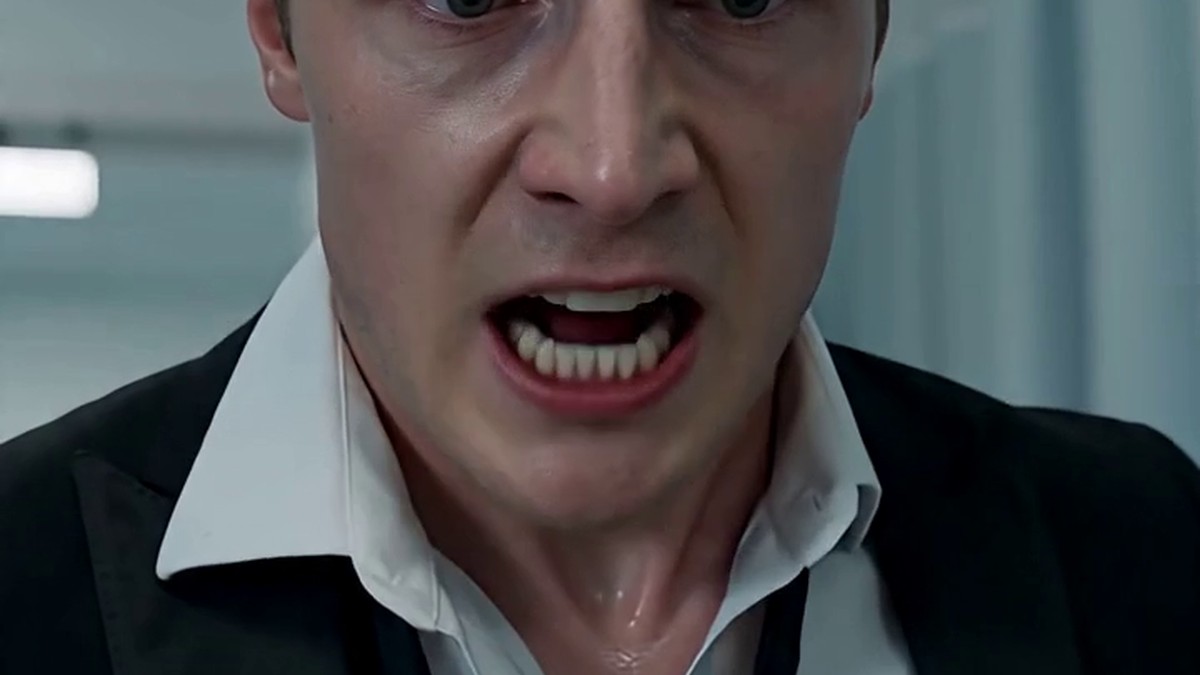
Daniel stood in the frame wearing his wedding tuxedo, the bow tie half-undone, hanging open at his collar. His face had gone the color of ash. His hair was ruined. Everything about him that had always been so carefully controlled — the posture, the expression, the narrative — was gone.
Vanessa appeared behind him in her wedding gown, diamonds catching the hospital light, her chest heaving.
He looked at the baby.
He looked at me.
“You planned this,” he said. His voice had gone hollow. “You staged all of this.”
I held my daughter against me and met his eyes without flinching.
“No,” I said quietly. “You did.”
And for the first time in all the years I had known him, Daniel Kingsley looked genuinely afraid.
The silence in the room was a specific kind of silence. Not the absence of sound but the presence of something too large for sound to survive.
Vanessa’s hand found the door frame. Her wedding dress caught the light from the corridor — ivory silk, cathedral length, the kind of dress a woman chooses when she wants the world to witness her certainty. Right now that certainty was doing something complicated with her face.
“Daniel,” she said. Not a question. A test.
He didn’t look at her. He was still looking at my daughter, and in his expression I could see the math he was doing — the dates, the timeline, the arithmetic of his own life collapsing into something he couldn’t balance.
“When,” he said. Just that word.
“November,” I said. “You were in Tokyo. You sent me a settlement offer from your hotel room.”
Something moved across his face. He had been in Tokyo in November. He knew exactly what he’d been doing there, and apparently so did I.
“She’s not yours,” I said. The words came out clean, without satisfaction, without cruelty. Just the truth, finally free of the box I’d kept it in. “She was never going to be yours.”
His exhale was the sound a building makes before the demolition charges go.
“Then why —” He stopped. Started again. “The fine print. You said the fine print.”
I looked at him the way you look at someone you once loved when you finally see them correctly.
“There’s a clause,” I said. “Your lawyers were very thorough about the apartment. The shares. The pension accounts. They were thorough about everything you told them to be thorough about.” I shifted my daughter in my arms. She made a small sound, somewhere between protest and resignation. “They weren’t told about the offshore account. The one you put in my name in 2019. For tax purposes, you said.”
The color left his face in a single wave.
“That account,” I continued, “is now, legally, entirely mine. Has been since you signed. The clause specifies that any marital assets held in a spouse’s name revert unconditionally upon dissolution.” I smiled, and I was surprised to find that it felt genuine — small and tired and genuine. “Your new corporate lawyer is very good. Your divorce attorney, it turns out, was better.”
“That’s —” He stopped. He was calculating again, but the math wasn’t working anymore. “That’s not what that clause —”
“Your signature is on page forty-seven,” I said. “Right below where it specifies the exact account number.”
Vanessa was very still in her wedding dress.
I had wondered, in the months between the courtroom and this hospital room, what I would feel when I finally saw her. I’d imagined rage. I’d rehearsed ice. What I actually felt was something closer to exhaustion and a faint, distant pity. She had believed in him. That was her crime and her punishment both, and she was about to receive the sentence.
“Vanessa,” I said.
She met my eyes. Behind the mascara and the diamond earrings and the careful construction of herself, she looked the way I had looked standing in our kitchen the night I found the messages. Like someone who has just heard a sound from inside a wall.
“There were four of them,” I said. “That I know of. The Paris assistant in 2017. A client in 2018. Someone named Kate I never identified. And you, starting April of last year.” I watched her breathe. “He didn’t tell you about any of the others.”
It wasn’t a question.
The answer moved through her face like weather.
“Vanessa.” Daniel’s voice had dropped into the register I now recognized as damage control. “Listen to me. Whatever she’s told you —”
“She hasn’t told me anything,” Vanessa said. “I did the math myself. On the way over here.” Her eyes came back to me. “I found a receipt in his jacket last week. A hotel. February. We weren’t in a hotel in February.”
She said it flatly. Like someone reading a verdict already returned.
“It doesn’t matter,” Daniel said.
Both of us looked at him.
“It doesn’t matter,” he said again, and now something jagged and desperate had gotten into his voice — the sound of a man accustomed to winning arguments by volume. “This is our wedding day. Whatever happened before — whatever Claire is trying to make you believe — today is what matters. We walked up those steps together. You said yes to me —”
“I said yes to the man you pretended to be,” Vanessa said.
The room went very quiet.
My daughter had gone still against my chest. I could feel the soft animal weight of her, untroubled by any of this, breathing her small steady breaths into the fabric of my gown.
Daniel looked at her again. Something in his expression shifted — not toward grief, not exactly. Toward recognition. Toward the slow dawning awareness of what he had lost and when and how completely the loss was his own architecture.
“You could have told me,” he said. To me. “On the phone. You could have said she wasn’t mine.”
“You called me from your wedding,” I said. “To gloat.”
He didn’t deny it.
“I was,” I said, “in labor.”
Something happened to his face then. A fracture, small and deep. It wasn’t remorse — I was long past needing his remorse — but it was the closest thing to it I had ever seen from him. It had come too late, and it landed in a hospital room, with his bow tie hanging open and his new wife standing behind him in ivory silk, already halfway out the door in every way that mattered.
A nurse appeared in the doorway behind them both. Older woman, compact and unimpressed, the kind of face that has processed more human wreckage than most emergency rooms.
“Sir.” She did not look at the tuxedo or the wedding dress or the whole collapsed ceremony of it. She looked at Daniel with the particular calm of someone whose patience is a professional courtesy and nothing more. “I need you to lower your voice or I need you to leave. This is a maternity ward.”
He looked at her. He looked at me.
He looked at the door.
“The account,” he said. His voice was very quiet now. “I’ll contest it.”
“I know,” I said. “Your lawyers will call my lawyers. It’ll take about eight months. You’ll settle.”
He stood there another moment. Maybe he was waiting for something — for me to flinch, to escalate, to give him a stage. The Daniel I had married needed an audience for everything, even his endings. Especially his endings.
I didn’t give him one.
I just held my daughter and waited for him to leave.
He left.
—
Vanessa didn’t follow immediately.
She stood just inside the doorway, one hand still on the frame, and in the fluorescent light her dress looked less like celebration and more like something she was trapped inside.
“I’m sorry,” she said. And then, before I could answer: “I know that doesn’t —”
“It doesn’t,” I said. “But I believe you mean it.”
She nodded. A small, exhausted nod, the kind that comes after the adrenaline runs out.
“Is she healthy?” she asked. Looking at my daughter.
“Yes,” I said. “She is.”
“She’s beautiful.”
“I know.”
A long pause. Outside the window, the rain had softened — not stopped, just gentled, the way things sometimes do after a certain amount of time has passed, without announcement, without ceremony.
“I don’t know what I’m going to do,” Vanessa said. Not to me, exactly. To the room. To the version of her life that had existed this morning when she walked into a cathedral and believed in something.
I had been that woman. In different shoes, on a different day, with different lies. I had been exactly that woman.
“You’ll figure it out,” I said. “It takes longer than it should. But you’ll figure it out.”
She looked at me one more time — a look that held no warmth and no coldness, just the bare, stripped recognition of two people who had been damaged by the same source. Then she walked out of my room and out of my life, the train of her dress whispering against the hospital floor.
—
The nurse came back around ten. Checked my blood pressure. Told me, again, to sleep.
This time I understood her differently.
Rest. Not the absence of chaos, but the presence of something quieter. The kind you find on the other side of a long time of not finding it.
My daughter was asleep on my chest. She had her father’s coloring — dark hair, a fine-boned nose that would probably sharpen as she grew. Marco, who had been pacing a waiting room for the last four hours because I’d told him this was something I needed to do alone, would come in soon and see her and forget how to speak for a moment, the way he always did when something moved him.
He was a good man. Quiet. A man who, six months ago, had sat across from me in a coffee shop while I cried into a paper cup about a divorce I hadn’t asked for, and who had not tried to fix it or reframe it or make it mean something other than what it was. Who had simply passed me a napkin and said: *keep going.*
We had kept going.
And here we were.
I looked down at my daughter’s face. She was frowning in her sleep, the way newborns do — working through something private and fierce. Tomorrow she would open her eyes in full and take the measure of the world with that suspicious alertness she’d had in the first hour, and the world would have to earn her. She struck me, already, as someone who would always make the world earn her.
*Good*, I thought. *I hope you never stop.*
Outside the window the rain finally quit. The streetlights came back whole, no longer fractured by the water. The city looked the way cities very occasionally do at three in the morning when something has just ended: clean and still and full of the particular quiet that follows a long storm.
My phone was on the nightstand. Dark and silent.
I left it there.
There was nothing left to answer.