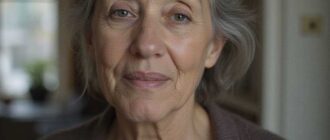
They Said the Cottage Was a Gift for Nana. But I Was the Only One Who Didn’t Get a Holiday
When my daughter booked a little cottage in Cornwall, she said it was for me.
“Mum, sea air will do you good,” Claire told me. “You need a break from that quiet house.”
I believed her.
I packed two summer dresses, my crossword book, a cardigan for the evenings, and a paperback I had been saving for months. I pictured myself sitting near the harbour with a cup of tea, watching boats rock in the water. I imagined maybe one morning where nobody needed me before I had brushed my teeth.
By the second day, I understood the truth.
The holiday was for Claire and her husband, Ben.
I was the arrangement.
Their children, five-year-old Poppy and little Harry, woke before the sun. The cottage had thin walls, one bathroom, a temperamental kettle, and a sofa bed that folded me in half by morning. Harry liked to start the day by dropping wooden cars onto the floorboards. Poppy wanted plaits, but only the kind “Mummy does,” except Mummy was asleep behind a closed bedroom door.
So Nana got up.
Nana made toast.
Nana found socks.
Nana wiped noses, tied sandals, rubbed sun cream into wriggling arms, carried buckets to the beach, washed sandy pants in the sink, and cooked pasta on a stove that only had two working rings.
Claire and Ben would come downstairs late, stretching and cheerful.
“You’re a star, Mum,” Claire would say.
Then she’d add, “We’re just popping out for a proper coffee.”
A proper coffee became a walk.
A walk became lunch.
Lunch became “We lost track of time, Mum, sorry!”
And by the time they returned, the children were fed, the washing was hung over chairs, and a shepherd’s pie was browning in the oven because Harry wouldn’t eat “holiday food.”
I told myself not to be bitter.
Hadn’t my own mother helped me when Claire was small? Hadn’t she come from Leeds after the birth and stayed for three weeks, cooking casseroles and ironing baby vests? I remembered my husband, Peter, saying, “Your mum’s worth her weight in gold.”
My mother had smiled.
Only now, at sixty-four, did I wonder whether that smile had been happiness or politeness.
The last evening in Cornwall, I was packing the children’s clothes because Claire said she was “rubbish at folding.” Poppy’s crayons had rolled under the bed. Harry’s dinosaur socks smelled faintly of damp sand. My ankles were swollen, and my hands smelled of washing-up liquid.
That was when I heard Claire outside the kitchen window.
She and Ben were on the patio, drinking the wine they had bought “for everyone” and opened after I had taken the children upstairs.
Ben said, “I did feel a bit guilty leaving her with them every day.”
Claire laughed softly.
“Oh, don’t. Mum loves it. Honestly, she’s happier when she’s busy. What else would she be doing? Sitting at home on her own?”
I froze with Harry’s tiny sock in my hand.
What else would she be doing?
As though I had no books unread beside my bed. No friends I kept cancelling. No knees that burned on stairs. No grief of my own. No private mornings. No life beyond being available.
I finished packing because that is what women of my generation do. We finish the job even when our hearts are falling quietly to pieces.
On the drive back to Birmingham, Claire showed me photos on her phone.
There she was, laughing on a cliff path. Ben with an ice cream. The children building castles. A sunset. A plate of mussels. A selfie of Claire and Ben with their faces brown from the week.
I was in one picture.
In the reflection of a café window, pushing the buggy.
“Mum, you enjoyed it though, didn’t you?” Claire asked.
I looked at the photo.
“Yes,” I said.
And hated myself for it.
At home, I opened the front door and breathed in the stillness. My late husband’s coat still hung on the peg, though he had been gone five years. I touched the sleeve as I passed, the way I always did, and sat down in the kitchen without turning on the light.
The house was quiet.
But for the first time, I wondered whether quiet was truly the enemy.
Maybe quiet was only frightening because I had never allowed it to speak.
The next Thursday, Claire rang.
“Mum, quick question. Can you have Harry Saturday night? Poppy’s got a party Sunday, and Ben and I thought we might go to Bristol.”
“No, love.”
There was a pause so long I could hear her washing machine spinning in the background.
“No?”
“I’ve made plans.”
“What plans?”
I swallowed. “I’m going to the pictures with June.”
Claire gave a little laugh. “Can’t you go another time?”
“No.”
“Mum, it’s one night.”
“I know.”
“Are you angry with me?”
I looked at the framed photograph of Peter on the windowsill. He was smiling there, sunburnt and alive, holding a paper cup of chips in Brighton the summer before he became ill.
“Yes,” I said, surprising both of us. “A little.”
Claire went silent.
So I told her.
Not cruelly. Not shouting. But properly.
I told her I loved my grandchildren more than my own breath. I told her I wanted to help, but I no longer wanted to be assumed. I told her the Cornwall holiday had left me exhausted and invisible. I told her I had heard what she said on the patio.
Claire whispered, “Mum…”
“No,” I said gently. “Please don’t explain it away. Just hear me.”
She cried then. I heard it in the small broken sound she made before she said she had to go.
For a while, things were stiff between us. She sent polite messages. I replied politely. The children left voice notes, and I answered every one.
Meanwhile, I went to the pictures with June. We saw a film neither of us understood, ate chocolate buttons in the dark, and laughed at ourselves all the way home.
Then I joined a Saturday walking group for widows, though most of us walked very slowly and stopped for cake. I bought myself a blue raincoat that Peter would have called “rather loud.” I started leaving my phone in another room when I drank my morning tea.
Three weeks later, Claire came round without asking for anything.
That alone told me something had changed.
She stood on my doorstep holding a bunch of supermarket tulips, the reduced sticker still on the wrapping. Her face crumpled the moment I opened the door.
“I’m sorry,” she said. “I didn’t mean to make you feel small.”
Small.
That was exactly the word.
I let her in.
We sat at the kitchen table, and for once I did not get up to make tea immediately. Claire noticed. After a moment, she stood.
“I’ll do it,” she said.
It was such a tiny thing. The kettle. Two mugs. Milk from the fridge.
But I watched my daughter move around my kitchen like a guest who had finally remembered she was also family, and my throat tightened.
“I thought because you always said yes, it meant yes was easy,” she said.
I reached across the table and touched her hand.
“No, darling. Sometimes yes means I love you. Sometimes yes means I don’t know how to say I’m tired.”
After that, we learned again.
Clumsily.
Now Claire asks before she assumes. Ben cooks when they invite me over. The children know Nana has “walking group Saturdays.” Poppy once told Harry, very seriously, “Nana is not a servant. She is a person with biscuits.”
I laughed until I cried.
This year, Claire suggested another seaside week. I felt my stomach tighten before she even finished the sentence.
But then she said, “We’ll get a proper bed for you. And Mum? One day is yours. Completely yours. We’ll take the kids.”
So I went.
On the second morning, I woke at half past eight to sunlight on the curtains and no small child breathing into my face. Downstairs, I found a note beside the kettle.
Mum, we’ve taken the children to the beach. Tea bags are by the toaster. Your book is on the chair outside. Don’t cook. We mean it. Love, C.
I carried my tea to the garden and sat under a sky full of gulls.
For a long time, I did nothing.
And do you know what?
The world did not collapse.
The children still loved me. My daughter still needed me. But I was no longer disappearing inside that need.
Later, Poppy came running back with wet curls and a shell clutched in her fist.
“Nana,” she shouted, “we saved you the prettiest one!”
I took it from her small sandy hand and held it to my ear.
They say shells carry the sound of the sea.
This one carried something better.
The sound of my own life, coming back to me.