Walter: “A lighthouse. Red and white stripes. And the paint was chipping near the handle — you could feel it with your thumb if you held it a certain way.”
The air left the tent.
Sophie didn’t move. She couldn’t.
Sophie: “Nobody knew about that mug. It broke before I was five. Mom threw it away and never talked about it again. I thought I dreamed it.”
Walter: “You didn’t dream it. You used to point at it every morning. You wanted your juice in the lighthouse cup, but it was too big for you, so your mother filled it halfway.”
Sophie: “Stop.”
Walter: “Sophie—”
Sophie: “I said stop.” Her voice was a wire pulled too tight. “Because if you’re telling the truth — if you’re actually telling the truth — then you left. You left and you never came back and I have to be very careful right now about what I feel.”
Walter said nothing. There was nothing to say that wouldn’t sound like an excuse, and he knew it.
Sophie: “How long have you been looking?”
Walter: “Since the day I lost you.”
Sophie: “That’s not an answer. That’s a sentence.”
Walter: “Eleven years. Three countries. Every dead end I could find, and then some.”
Sophie looked at her hands. Then at him. Then somewhere past him, at a version of her life that might have been different.
Sophie: “I named my cat Bicky.”
A sound escaped Walter then — broken, quiet, almost nothing.
Walter: “I know.”
Sophie: “You couldn’t possibly know that.”
Walter: “No. But it doesn’t surprise me.”
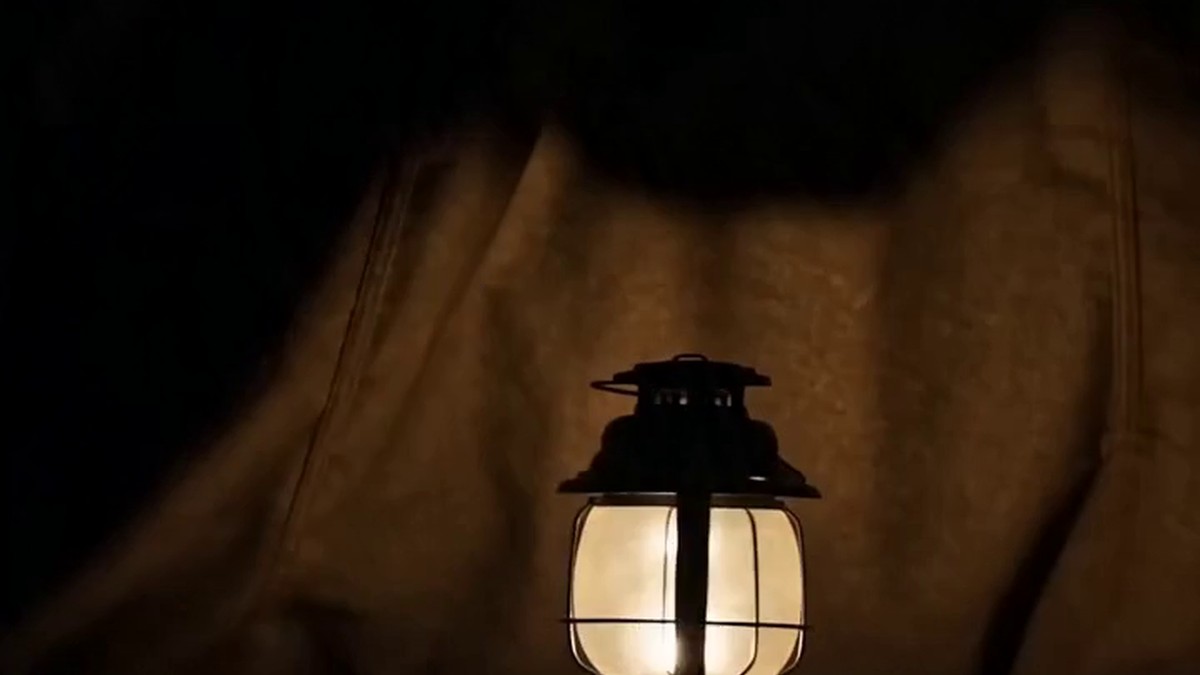
The lamp between them flickered. Outside, the wind pressed against the tent walls like it was listening.
Sophie: “I don’t know how to do this.”
Walter: “Neither do I.”
Sophie: “You’re supposed to have answers. You came all this way — you’re supposed to have a plan, a reason, something that makes this make sense.”
Walter: “I have eleven years of reasons. I just don’t think tonight is the night to say all of them.”
Sophie looked at him for a long time. Long enough that the silence changed shape.
Sophie: “The juice. Was it orange or apple?”
Walter blinked.
Walter: “Apple. Always apple. You hated pulp.”
Sophie closed her eyes.
When she opened them, she wasn’t softer — she was something more complicated than soft. She was a woman deciding, in real time, whether the past had any right to walk back into the present and call itself family.
Sophie: “You can stay tonight. On that side of the tent.”
Walter: “Okay.”
Sophie: “And tomorrow we talk. Properly. Everything.”
Walter: “Everything.”
Sophie: “And Walter—”
She said his name like she was testing the weight of it. Like she’d been carrying it for years and wasn’t sure yet if she was ready to set it down or throw it.
Sophie: “If any of this turns out to be a lie, I will not recover from it. Do you understand me? I will not.”
Walter: “I understand.”
He meant it the way you mean the truest things — quietly, without theater, in a voice that had already paid the price of every word.
The lamp flickered once more.
Then held.
Sophie did not sleep.
She lay on her side of the tent and listened to Walter breathe — slow, deliberate, the breath of a man trying very hard not to take up too much space — and she thought about apple juice. She thought about a mug she had half-convinced herself was a dream. She thought about the particular way certain griefs don’t announce themselves but simply live inside you like a quiet tenant you stopped noticing, until someone walks through the door and the whole room shifts.
Around three in the morning, she heard him stop pretending to sleep too.
Neither of them said anything.
That was its own kind of language.
—
Morning came the way mornings do after hard nights — indifferent, bright, slightly offensive in its cheerfulness. The light hit the tent wall and turned everything gold, and Sophie sat up with her hair flattened on one side and her jaw set like she’d been clenching it for hours, which she had.
Walter was already sitting up. He looked like a man who had rehearsed this moment ten thousand times and understood, now that it was here, that none of the rehearsals had been any use at all.
Sophie: “Coffee first.”
Walter: “Okay.”
Sophie: “I need to be a functional human being before I have the conversation that might reshape my entire understanding of my own life.”
Walter: “That seems reasonable.”
She made the coffee on the small camp stove with the efficiency of someone who had been living out of a pack long enough to make it automatic. She handed him a cup without looking at him. He took it without making a thing of it. They sat at the entrance of the tent while the valley below them caught the light, and Sophie drank half her cup before she spoke.
Sophie: “Start from the beginning.”
Walter: “Which beginning?”
Sophie: “The one where you left.”
He looked into his cup. Set it down on the ground beside him, carefully, like he needed his hands free for what came next.
Walter: “I didn’t leave the way you think. The way you were told.”
Sophie: “How do you know how I was told?”
Walter: “Because I know your mother. And I know that she believed what she told you was true. She wasn’t lying to you, Sophie. She was lying to herself.”
The wind moved through the grass below them. Somewhere a bird called twice and then stopped.
Sophie: “Explain that.”
Walter: “She thought I chose to go. I didn’t choose. There were — there were things happening that I handled badly. Money, and a man I owed it to, and a situation I thought I could control and couldn’t. I left to protect you both. I left because staying was going to bring something dangerous to your door, and you were four years old, and your mother was—” He stopped. Started again. “I left because I thought it was temporary. I thought I would fix it and come back. That’s the part I was wrong about.”
Sophie: “How long did it take you to figure out you were wrong?”
Walter: “About six months. And by then your mother had moved, and there was no forwarding address, and I—” His voice held. Just barely. “I understood why. I’m not saying she was wrong.”
Sophie stared at the valley. The light was doing something extraordinary to the far ridge, turning it amber and almost violet at the edges, and she noticed it the way you notice beautiful things when you’re too full of other feelings to actually feel the beauty.
Sophie: “She told me you had another family.”
Walter: “I know.”
Sophie: “Did you?”
Walter: “No.”
Sophie: “She said you chose them.”
Walter: “I know what she said. There was a woman, for a while, years later. It didn’t last. There were no children. There was never anyone I chose over you — over either of you. That’s the truth, and I can’t make you believe it. I can only tell you.”
Sophie turned and looked at him then. Really looked. She looked at the lines in his face, the way time had moved through him, the shape of something she recognized from the inside of her own expressions when she caught herself in mirrors.
Sophie: “You look like someone who’s been sorry for a long time.”
Walter: “I have been.”
Sophie: “Being sorry doesn’t fix it.”
Walter: “No. It doesn’t.”
Sophie: “So why come now? Why not ten years ago, why not when I was eighteen, why—”
Walter: “Because I found you. That’s the only reason for the timing. It wasn’t a choice of moment. I found you three weeks ago through a name in a publication, a byline on a field survey out of the university, and I had been looking for that name for eleven years.” His voice broke on the last word, just slightly, like a step giving way. “I came as fast as I could. I’ve always come as fast as I could. The problem was finding where to come.”
Sophie stood up. She walked a few feet out into the morning, into the cold air and the dew-wet grass, and she stood there with her arms crossed and her back to him, and Walter did not follow her. He understood, somehow, that this was a moment that required him to stay absolutely still. That any movement toward her would be the wrong movement. That she needed the distance to hold herself together while she decided something.
He heard her exhale — long, deliberate, the breath of someone at the edge of something.
Then she turned around.
Sophie: “The man you owed money to. Is he still—”
Walter: “He died in 2019. There’s nothing from that time that follows me anymore. I need you to know that. I wouldn’t have come if there was any risk to you.”
Sophie: “I’m not afraid for myself.”
Walter: “I know. That’s not who you are.”
She walked back. Sat down beside him, not across from him the way she’d been sitting inside the tent, but beside him, both of them facing the same direction, looking out at the same valley.
Sophie: “I have questions. I have so many questions that I can’t even find the beginning of them right now.”
Walter: “We have time.”
Sophie: “You don’t know that.”
Walter: “No. But I’m not going anywhere. Not unless you tell me to.”
A long pause. The bird called again, closer this time.
Sophie: “The lighthouse mug. Where did it come from?”
Walter: “A gift shop in Maine. Before you were born. Your mother and I were on a road trip — we had almost no money and it rained the entire time and it was the best week of my life. She bought it for herself and then you claimed it. The way you claimed things you loved.”
Sophie made a sound that wasn’t quite a laugh and wasn’t quite a sob but lived in the difficult territory between them.
Sophie: “I do still do that.”
Walter: “I know.”
Sophie: “You keep saying that. You keep saying *I know* like you’ve been watching.”
Walter: “Not watching. Hoping. When you imagine someone for eleven years, you fill in the blanks. I’m probably wrong about most of it.”
Sophie: “You’re wrong about some of it.”
Walter: “Tell me.”
She looked at him sideways. Something in her face was changing — not softening, she wasn’t a softening kind of person, he was already understanding that — but opening, very carefully, the way you open something you’ve kept sealed for a long time when you finally decide the thing inside is worth the risk.
Sophie: “I don’t hate pulp anymore.”
Walter blinked.
Walter: “That’s a significant development.”
Sophie: “I know. I surprise myself sometimes.”
The silence that came after that was different from all the silences before it. It had something new in it. Not resolution — nothing was resolved, not even close, there were years of wreckage between them that would take years more to sort through, if they sorted through it at all. There was no mug to hold. There was no going back.
But there was apple juice in a lighthouse cup, halfway filled, handed from one person to another on an ordinary morning before anything had gone wrong.
There was that.
And this morning — cold and bright and uncertain and real — there was the two of them sitting shoulder to shoulder at the edge of something that might, if they were both very careful and very honest and very brave, become the beginning of something else.
Walter: “I’ll answer every question. As long as you need. As many times as you need.”
Sophie: “I’m going to need a lot of times.”
Walter: “I know.”
Sophie: “Stop saying that.”
Walter: “Okay.”
She almost smiled. It didn’t quite make it all the way to her face, but it was close. It was the closest thing to a door swinging open — not thrown wide, not yet, maybe not for a long time — but unlatched.
The sun came fully over the ridge.
The valley lit up like it meant something.
Sophie picked up her coffee cup again. It had gone cold, but she drank it anyway, looking out at all that light, and Walter sat beside her and said nothing more, and somewhere below them a river was running that they couldn’t see but could hear if they were quiet enough.
They were quiet enough.