He’d changed the security code.
He’d packed his bags.
He’d boarded a flight to Miami with his mother.
And the worst part — the detail that still burns when I close my eyes?
**Brent was smiling when he did it. Like a man who had finally collected what he was owed.**
He was convinced he had stripped me of everything.
He saw a exhausted new mother and assumed she would shatter, beg, fold herself small, and accept whatever terms he dictated.
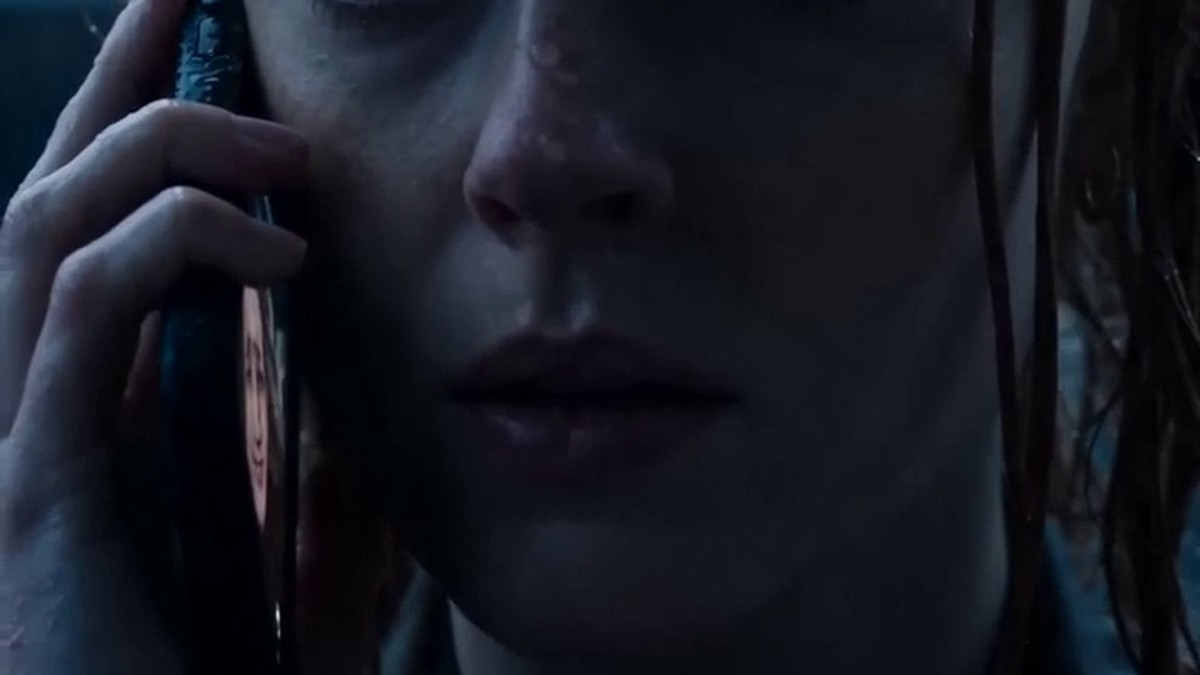
But standing in the dark outside the house I had spent years constructing from nothing — my daughter warm and sleeping against my ribs — I made one quiet phone call that rearranged the entire board.
“Sell it,” I said.
Silence on the other end.
Jennifer understood immediately what those two words cost me.
For nearly eight years she had been my attorney. She had watched me negotiate million-dollar contracts, outmaneuver hostile investors, walk into rooms designed to break me and walk back out unbroken. She had seen me under pressure that would have collapsed most people. She had seen me furious. She had seen me running on four hours of sleep and still closing deals.
But she had never once heard me speak about my home like it was a thing I could simply release.
“Tessa,” she said, choosing each word with the precision she reserved for courtrooms, “the mansion is still legally yours?”
I stared at the keypad beside my front door. The same keypad that had read my code every day for years. The same entrance I had walked through after late nights at the office, after flights home from cities I barely remembered, after every version of a life I had fought to build. The same threshold where I had pictured myself stepping across for the first time as a mother, Ivy bundled in my arms, Brent beside me, the future waiting inside like a room lit for a celebration.
Now the house was sending me away.
“Yes,” I said.
“Brent was never on the title?”
“Never.”
“The mortgage?”
“Paid off last spring.”
Jennifer paused.
“The prenuptial agreement?”
“Fully enforceable.”
The rain intensified. Ivy shifted against me, her impossibly small fingers curling tighter around the edge of her blanket, searching for something solid in her sleep.
She was three days old.
Three days.
That was the entire length of my life as her mother. Three days since I believed I was stepping into the happiest season I had ever known. And instead I was standing in the dark outside my own home — soaked, freezing, locked out by the man I had chosen — while my infant daughter slept through all of it, trusting me completely to keep her safe.
“Three days after bringing my baby home,” I said, “I’m standing in the rain outside my own house because my husband changed the code and flew to Miami with his mother.”
Jennifer’s tone changed so fast it was almost physical — the measured attorney dissolving, the woman who knew the full geography of my life stepping forward in her place.
“I’m pulling every file we have.”
Those words should have frightened me.
They didn’t.
Because something in me already knew. Had known for a while, maybe. Something had been quietly wrong for a long time, and I had kept choosing not to look directly at it.
Behind me, the mansion on Redwood Crest Drive glowed against the dark Colorado sky. Warm light bleeding through those massive windows, falling across the stone exterior, illuminating every elegant, expensive detail.
It looked beautiful.
Cruelly, almost mockingly beautiful.
The kind of beautiful that made people stop and stare from the road. The kind that made strangers assume things — assume it had always belonged to someone like Brent. Polished. Effortless. Received rather than earned.
They were always wrong.
**Every beam, every room, every square foot of that house existed because of me.**
Before Brent, I had years of quiet, relentless work behind me. Late nights that bled into early mornings. Deals that collapsed and had to be rebuilt from scratch. Moments of genuine doubt that I absorbed alone and kept moving through anyway. I had built a career the way you build anything real — slowly, imperfectly, without a safety net.
That mansion was not a gift. It was not an inheritance. It was not something any man had handed me.
It was the physical proof of everything I had refused to give up on.
And yet — somehow, gradually, almost imperceptibly — after the wedding, Brent’s family had begun to inhabit the place as though it already belonged to them.
His mother Diane would host holiday gatherings in my home and circulate through the rooms like a woman playing host in her own residence. She would move through my kitchen, quietly rearrange things on my shelves, then turn to guests with that warm, proprietary smile and say, *”Our family built such a beautiful place.”*
Our family.
I always felt the wrongness of those words. Always swallowed it.
Then there was Karen, Brent’s sister, who one afternoon covered my staircase with framed family photographs she’d brought over without asking. She stood back to examine her work, laughed lightly, and said, *”It finally feels like our house.”*
I smiled.
I said nothing.
Because I told myself marriage required generosity. That love meant making room. That letting people feel at home in your home was a kind of grace, not a concession.
I never understood that they were reading my silence as surrender.
And I never once imagined my husband would be the one standing on the other side of that locked door.
My phone buzzed.
Jennifer.
“Elliot says the private buyer is still interested,” she said.
I looked back at the mansion.
“The buyer?”
“The one we discussed a few months ago. All-cash offer. He hasn’t moved on.”
I held Ivy closer.
For months I had let that conversation stay theoretical. Because this house was not just property to me. It was memory. It was proof. It was the future I had imagined raising my daughter inside.
But standing there in the rain — cold, locked out, three days postpartum, holding my sleeping child on the wrong side of my own front door — something shifted into focus that I hadn’t been able to see clearly before.
Maybe I wasn’t losing a home.
Maybe I was finally understanding what this place had quietly become.
“How serious is he?” I asked.
Jennifer didn’t pause.
“Serious enough that we could move fast.”
I looked at the keypad again. The screen still glowing with its patient, indifferent rejection.
*Access denied.*
A message from the house I owned.
A message from the man who thought he could rewrite what was mine.
“Tell him I’ll review it tonight.”
A beat of silence.
“Tessa…”
“I mean it.”
“Where are you going right now?”
I looked down at Ivy’s face, slack with sleep, completely unbothered by the rain or the cold or any of it.
“My sister Molly’s.”
“Does she know?”
“Not yet.”
Jennifer’s voice dropped.
“Call her.”
I breathed.
“And Tessa?”
“Yes.”
“Don’t come back here by yourself tonight.”
I closed my eyes.
Because that was the moment I let myself feel the full weight of what had actually happened. Not just an argument. Not just a terrible night. This was something that had been constructed deliberately, while I was at my most exposed.
I hadn’t been locked out in a moment of anger.
I had been removed.
No conversation. No ultimatum. No acknowledgment that I had just delivered his child.
**He had planned this while I was still recovering. While I was sleepless and raw and tender. While I was at the absolute edge of what a human body can endure.**
I looked down at Ivy.
“I came here tonight believing I was finally bringing my daughter home,” I whispered to no one in particular.
My voice broke on the last word.
“And now I understand I never had the home I thought I did.”
I ended the call and dialed Molly.
She picked up before the second ring.
“Are you home?”
My throat closed around the answer.
“No.”
Pause.
“Where are you?”
I turned toward the house behind me. All that light. All that warmth. Locked away from me like it had always been a different person’s life.
“I’m outside.”
“Outside where?”
“At the house.”
Silence.
Then I said the sentence I never once rehearsed for, because I never imagined needing to say it.
“Brent changed the code.”
Molly didn’t bother with calm.
“What?”
“He left.”
“Where?”
The rain tapped steadily against the driveway stones.
“With Diane.”
Silence.
Then, quietly:
“Miami?”
I didn’t answer.
I didn’t need to. She already knew. Molly had always known something about Brent that I refused to see. She said he was too seamless. Too precisely assembled. Like a person who had rehearsed himself instead of actually becoming someone. I defended him every time. Told her she was projecting. Told her love wasn’t something you could diagnose from the outside. Told her I knew him in ways she couldn’t.
I had been so certain I was right.
“I’m leaving right now,” Molly said.
“I can drive myself.”
“No.” Her voice went flat and final. “Tessa. You gave birth three days ago. You are not driving anywhere. Stay exactly where you are.”
And that was when it broke open — the thing I had been holding sealed since four in the morning. The tears came fast and without warning, slipping down my face into the rain.
“He took them to Miami,” I said. “His whole family. And he left me standing outside with our daughter.”
Molly’s voice went soft in a way that only happens when someone loves you without condition.
“Stay there.”
A pause.
“I’m coming.”
I stood there a moment longer, looking at the mansion one final time.
The place where I had imagined my daughter learning to walk. Where I had pictured candles on birthday cakes and the chaos of holidays and all the ordinary moments that stack up into a life. The place Brent believed he had taken from me by changing four digits on a keypad.
Then I turned my back on it.
Because somewhere in Miami, Brent was raising a glass to himself. Convinced he had outmaneuvered me. Convinced I was standing in the rain with nothing left to hold onto except a baby and whatever remained of my pride.
He had forgotten something fundamental.
**The house was never his to take.**
And when he finally came back from Miami — sunburned and certain of his victory — and discovered what I had set in motion while he was gone…
He would realize, too late, that he’d never been a player in this game.
He’d only been a guest.
—
Molly arrived in nineteen minutes.
She pulled into the driveway fast, headlights sweeping across the stone facade, and she was out of the car before the engine fully stopped. She didn’t say anything when she reached me. She just put her arms around both of us — me and Ivy together — and held on with the specific fierceness of someone who has been waiting a long time to be allowed to protect you.
I let her.
She drove us to her house, which smelled like cedar and warm bread and the particular comfort of a place that has never been anything other than exactly what it appeared to be. She made me tea I didn’t drink and settled Ivy into the portable crib she’d kept assembled since my third trimester, the one I used to tease her about.
*You’re being dramatic*, I had told her.
*I’m being ready*, she had said.
I sat on her couch with a blanket across my shoulders and my phone in my hands and I opened Jennifer’s files.
It took me four hours.
By two in the morning I understood the full picture. Not fragments. Not suspicions. The actual architecture of what Brent and Diane had spent eighteen months quietly building around me.
He had applied for a joint line of credit against a property we co-owned in Aspen — a smaller investment property I had purchased before we married but amended the title on after, in a moment of what I had understood as symbolic generosity. He had used my signature on documents I had signed for different purposes, a technique Jennifer identified with cold precision as a pattern, not an accident. His mother had directed him throughout. There were emails between them — obtained through Jennifer’s forensic accountant — in which Diane referred to the Redwood Crest mansion as *the asset*, and to me, in the weeks following Ivy’s birth, as *temporarily incapacitated*.
Temporarily incapacitated.
That was their window.
I read that phrase twice.
Then I set my phone face-down on the cushion beside me and sat very still for a moment, listening to the sound of my daughter breathing in the next room. That small, steady, improbable sound. The realest thing in my life.
I picked the phone back up.
I called Jennifer.
She answered on the first ring. It was two-seventeen in the morning.
“I read everything,” I said.
“I know.”
“The Aspen property.”
“We’re already moving to freeze it.”
“The signature forgery.”
“I have the forensic comparison. It’ll hold.”
“Diane directed him.”
A pause.
“Yes.”
“She’s implicated.”
“Significantly.”
I closed my eyes.
“Then go,” I said. “All of it. Full acceleration.”
“Tessa, I want to be clear about what that means in terms of —”
“Jennifer.” My voice came out quiet and absolute. “I know exactly what it means. Go.”
—
Brent came back from Miami on a Thursday.
I know this because Jennifer had arranged for a process server to meet him at the airport with the emergency injunction — freezing his access to all jointly held accounts, the Aspen property, and any financial instrument bearing my name within a six-county radius. She had also filed the initial divorce petition that morning, along with a formal complaint to the Colorado Attorney General’s office documenting the signature irregularities.
He called me forty-seven times between baggage claim and his Uber.
I answered the forty-eighth.
“Tessa.” His voice was controlled. That old, familiar composure, the one I had once mistaken for steadiness. “This is insane. You need to calm down and we need to talk.”
I was sitting at Molly’s kitchen table. Ivy was in my lap, awake for once, dark eyes moving around the room with that ancient, unfocused curiosity that newborns have, as though they are cataloguing a world that is still deciding what it wants to be.
“I’m very calm,” I said.
“You’re making decisions while you’re postpartum and exhausted and not thinking —”
“Brent.”
He stopped.
“I’m going to need you to stop telling me what I’m thinking.”
Silence.
“You changed the code three days after I brought our daughter home,” I said. “You flew to Miami with your mother. You left me standing in the rain outside the house I built and paid for and own outright. And while I was recovering from childbirth, the two of you were attempting to move against an asset you have no legal claim to.” I kept my voice level. “So I need you to understand something. This isn’t impulsive. This isn’t hormones. This isn’t a woman who doesn’t know what she’s doing.” I looked down at Ivy. “This is what I do.”
A long pause.
Then, and I would always remember this, his tone shifted. The composure cracked just slightly, and underneath it was something I recognized as real — not love, I understood now, but something adjacent to fear.
“The house sold,” he said. It wasn’t a question.
“Closed yesterday.”
“You actually —”
“All-cash. Full asking price.” I paused. “It was a very competitive offer.”
“That house was —”
“Mine,” I said. “It was always mine. You were on nothing. Not the title. Not the mortgage. Not a single document that mattered.” I shifted Ivy gently to my other arm. “Your mother called it *the asset*. In writing. In emails your forensic footprint left perfectly intact. So yes. I sold the asset.”
The silence that followed was different from all the other silences.
It was the sound of someone finally understanding that the game they thought they were playing had different rules than they realized — had, in fact, been someone else’s game all along, and they had simply been allowed to feel like participants.
“You need to speak with Jennifer from now on,” I said. “I won’t be taking your calls.”
I ended it.
Molly was in the doorway. She’d been there for most of it, leaning against the frame with her arms crossed and her expression doing something complicated that I didn’t have a name for.
“Asset,” she said.
“Asset,” I confirmed.
She shook her head slowly.
“I’m sorry I was right about him.”
I looked down at Ivy, who had found my thumb and was gripping it with the full commitment of someone with extremely limited options and absolute certainty that this particular thing was worth holding onto.
“Don’t be,” I said. “I needed to see it for myself.”
—
The legal proceedings took eleven months.
Diane retained her own attorney, a sharp-elbowed partner from a Denver firm who spent the first three months suggesting this was all a misunderstanding rooted in grief over a difficult marriage. Jennifer disassembled that theory with a forensic efficiency that I found, genuinely, a little beautiful to watch. The Attorney General’s office opened a formal investigation. Brent, in the end, cooperated — turned testimony on his mother in exchange for reduced personal exposure, a choice that I imagined caused certain dinner conversations in the Hargrove family to become permanently uncomfortable.
Diane settled.
She never admitted anything.
But she paid, and she signed, and the look on her face at the settlement table — that particular quality of a woman who has spent sixty years moving through rooms as though they already belong to her encountering the specific moment they don’t — was something I did not let myself feel satisfied by.
I let myself feel it for exactly thirty seconds.
Then I moved on.
—
The new house was smaller.
That surprised people, when they found out. They expected me to escalate — to buy something larger, louder, more declarative of exactly what I had survived and emerged from. That is the narrative people prefer. The triumphant monument.
But I had spent years in a monument. I knew what monuments were actually for.
The new house was in a neighborhood with wide sidewalks and old trees whose roots had begun lifting the pavement in places, the kind of neighborhood where people walk dogs in the early morning and know each other’s names. Four bedrooms. A kitchen with south-facing windows that filled with light by nine a.m. A backyard with a single oak tree old enough that it felt like it had been waiting there specifically.
I sat in that backyard on Ivy’s first birthday with my sister on one side of me and Jennifer on the other, and I watched my daughter navigate the physics of grass for the first time — the texture startling her, then delighting her, both reactions moving across her face in rapid succession like weather — and I thought about the woman who had stood in the rain outside a locked door with this exact child pressed against her chest.
I had been so certain that night that I was losing everything.
I had been wrong about that too.
Not the way I was wrong about Brent — wrong from the beginning, wrong in the foundation. This was a different kind of wrong. The kind that turns out to be necessary. The kind that clears away what you built for the wrong reasons so you can finally see the ground underneath.
Ivy grabbed a fistful of grass and looked up at me, delighted by her own audacity.
I laughed.
It came out surprised, the way the best ones do.
Molly leaned into my shoulder.
“She’s going to be exactly like you,” she said.
I watched my daughter consider the grass in her hand with the absolute gravity of someone encountering a completely new idea.
“God help everyone,” I said.
And I meant it as the highest possible praise.