Liam had been recovered two blocks away, standing near the fountain in the park, both arms locked around his stuffed elephant. Thomas had not been recovered.
Had not been recovered.
Until now.
Until a Wednesday afternoon in February when she turned a corner on Clement Street and saw both of her sons sitting side by side on a bench outside a pharmacy — one of them holding the other’s hand.
Her knees hit the sidewalk.
The cold concrete bit through her jeans. She didn’t feel it.
“Thomas.” Barely a breath. Barely a word at all.
The slight boy on the right went absolutely still.
“I thought I lost you.” Her voice cracked down the middle. “I thought—” The sentence dissolved. There was no ending she could speak aloud. “I looked for you every single day. Your room is still there. It’s been waiting two years — I couldn’t move anything, couldn’t change a single thing, because I kept thinking—”
The boy was watching her with an expression that lived somewhere between recognition and the absence of it. A threshold expression. Something that had been holding itself there, patient and unresolved, for a long time.
“What’s my name?” he asked.
“Thomas,” she said. “Thomas James Morrow. You’re six years old. Your brother is Liam. You came into the world at Saint Catherine’s on March third, six pounds four ounces. You cried for forty straight minutes and then went completely silent and it nearly stopped my heart.”
Something shifted in his face. Something unlocked.
“I was here,” he said. Quietly. Simply. The way someone states a fact about the weather.
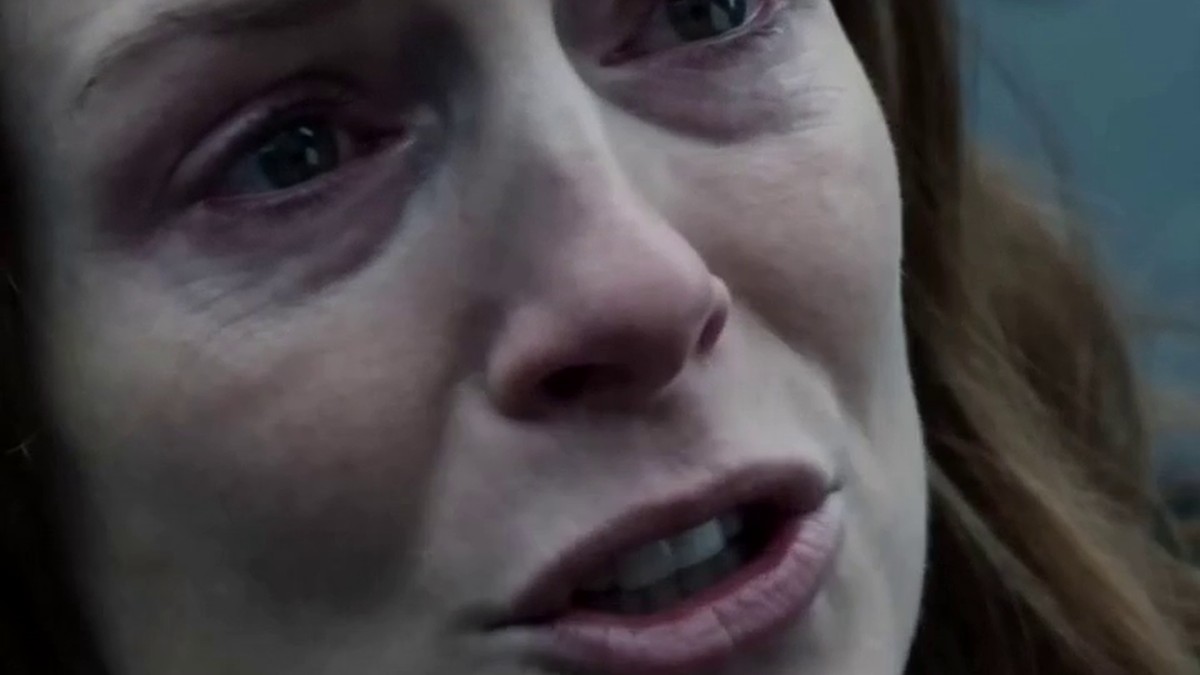
And then she shattered.
Not slowly — all at once, the way a thing breaks when it has absorbed pressure for too long and the pressure finally, completely lets go. She pulled both boys into her arms on that cold gray sidewalk and held them with the absolute wholeness of a person who has spent two years missing two pieces of herself and has just discovered that both pieces are breathing, are real, are right here.
Her fingers closed around the worn collar of Thomas’s oversized fleece.
She did not let go.
Liam startled for just a moment — the instinctive flinch of a child suddenly gathered in — and then went soft. His arms came up around her.
Thomas was different.
He remained motionless inside the embrace, neither pulling away nor fully arriving. Suspended. She could feel it — that careful distance — and she held him anyway. Not harder. Just steadily. The way you hold someone when what you want them to understand is not your strength but your permanence.
“It’s okay,” she said. “I have you. I have both of you.”
The pharmacy door opened behind them. A woman came out — mid-forties, reading glasses pushed up on her forehead, a paper bag in the crook of her elbow. She stopped when she saw them on the sidewalk. Her face did something complicated.
“Mrs. Morrow,” she said.
The name landed wrong. Not hostile — just precise in a way that made Claire’s spine go straight.
She looked up from the sidewalk. “I’m sorry?”
The woman didn’t answer immediately. She set the paper bag down on the bench beside where the boys had been sitting. A careful gesture. Deliberate. Like someone who had rehearsed being careful for a very long time.
“My name is Dena Purcell,” she said. “Thomas has been living with me.”
—
The world did not stop. The street kept moving — a bus grinding past, a man arguing into his phone, a gust off the bay that smelled of salt and exhaust. All of it continued without interruption, indifferent to the fact that Claire Morrow was kneeling on concrete with her son’s collar in her fist and a stranger was standing above her having just said the most enormous sentence of the last two years.
Claire rose slowly. Her knees ached. She kept one hand on Thomas’s shoulder.
“Living with you,” she repeated.
“Yes.” Dena Purcell did not look away. Her eyes were dark and direct and carried something in them — not guilt, not exactly. Something older than guilt. Something that had been examined and turned over for a long time before it hardened into this steadiness. “I found him. The day he went missing. He was on the bus. Sitting by himself. He didn’t know his address, he didn’t know his last name. He knew his first name and his brother’s name and that’s where it ended.”
“He knew his last name,” Claire said. Her voice came out harder than she intended. “He knew our address. He was four years old and I had drilled it into him — his full name, our street, our number. He could say it in his sleep.”
“He was in shock,” Dena said quietly. “It can do that to a child. Wipe out exactly what they’ve been taught.”
Claire’s jaw tightened. She wanted to push back against that — against the clean, clinical neatness of it, the way it folded two years of drilling and repetition into a single convenient explanation. Shock. As if that were a door that could simply close over everything she had given him to carry. She turned the word over in her mind, examining it, looking for the place where it didn’t hold. But Thomas was standing beside her. Alive. Unhurt. And she had read enough, in the long desperate nights of the search, to know that it was true — that trauma did exactly that to small children, collapsed the scaffolding, left them with only the most primitive anchors. First name. Brother’s name. Nothing else.
She hated that it was true. It didn’t make it easier.
“You should have called the police,” she said.
“I did.” A beat. “Eventually.”
The word *eventually* fell between them like a stone into still water.
Liam pressed closer to Claire’s side. Thomas stood slightly apart — not fleeing, not closing the distance. Just present in that careful, suspended way he had. Watching Dena. Watching his mother. Moving his eyes between them the way a person moves a flashlight through a dark room, trying to get the full shape of a thing.
“When?” Claire asked. “When did you call them?”
Dena Purcell picked up her paper bag. Put it down again. A small, useless motion. “Six weeks after.”
Six weeks.
The number went through Claire like a current. Six weeks was the length of the search. Six weeks was the window in which the flyers had been fresh and the tip line had been active and people had still been stopping strangers on the street to show them a photograph. Six weeks was exactly how long it had taken for the world to quietly conclude that Thomas Morrow was probably not coming home.
“Why?” The word came out barely above a whisper.
“Because I was—” Dena stopped. Started again. “I was alone. My son had died the year before. He was six. He was six years old and he died and then this child appeared, this child who was exactly his age, who needed—” Her voice didn’t break. It compressed. Like something being held under enormous weight. “I told myself I would bring him back. I told myself that every single week. When he’s more settled. When he stops waking up screaming. When he can say his last name again without going blank. I kept moving the line, and I knew I was moving it, and I did it anyway, because every time I reached for the phone I thought: one more week. One more week and he’ll be ready and I’ll bring him back.” She stopped. “Two years of one more weeks.”
“You knew what it cost me *every single day,*” Claire said, “and you kept him anyway.”
“Yes.”
The honesty of it was almost unbearable. No deflection, no performance of remorse, no collapsing into tears designed to make Claire absorb the weight of comforting her. Just the bare, terrible *yes.* I did this. I knew. I did it anyway.
Somewhere inside Claire there was a version of this moment that was simply rage — clean, righteous, the kind of anger that organizes itself around being correct, because she *was* correct, she had been wronged in a way that had no floor. But the rage kept running into Thomas. It kept running into the fact that he was standing here, alive, unhurt, wearing a fleece that was too big and shoes that fit and a look on his face that was confused and careful but also, underneath all of it, something that had been tended. Something that had been fed and kept warm and spoken to gently enough that he had not disappeared entirely inside himself.
She hated that. She was grateful for it. Both things at once, with nothing to reconcile them.
“Thomas.” She crouched down so they were level. “Do you know who I am?”
He looked at her for a long moment. His eyes were the same eyes. Exactly. Two years had not changed that — the particular gray-green of them, the slight downward tilt at the outer corners that had always made him look like he was thinking about something far away.
“You’re my mom,” he said.
“Yes.” Her throat closed. “Yeah, baby. I am.”
“Dena said you were looking for me.” He glanced up briefly at the woman behind him. “She said she would bring me back when I was ready.”
Claire looked up at Dena over the top of her son’s head.
Dena was watching the sidewalk. The paper bag was still in her hands. Her jaw was working at something no one could hear.
“When you were ready,” Claire repeated softly. “Okay.” She breathed in. “And are you? Are you ready?”
Thomas considered this with the gravity of a small person taking a question seriously. He looked at Liam, who had not let go of Claire’s coat since the moment she’d risen from the ground. He looked at the bench where he’d been sitting. He looked at Dena. He looked at Claire.
“I have the elephant,” Liam offered suddenly, fiercely, as though this were decisive information. He produced it from somewhere inside his coat — the stuffed elephant, gray and worn and listing slightly to one side, the one he’d been holding that day in the park when they found him. The one Claire had bought for Thomas at the hospital gift shop the afternoon he was born. The one that had somehow stayed with the wrong brother for two years.
Thomas stared at it.
His face did something she hadn’t seen yet — something young and sudden and completely unguarded. A flash of the four-year-old he’d been, surfacing through the careful six-year-old he’d become.
He took the elephant. Held it against his chest with both arms, the same way Liam had been holding it in the park. Mirror images across two years.
“Okay,” he said. To no one in particular. To all of them. “Okay.”
—
Claire stood. She reached into her coat pocket for her phone. Her hands were steadier than they had any right to be.
“I’m calling the police,” she said to Dena. “Not to — I’m not—” She stopped. Recalibrated. “Thomas needs to be medically evaluated. There’s paperwork. There are things that have to happen, legally, and they’re going to happen regardless of what I say or don’t say about you. You understand that.”
“Yes.” Dena’s voice was very small now. “I know.”
“I want you to stay here until they come.”
“I will.”
Claire looked at her for one more moment — this woman who had taken something irreplaceable and also, in the most complicated and painful way, preserved it. Who had broken something in Claire that would never fully close and also kept her son in shoes that fit. Who had loved badly and with enormous consequences and out of a grief so large it had eaten her judgment whole, and who had spent two years telling herself one more week while the weeks became months and the months became this: a sidewalk on Clement Street, a paper bag set down and picked up and set down again, a reckoning that had always been coming.
She did not forgive her. She did not know if she ever would. She did not think that was the most important question right now.
She took both of her sons by the hand.
Thomas’s hand was small and warm and he did not squeeze back — not yet — but he did not pull away, either. He walked beside her, the elephant tucked under his free arm, and Liam on the other side chattering suddenly about something, some urgent disconnected thing about the bus and whether they would have hot chocolate and whether Thomas liked hot chocolate because he, Liam, liked it a lot, a *lot*, and Thomas was quiet but he was listening.
She could feel him listening.
Half a block up Clement Street she allowed herself to look down at the top of his head — the particular cowlick at the crown that had defeated every attempt at combing for the entirety of his four years at home — and the sob that came out of her was nothing like crying. It was more like a sound a structure makes when the pressure is finally, finally released.
She kept walking.
Both hands full.