“Security! Remove that child — now!”
The manager’s voice sliced through the boutique like a blade. In her mind, a crying girl was nothing but a stain on the store’s pristine image.
One employee saw it differently.
She dropped beside the child without hesitation, wrapping her own coat around those trembling shoulders, angling her body to block the brutal overhead lights. A small act of mercy. A human one.
“You’re done here,” the manager said, her voice stripped of any warmth. “Clear out your locker.”
The employee looked up. Her eyes went glassy — not with rage, but with something quieter and harder to bear. The bewilderment of someone who did exactly the right thing and still lost everything because of it.
Then the glass doors burst open.
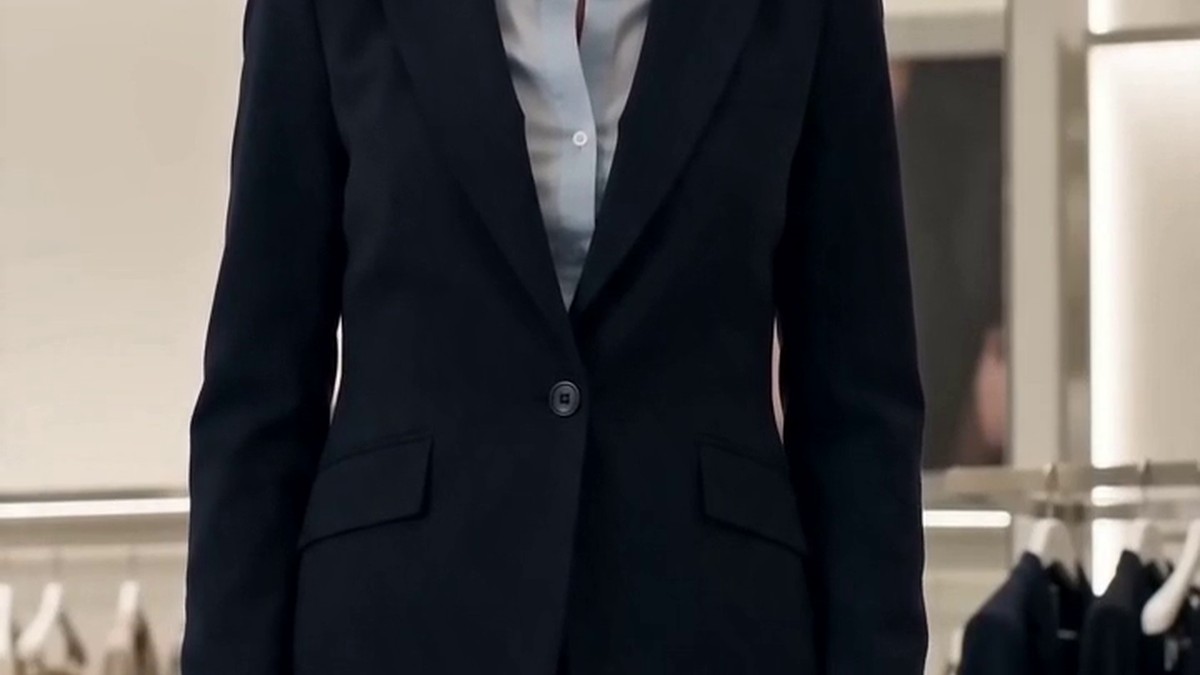
He moved like a man who had never once needed to ask permission to enter a room. Tall. Commanding. Navy suit cut to perfection. Two bodyguards flanked him like shadows, but he wasn’t looking at anyone in the store.
He was scanning. Searching.
The little girl lifted her tear-streaked face from the floor.
Something ignited behind her eyes.
“Papa!”
The most powerful man in the room didn’t glance at the imported marble beneath him. Didn’t register the stares or the silence that had swallowed the entire boutique. He went straight down to his knees — suit and all — and pulled his daughter against his chest like she was the only thing in the world worth holding onto.
The manager hadn’t moved.
Her hands had started to shake.
Because now she understood exactly whose child had been crying on her floor — and exactly what she had just done to the woman who tried to protect her.
The silence in the boutique had a texture now. Thick. Suffocating. The kind that presses against your eardrums and makes you hyper-aware of every breath you take.
The manager’s mouth opened. Closed. Opened again.
Nothing came out.
He held his daughter for a long moment — long enough that the bodyguards had exchanged a single glance and looked away again, trained to make themselves invisible when their principal needed to be human. The little girl’s fingers were balled up in the fabric of his jacket, wrinkling that perfect navy wool into something ordinary and beloved.
“Hey,” he murmured into her hair. “Hey. I’m here. I’ve got you.”
Her sobs had softened into the wet, hiccupping kind. The kind that come after the worst of it is over, when the body is still catching up to the fact that it’s safe.
He leaned back just enough to look at her face. Brushed her cheek with his thumb. Read her the way only a parent can read a child — every detail, every tremor, the story written in red-rimmed eyes.
“Who stayed with you?” he asked her quietly.
The little girl turned. Small arm extended. One finger pointing.
At the woman now standing with her coat still half-offered in her hands, dismissed, jobless, watching the reunion she had bought with her livelihood.
He looked at her for the first time.
She didn’t flinch. Didn’t smile. Didn’t perform anything. She just stood there with the coat and the quiet dignity of someone who had already made their peace with what they’d done and what it cost.
He rose from the floor in a single motion. Unhurried.
“You stayed with her.”
It wasn’t a question.
“Yes,” she said.
“They fired you for it.”
A beat. “Yes.”
Something moved through his expression — fast and controlled, like weather passing over open water. He turned.
The manager had found her voice again, which was perhaps the worst decision she could have made.
“Mr. Hargrove, I want to assure you that our policy regarding unaccompanied minors requires us to contact—”
“Where was she when you found her?” He was still looking at the manager, but the question was aimed behind him.
The woman answered. “On the floor by the east display. She’d been there a while. She was alone and she was frightened and she was *cold*.” A pause. “The lights in that corner run hot. I moved her away from them.”
The manager’s jaw tightened. “Our staff followed proper protocol—”
“Your staff.” His voice dropped half a register, and the whole room felt it. “Your staff stood in a circle and waited for someone else to make a decision while my seven-year-old daughter sat on your floor in tears.”
“I was simply maintaining the environment our clientele—”
“Don’t.” One word. Absolute. The kind of quiet that is more dangerous than shouting. “Do not finish that sentence in front of my child.”
The little girl had pressed herself against his side, one hand wrapped around two of his fingers. She wasn’t crying anymore. She was watching the manager with the enormous, unblinking attention of a child who understands more than adults assume.
The manager closed her mouth.
He reached into the interior pocket of his jacket and produced a card — plain, matte, the kind that doesn’t need to advertise anything because the name alone does the work. He didn’t hand it to the manager.
He walked the three steps to the woman with the coat.
“I’d like you to call that number tomorrow morning,” he said, holding the card out. “Before ten.”
She looked at it. Looked at him.
“I don’t need a reward,” she said. Not proudly. Not stiffly. Just honestly, the way some people are built — straight through, no performance.
“I know you don’t.” He kept the card extended. “That’s why I’m asking.”
A long moment. The coat was still folded over her arm. The boutique was absolutely still — every employee a statue, every remaining customer suddenly fascinated by displays they hadn’t glanced at before. The bodyguards might as well have been furniture.
She took the card.
He nodded once — the nod of someone who means things, who follows through, who doesn’t make gestures for the sake of them.
Then he looked back at the manager. The brief warmth that had entered his face when he spoke to the woman was gone now, replaced by something measured and final.
“I’ve been a silent investor in this property group for eleven years,” he said. “I won’t be renewing that position.” He let that land. Let her do the math. “And I imagine the story of what happened here today will be of some interest to people. Not because I’ll tell it.” He glanced down at his daughter, then back up. “Because she will. Children do.”
The manager had gone the color of old chalk. Her hands had stopped shaking only because she had pressed them flat against her thighs.
He didn’t wait for a response. There was nothing she could say that would constitute a useful contribution to the next few seconds of his life.
“Come on, bug,” he said softly, and his daughter slipped her hand fully into his.
They walked out through the glass doors — the two bodyguards a half-step behind, the doors sighing shut in their wake — and just like that, the most important people in the room were gone.
—
The boutique exhaled.
Then, slowly, the reality began to settle over everything like sediment dropping through water.
One of the junior employees looked at the manager. Then at the door. Then back.
The manager was staring at the glass as if she could un-see the last fifteen minutes. As if there were some version of events she could locate where she had made different choices and was standing in a different outcome.
There wasn’t.
—
The woman with the coat collected her things from the locker in under four minutes.
She didn’t rush. She didn’t drag her feet either. She moved with the same unhurried steadiness she’d brought to everything else that afternoon — folding her scarf, zipping her bag, leaving the locker exactly as she’d found it.
On her way out through the service corridor, one of the younger employees — barely twenty, still new enough to be unscarred by the place — touched her arm.
“That was—” The young woman stopped. Started again. “What you did was really good.”
The woman with the coat looked at her. Smiled, small and real.
“She was cold,” she said simply. “That’s all.”
And she walked out into the late afternoon, where the air was sharp and the light was going golden and somewhere a few blocks away, a little girl was safely buckled into the back of a car, already beginning the slow drift toward sleep against her father’s arm.
—
She called the number the next morning at half past nine.
She wasn’t sure what she expected. A secretary, maybe. A vague promise. The polished machinery of wealth doing what wealth does — gesturing at gratitude without really committing to it.
What she got was his voice, direct, on the second ring.
“I’m glad you called,” he said. “I meant what I said.”
He had a foundation. Not a vanity project — a real one, the kind with staff and teeth and a genuine mandate to improve early childhood welfare services in underfunded communities. They had been looking for a director of field operations for seven months. Someone with ground-level instincts. Someone who knew how to read a situation and respond to what was actually in front of them rather than what the protocol said should be there.
She was quiet for a moment on her end of the phone.
“You don’t know anything about me,” she said.
“I know the one thing I need to know,” he said. “The rest is just paperwork.”
She looked out her window. The city was going about its morning — ordinary, indifferent, moving at its usual relentless pace. She had been part of that current for a long time. Head down. Making do.
“What time do you need me?” she asked.
He named an address. A time. Said his daughter had asked about her this morning, which she hadn’t expected, and which did something unexpected to the space behind her sternum.
She wrote it down.
—
Years later, when people would ask her how she got the job — the career that turned out to matter, the work that actually meant something — she would tell the story in the plainest terms.
A little girl was cold. She gave her a coat.
That was all.
But the people who heard it always understood, in the way that true things make themselves understood, that it was never really about the coat.
It was about the fact that she stopped.
In a world that had been walking past for a long time, she was the one who stopped.