Mrs. Gable sat motionless at the defense table. Hands shaking. Eyes fixed on the floor. The entire room had already made up its mind — she had poisoned billionaire Arthur Sterling. Case closed. Guilt assumed.
Everyone thought so.
Except one little girl.
Eight-year-old Clara pushed out of her seat and sprinted toward the judge. No shoes. Still in her pajamas. The courtroom erupted — gasps, shuffling, shouted commands cutting through the air like broken glass.
“Stop!”
Her voice split the noise wide open.
Guards lurched forward. Attorneys rose from their chairs. The judge sat rigid, jaw tight, staring down at this child like she’d walked in from another world.
But Clara wasn’t carrying evidence.
Nothing anyone would’ve called evidence, anyway.
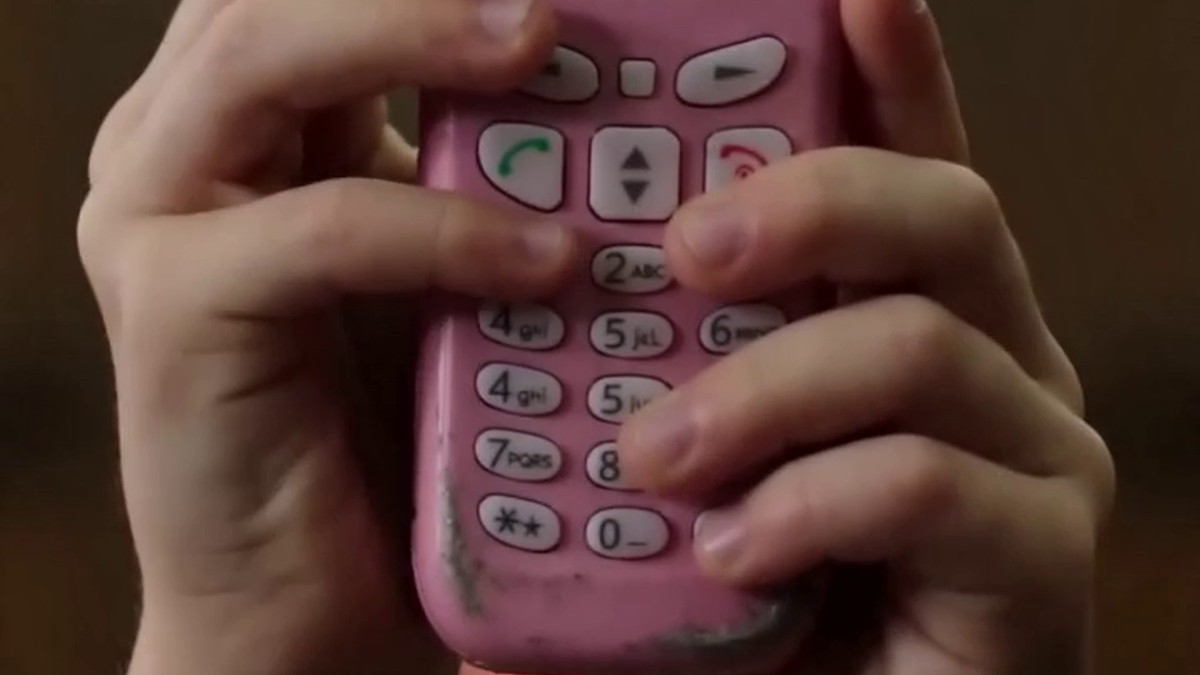
She was gripping a beat-up pink toy phone. The kind you find in a dollar bin. The kind adults don’t take seriously.
A ripple of disbelief moved through the gallery.
Almost a laugh.
Almost.
Then Clara’s face crumpled, and the tears came hard and fast.
“My nanny didn’t kill my father.”
The room went dead quiet.
Because that kind of pain can’t be faked. Not at eight years old. Not like that.
She raised the toy above her head with both hands, clutching it like it was the only thing keeping her upright.
“I recorded them.”
The prosecutor’s expression shifted. The judge leaned so far forward his robe bunched at the collar. And across the room, the billionaire’s widow — who had sobbed through nearly every minute of the trial — suddenly went completely still.
Not grieving still.
Scared still.
Clara pressed the button.
A burst of static. Then a voice — warm, familiar, unmistakable — poured out of that cheap little toy and filled every corner of the courtroom.
The widow’s face went white.
Jurors exchanged glances. Mrs. Gable pressed both hands over her mouth.
And Clara didn’t move. Didn’t flinch. Just stood there, small and barefoot on that cold floor, while the recording kept playing.
Every word dropped like a stone into still water.
Every sentence unraveled another thread of the story the world had believed.
The widow’s hands trembled now. Her attorney looked like he might fold in half.
Because the voice on that recording didn’t belong to the nanny.
And what it confessed to —
Was only where the truth began.
👇 Full story in the **COMMENTS**.
The voice belonged to Diane Sterling.
Arthur’s wife of eleven years. The woman who had worn black every single day of the trial. The woman who had pressed a handkerchief to her eyes so many times the gesture had become almost theatrical.
Her own voice, playing back from a child’s toy.
*”He was going to change the will. I had maybe two weeks — maybe less. Eleanor was the only one who knew. I needed her out of the way first.”*
Eleanor Gable, the nanny, sat frozen at the defense table with her hands still pressed over her mouth. Tears ran silently down her face. Not from fear anymore. From something rawer than that. Something like the feeling of a trapdoor opening beneath a long fall you’d almost accepted.
The judge held up one hand.
The courtroom stayed held in that suspended silence — the kind that isn’t quiet at all, but roaring underneath.
“Bailiff.” His voice was controlled and precise. “Secure Mrs. Sterling.”
Diane moved before they could reach her.
She was on her feet, knocking her chair back, one hand out toward Clara like she could physically stop what was already in motion. The child didn’t step back. She stood her ground on that cold marble floor, barefoot, the pink toy phone still raised in both hands, and met Diane’s eyes without blinking.
“Clara.” Diane’s voice cracked open. There was something ragged in it — not guilt, not remorse, but the sheer animal desperation of someone watching the last wall come down. “Baby, you don’t understand what you’ve done.”
“Yes I do.”
Eight years old. Wearing pajamas printed with small yellow stars. And the absolute certainty in her voice made half the gallery go still in a way the evidence hadn’t.
The bailiffs reached Diane at the second row. She didn’t fight them, exactly — she sort of collapsed into the restraint, like a building losing its internal structure. Her attorney sat with both hands flat on the table, staring at nothing. He’d known. Maybe not everything. But enough that his stillness now was the stillness of a man calculating how much was still salvageable.
The judge’s gavel came down once. Firm. Final.
“This proceeding is recessed pending an emergency review of new evidence. Defense counsel, prosecution — my chambers. Now.”
—
The recording lasted four minutes and thirty-eight seconds.
Clara had made it seven weeks earlier, on a Thursday evening, hiding behind the long curtain in her father’s study while Diane spoke on the phone in the adjoining sitting room. Clara had been looking for her stuffed rabbit. She’d heard her stepmother’s voice go low and sharp and wrong in a way she didn’t have words for yet, only instinct. So she’d pressed the red button on her toy — the one that was supposed to record her own songs and play them back — and she’d held it very still and not breathed.
She hadn’t fully understood what she was hearing.
But she had understood that Mrs. Gable was crying in her room that same night. And that two days later her father was dead. And that the adults had decided, with enormous confidence and very little listening, exactly what had happened and exactly who was responsible.
Clara had tried to tell her uncle. He’d patted her head.
She’d tried to tell the family’s lawyer. He’d smiled in that particular way adults smile when they’ve already moved on.
She’d brought the phone to her mother’s sister, who had driven her to the courthouse that morning in her bathrobe, running two red lights, saying *oh God oh God oh God* the whole way there.
—
Mrs. Gable sat in a small room off the main corridor with a cup of water she hadn’t touched. Her defense attorney was inside the judge’s chambers. A young clerk sat across from her, not sure what to say, so saying nothing.
Eleanor Gable had worked for the Sterling family for six years. She had taught Clara to tie her shoes and read chapter books and make French toast on Sunday mornings when Arthur slept late. She had watched him decline through those last months — quieter, more careful, jumping slightly at sounds — and she had understood in retrospect what she hadn’t allowed herself to name in real time.
He’d been afraid of his wife.
She had been thirty-one days from execution of the verdict when Clara walked through that door.
She didn’t cry again. She’d used everything she had left up at the defense table. Now she just sat, hands wrapped around the cold cup, and breathed.
The door opened.
Clara came in first. Her aunt hovered in the doorway, uncertain. Clara walked straight across the room and climbed up onto the chair next to Eleanor and pressed herself against her side the way she used to do during thunderstorms.
Eleanor put her arm around her without thinking. The way you do something you’ve done ten thousand times.
“I’m sorry it took so long,” Clara said into her shoulder.
Eleanor pressed her lips together very hard. Nodded once, jaw working.
“You found me,” she finally said. Her voice was wrecked. “That’s all that matters. You found me.”
—
The formal charges against Eleanor Gable were dropped before the end of the day.
Diane Sterling’s attorney entered a request for continuance that was denied. A forensic audio specialist confirmed within seventy-two hours that the recording was unaltered and matched Diane’s voice with a ninety-seven percent confidence rating. Subsequent investigation turned up a wire transfer to a pharmaceutical connection, a deleted message thread recovered from a backup server, and a separate testimony from a household employee who had been too frightened to speak before Diane was in custody.
The case, it turned out, had been simpler than anyone wanted to admit. Simpler and uglier. A woman who had seen a fortune about to slip through her hands and had decided, with cold efficiency, to remove the obstacles. The nanny first — framed, discredited, imprisoned. Arthur second — already dead by then, the plan already in motion for months.
What Diane hadn’t calculated was a child who loved her nanny more than she feared being wrong. Who had kept a four-minute recording on a dollar-bin toy phone for seven weeks because something in her had held onto it the way you hold onto a thing when you don’t know why yet, only that you should.
—
Six months later, Eleanor stood in a small apartment that smelled like fresh paint and a little bit like the lemon cleaning spray she’d always used. The windows were good. The light came in from the east in the mornings.
The case had made noise. There had been interviews she’d declined, a book proposal she’d declined, a made-for-television something she’d declined. She wanted, more than anything, to become boring again. To matter only to a small number of people in a way that was warm and unremarkable.
On Sunday mornings now, Clara came over with her aunt. They made French toast. Clara had started reading longer books — real chapter books, the kind with no pictures — and she brought them over and read passages aloud while Eleanor made coffee, and they argued mildly about whether the characters were making good decisions, and Clara almost always thought they were, and Eleanor almost always wasn’t sure.
It was ordinary. Deliberately, defiantly ordinary.
On the kitchen counter, next to the coffee maker, sat a beat-up pink toy phone.
Eleanor had asked if she could keep it. Clara had considered this with the gravity of an eight-year-old weighing something important, and then nodded once.
“It did its job,” Clara said.
“It did,” Eleanor agreed.
She never played the recording again. She didn’t need to. She knew what truth sounded like now — not because she’d heard it on a tape, but because she’d seen it walk barefoot across a marble floor on a cold morning, wearing pajamas with yellow stars, holding itself up through sheer force of love and the refusal to be dismissed.
That kind of evidence doesn’t expire.
It keeps playing long after the case is closed.