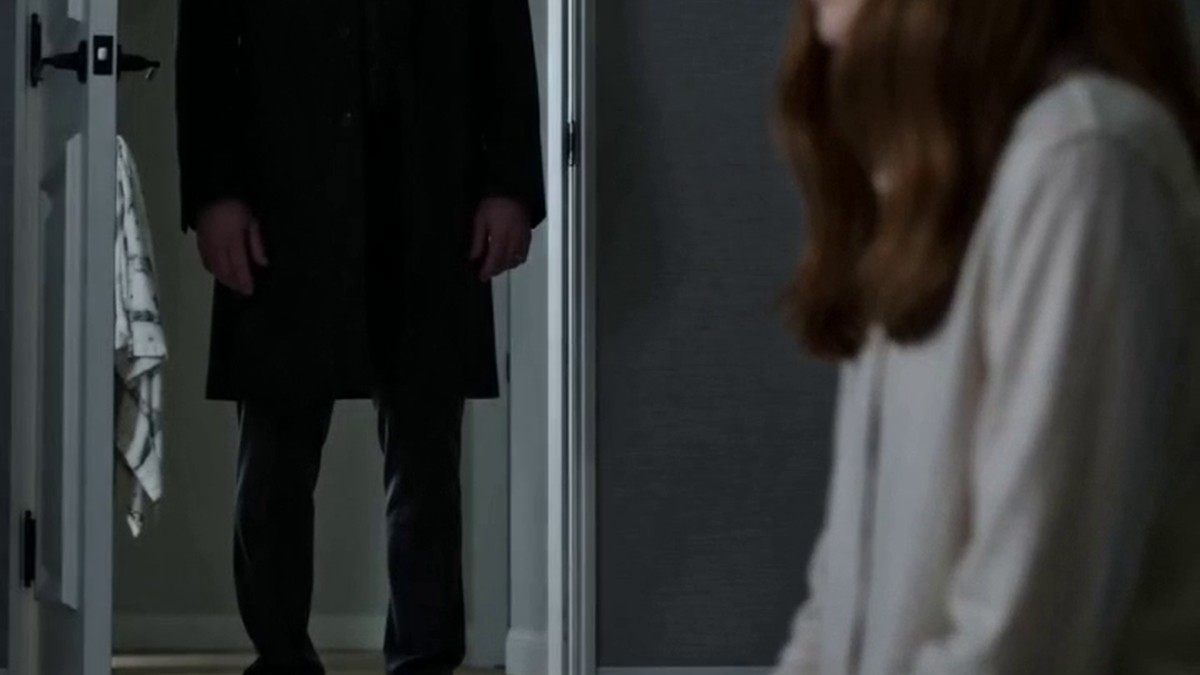
He stood there with it raised, his small chest heaving, watching her the way a wounded animal watches something that hasn’t run yet. Clara didn’t move. She sat on the cold marble floor in her thrift-store dress and waited.
Jonah lowered his arm one inch. Then another.
He didn’t speak. He didn’t smile. But he set the track down.
That was how it began.
—
Clara’s room was in the east wing, past the kitchen and the laundry and a narrow corridor that smelled of cedar and old paint. It was smaller than the other staff quarters, with a single window that looked out on the service road rather than the ocean. She unpacked in twelve minutes. There was not much to unpack.
She lay on the narrow bed that first night and listened to the mansion breathe around her. Wind off the harbor rattled the panes. Somewhere above her, Jonah screamed himself awake at two in the morning, then at three-forty, then again at five. She heard heavy footsteps cross the floor above her. She heard Dominic’s voice, low and even, the kind of voice a man uses when he has forgotten how to comfort but refuses to stop trying.
The screaming eventually softened into crying. The crying softened into silence.
Clara stared at the ceiling and thought about her father in the hospice bed, how his breathing had changed in the last weeks, how the nurses spoke to her with that specific gentleness reserved for people who were about to lose something they could not replace. She thought about Reggie Malone’s last voicemail. She thought about two hundred and eleven dollars.
Then she stopped thinking and went to sleep.
—
She tried routine first. Breakfast at seven, outdoor time at nine, quiet reading before lunch. Jonah demolished the routine inside of two days. He threw his oatmeal against the yellow kitchen wall. He bit the sleeve of her coat when she tried to take him outside. He tore three pages from a picture book she had borrowed from the mansion’s library and ate one of them, staring at her the whole time with those too-old eyes as if he were daring her to react.
Clara cleaned the oatmeal off the wall. She checked that the bite hadn’t broken skin. She taped the torn pages back together with Scotch tape from the housekeeper’s drawer.
She did not raise her voice. She did not cry. She did not call Atlantic Domestic Staffing.
What she did, on the third afternoon, was sit down on the kitchen floor again, pull a battered harmonica from her coat pocket, and play a slow, wandering tune her father had taught her when she was six. Nothing deliberate. Nothing performed. She just played, her eyes half-closed, her back against the cabinet below the sink.
She heard small feet on the tile. She did not look up.
A warm weight settled beside her left hip. Jonah pressed himself against her side and sat very still, listening, the way a person sits inside a sound they don’t want to end.
She played for twenty minutes. When she stopped and finally looked down at him, his eyes were dry and his face was open in a way she hadn’t seen before. Not happy. Something rawer than happy. Something closer to safe.
“Again?” she said.
He didn’t answer in words. But he put his hand on top of the hand that held the harmonica.
She played again.
—
The staff noticed.
The housekeeper, Mrs. Faria, told the driver, who told the two guards who worked the daytime rotation, who told the maid named Elena Voss in the manner of people reporting something vaguely threatening: the new one has gotten to the boy. Elena was twenty-three, blond, cheerful in the way of a person who had not yet been badly disappointed by anything, and she decided this meant Clara was someone worth talking to.
Elena began finding reasons to be in whatever room Clara occupied. She brought coffee she hadn’t been asked to bring. She asked questions with the innocent persistence of someone too young to know some questions are doors you shouldn’t open. “Where are you from?” and “Is this your first live-in job?” and “Do you have family?”
Clara answered what she could and deflected the rest with the practiced ease of a woman who had learned early that honesty is a currency you spend carefully.
But Elena kept showing up.
And slowly, in the way that warmth erodes wariness, Clara let her.
—
Dominic watched.
It was what he did in that house when he was present, which was not often. He flew to New York on Tuesdays, returned on Thursdays, disappeared over weekends to meetings he did not describe and places no one asked about. But when he was home, he stood in doorways. He read in the library with the door slightly open. He sat at the head of the long dining table with his coffee and his phone and his silence, and he watched.
He watched Jonah eat half a bowl of oatmeal without throwing it. He watched the boy fall asleep on the kitchen floor with his head against Clara’s thigh while she read a book above him, one hand resting lightly on his back as though it had always belonged there. He watched his son reach up for Clara’s hand crossing the back garden, small fingers locked around two of hers, and he stood at the library window with his coffee going cold and felt something move in his chest that he did not immediately recognize because it had been so long.
He did not tell Clara she was doing well. Men like Dominic Mercer did not offer praise the way other men did. But he stopped scheduling her reviews. He gave her unrestricted access to the kitchen, the garden, the car when she needed it. He raised her pay after three weeks without explanation or preamble, the increase simply appearing in her account the way certain things happened in this house — without announcement, without ceremony, as if the decision had been made long before anyone knew it.
—
It was Elena who told her about Margaret.
They were in the laundry room on a rainy Thursday, folding sheets, and Elena talked the way she always talked — in long, gentle streams, switching subjects the way a river bends — and Clara half-listened and half-watched the rain streak down the single high window until Elena said the name.
“Margaret was his wife. Jonah’s mother.” Elena shook out a pillowcase. “She was beautiful. I only saw pictures — I started after — but God, Clara, she was just — the kind of beautiful that made you sad somehow, you know what I mean?”
Clara knew.
“The car was supposed to be his.” Elena’s voice dropped. “Someone meant it for Mr. Mercer. Everyone knows it. No one says it. Margaret had taken the car that night because hers was in the shop, and Jonah was in his car seat in the back, and she went off the bridge at Route 19 and —” Elena stopped. Pressed her lips together. Looked at the pillowcase in her hands. “Jonah survived because of the car seat. He was in the water for nine minutes before the first responder got him out. Nine minutes, Clara.”
Clara set down the sheet she was holding.
“Mr. Mercer got there before the ambulances. The harbormaster’s guys called him. He went in himself.” Elena looked up. “In November. In that water. He dove in three times before they pulled him back, and Margaret was already — they said he just kept going in. Kept going back.” She folded the pillowcase with precise, small movements. “He never talks about it. He never talks about anything. But the boys in the garage say he still won’t drive that road.”
The rain fell against the high window.
Clara picked up the sheet again and finished folding it in silence.
—
She began to understand the house differently after that.
The locked room on the second floor that no one cleaned. The photographs in the library that had been turned to face the wall. The way Dominic sometimes stood in the kitchen doorway watching Jonah eat with an expression that was not quite grief and not quite love but lived somewhere in the territory between them, in the dark country where a man goes when he has survived something he wasn’t meant to survive.
She understood something else, too.
She understood why the boy threw things.
—
Six weeks in, Jonah said his first word to her.
They were in the garden, cold and gray, the harbor visible beyond the stone wall, and Jonah had found a bird — a sparrow, or something like it — lying on its side near the garden bed. He crouched over it and stared at it with an intensity that made Clara’s chest ache. He poked it once, very gently, with one finger. The bird did not move.
He looked up at her.
“Gone,” Clara said quietly.
Jonah looked back at the bird. He was still for a long moment. His small face moved through several expressions she didn’t have names for.
Then he said, very quietly, barely a breath: “Gone.”
His voice was rough from disuse and higher than she’d expected, the word shaped with careful precision the way a child says a word they’ve been carrying in their mouth for a long time, waiting for the right moment to give it back to the world.
Clara sat down on the cold garden stone beside him. She did not cheer. She did not cry, though something in her wanted to. She simply said, “Yes. Gone.” And then, after a pause: “We can bury her, if you want. Give her a place.”
Jonah thought about this for a moment. Then he nodded.
They buried the sparrow beneath the rosebush at the corner of the garden wall. Clara found a flat stone. Jonah set it on top of the small mound without being told, then placed his palm flat against it and held it there.
She watched his little hand against the gray stone and thought about her father. She thought about everything that goes and does not come back.
“Goodbye,” Jonah said.
She couldn’t answer for a moment.
“Goodbye,” she said finally.
He stood, brushed the dirt from his knees with businesslike efficiency, and took her hand to walk back inside.
—
Dominic found out about the sparrow from Elena, who had watched from the kitchen window.
He asked Clara about it that evening, in the library, in the particular way he asked things — standing slightly apart, his question precise and uninflected, as if he were asking for a file number rather than something that clearly mattered to him beyond words.
“Elena said he spoke today.”
“Yes.”
“A word.”
“Two words, by the end.”
Dominic looked at the wall. Not at the turned-over photographs. At the blank space beside them. “Which words?”
“Gone,” Clara said. “And goodbye.”
The silence that followed was the kind that has weight. Dominic stood with his hands in his pockets and his jaw tight and his eyes somewhere Clara couldn’t follow, and she watched him be alone with it in the particular, terrible way that people are alone with the things they are not equipped to say out loud.
“Thank you,” he said finally. His voice was careful and flat, the way a man speaks when he is using all his available effort to sound like he is not feeling what he is feeling.
“He’s a good boy,” Clara said. “He just needed somewhere to put it.”
Dominic looked at her then. Really looked — not the assessing, contracted look from that first morning, but something different. Something unsettled and direct, the look of a man who has been surprised in a room he thought was locked.
He nodded once and left the doorway.
Clara stood in the library alone for a moment. The fire in the grate ticked. The harbor was black beyond the windows.
She put her hand on her stomach, briefly, automatically. A private thing. A reflex she hadn’t meant to let happen in this room.
She took her hand away and went to check on Jonah.
—
The secret had a shape by then.
It had been a shape for four weeks, though she had known it longer — had known it before she’d walked through the carved oak doors, before she’d taken the job, before she’d sat across from Mrs. Caldwell at Atlantic Domestic Staffing and said yes before the salary was fully stated.
She had not planned for it. She had not planned for any of the events that had produced it. There had been a man named Daniel who had been kind and then unkind and then gone, in the way that certain men move through a woman’s life — consuming everything and leaving behind only absence and, in this case, one more thing that Clara was still working out what to do with.
She was ten weeks along. She had taken four tests in the bathroom at the Logan Airport hotel where she’d last worked, and all four had been the same, insistent and clear the way inconvenient truths always are.
She had taken the Mercer job because she needed the money. She had not told Atlantic Domestic Staffing. She had not told Mrs. Faria. She had not told Elena, though Elena was the closest thing she had to a friend in this house.
She was not showing yet. She was careful about it. She wore her loose dresses and her bulky sweaters and she moved through her days with the composed, deliberate efficiency of a woman carrying something breakable.
She had told exactly one person, and that person was her father, in the hospice room, three days before she’d accepted the job. He had held her hand and not said anything for a long time and then said, “You’ve handled harder things than this, Clara Mae.”
She wasn’t sure if that was true.
But she had held on to it anyway, the way you hold on to things when the person who said them may not be around much longer to say anything else.
—
The call came on a Tuesday.
Dominic was in New York. Jonah was down for his afternoon nap. Clara was in the kitchen drinking tea when her phone rang and she saw the hospice centre’s number and her stomach dropped in the quiet, absolute way of something that has been anticipated for so long it has stopped being a surprise and become a certainty.
She answered.
She listened.
She thanked the nurse who called, which was a strange and involuntary thing to do, but she had been raised to be polite in the face of things that undid her.
She put the phone down on the kitchen table.
She sat very still for a moment. Then she put her head down on her folded arms and cried in the specific, sustained way that she had not allowed herself since the first diagnosis, since the first bill, since all of it — the long accumulated weight of the last two years pressing down through her at once, and she let it. She let it come through her completely, without performance, without audience, in the empty kitchen of a house that belonged to someone else.
She did not hear Dominic come in.
He had returned early from New York. She learned that later. A meeting canceled, a flight changed, no announcement sent to the staff because he rarely sent announcements. He walked into the kitchen and stopped.
Clara heard him and lifted her head and saw him in the doorway in his coat, his bag still over his shoulder, his face doing the thing it did when something had broken through the surface of it.
She straightened. She wiped her face with the back of her hand. She said, “I’m sorry,” because the apology was automatic, the reflex of a woman who had spent years apologizing for taking up space.
Dominic said, “Don’t.” He said it quietly, not unkindly. He set his bag down. He sat down across the table from her without being invited, which was not something she had seen him do before in a room he wasn’t presiding over. “What happened?”
She told him. She told him about her father, the diagnosis eight months ago, the hospice, the bills, the phone call twenty minutes before. She did not mean to tell him all of it, but grief has its own momentum, and Dominic Mercer sat across from her and listened without interrupting, without looking at his phone, without doing any of the things men do when a woman’s pain makes them uncomfortable — and so she talked until the talking was done.
When she finished, the kitchen was very quiet.
“I’m sorry,” he said. He said it the way a man says something he means when he is out of practice meaning things.
Clara nodded.
“Did you eat today?” he asked.
It was such a plain question. Such a functional, domestic, oddly tender question coming from a man who owned fishing docks and compromised judges. Clara almost laughed. “Tea,” she said. “This morning.”
He stood. He went to the refrigerator and the pantry and he made her a plate of food — cheese, bread, cold chicken, the small tomatoes from the garden that Elena kept in a bowl on the counter. He set it in front of her without ceremony. He poured her another cup of tea. Then he sat back down and looked at the window and let her eat without making it strange.
She ate.
The harbor outside was silver-gray in the afternoon light.
After a while, he said: “My father died when I was eleven. I didn’t cry until I was twenty-nine. At a gas station, of all places. I was filling the tank and it just — came.” He turned his coffee cup in his hands. “I don’t know why I’m telling you that.”
“It’s all right,” Clara said. “I don’t mind.”
He looked at her then, that direct look again, longer this time.
“Go rest,” he said. “Jonah won’t be up for another hour. I’ll listen for him.”
Clara wanted to say she was fine. She wanted to say she didn’t need the hour, that she was the employee and this was the job and she was perfectly capable. She was so tired of being perfectly capable.
“Thank you,” she said instead.
She went to her room and lay on the narrow bed and was asleep before she finished the thought she’d started having on the way down the corridor.
She slept three hours.
When she woke, the light through the service-road window was going amber and low, the specific gold of late afternoon in November, and for a moment she did not know where she was. Then she heard Jonah’s voice — not screaming, not crying, just speaking — a low, careful monotone from somewhere above her, and she heard Dominic’s voice underneath it, quieter, asking something she couldn’t make out through the floor.
She lay still and listened to the two of them talking, or trying to — the halting exchange of a man who had forgotten how to reach and a boy who had forgotten there was anywhere safe to reach toward. She listened until she was sure they were all right. Then she got up, washed her face, and went back to work.
—
The shape inside her kept growing.
Twelve weeks became fourteen. Fourteen became sixteen. The loose dresses and bulky sweaters were doing less work now, and Clara moved through her days with the particular vigilance of a woman counting borrowed time. She stood sideways in the mirror each morning and made her calculations. She thought about money. She thought about the apartment she no longer had, the job she would eventually not be able to keep, the shape of a life she hadn’t finished building being asked to hold something new and enormous inside it.
She thought about telling someone.
She thought about it and then she went downstairs and made Jonah’s breakfast and played the harmonica and braided Elena’s hair in the laundry room while Elena talked about a boy in the village, and she did not tell anyone.
—
Elena figured it out on a Thursday.
They were in the garden, the three of them — Clara, Elena, Jonah — and Jonah was crouched by the rosebush where the sparrow was buried, pressing small stones around the base of the flat marker with the focused solemnity he brought to everything he loved, and Elena had been watching Clara for a while in that sideways way of hers, the way that pretended not to be watching, and then she said, “Clara.”
Just the name. Nothing attached to it.
Clara looked at her.
Elena looked back. Her face was not shocked. Her face was soft, and certain, and already decided on something. “How far?”
Clara’s stomach dropped and then settled. She was, she realized, relieved. The secret had been so heavy. She had not known how heavy until just now, with Elena’s steady eyes on her in the gray garden, and the weight shifted a fraction.
“Sixteen weeks,” Clara said.
Elena nodded slowly. “Does he know?”
“No.”
“Are you going to tell him?”
Clara looked at Jonah pressing his small stones into the earth. She thought about Dominic sitting across the kitchen table from her without being invited. She thought about the plate of food set down without ceremony, the extra cup of tea, the hour of sleep he had given her the way you give something to a person you have decided matters.
“I don’t know,” she said. “I don’t know what he’ll do.”
“I do,” Elena said. She said it with the quiet confidence of a twenty-three-year-old who had, it turned out, been watching this house longer and more carefully than anyone had given her credit for. “He’ll be frightened. He’ll be strange about it for a week. And then he’ll be exactly what he always is when something needs holding up.”
Clara wasn’t sure what that meant. She wasn’t sure Elena was right. But she held the words anyway, the way she held everything useful that came to her in this season — carefully, with both hands, against her chest.
—
She planned to tell him on a Friday.
What happened instead was the men came on a Thursday night.
—
She heard the cars first. Two of them, no lights, rolling slow up the service road at half past eleven. She was awake — she was often awake at that hour now, the baby restless in a way she had no language for yet, a presence asserting itself in the dark — and she heard the gravel under tires and went to her window.
Two black cars. Four men getting out. Not the guards, not anyone she recognized. They moved with the specific, deliberate economy of men who had done this before in other places and were not uncertain about what they were here for.
Her heart went very cold and very still.
She had heard things, in six weeks in this house. Not from Dominic, who said nothing. From the guards in the garage, from the harbormaster’s son who came to collect payment on Fridays, from the particular silences that fell when certain names were mentioned in Dominic’s hearing. A man named Carver. Money owed and disputed. The bridge at Route 19 and whether it had been an accident at all.
She had filed these things and not asked questions, because she was not a woman who asked questions she wasn’t prepared to live with the answers to.
Now the answers were on the service road with their engine lights off.
She moved fast. Down the corridor, up the stairs, Jonah’s room first — the boy was asleep on his side, his small face slack and open, one hand curled beneath his chin. She stood in the doorway for three seconds and made the decision that came naturally and without drama: whatever happened tonight, she was not leaving him alone in this room.
She went to Dominic’s room at the end of the hall.
She knocked twice, fast. Nothing. She opened the door.
The room was empty. The bed unslept in.
She heard voices downstairs, then. Not shouting — controlled, the way men talk when they are demonstrating that they are in control. She heard Dominic’s voice among them, which meant he was already awake, already aware, already somewhere in the thick of whatever this was.
She stood in the dark hallway for a moment and breathed.
Then she went back to Jonah, lifted him from the bed — he stirred but didn’t wake, heavy and warm against her shoulder — and carried him to her room in the east wing, the small room that looked out on the service road rather than the ocean. She locked the door. She sat on the bed with Jonah in her lap and her back against the headboard and her hand on her stomach, the three of them in the dark, and she listened.
—
The voices moved through the house for twenty minutes.
She could track them by the floorboards, by the sound traveling up through walls. The kitchen. The library. The study at the far end of the ground floor where she had never been allowed. The voices rose once, sharp and sudden, and then Dominic’s cut through the others — not loud, not panicked, the voice of a man who has learned that stillness in the middle of chaos is the only real weapon he has — and the other voices dropped.
Then quiet.
A long quiet, the kind that has a held breath in it.
Then footsteps. Only one set of footsteps, deliberate, coming up the stairs.
Jonah shifted against her shoulder. His eyes opened, half-lidded, unfocused. He looked at her face in the dark and did not seem afraid. He had learned, somehow, in these weeks, to take his cues from her face. She kept her face calm. She held him.
The footsteps stopped outside her door.
A knock. Three times. Even.
“Clara.” Dominic’s voice. “It’s me.”
She crossed the room and unlocked the door.
He stood in the corridor with his shirt untucked and a cut above his left eye that was doing what cuts on foreheads do — dark and insistent, running down past his temple. He was holding a cloth against it. His face was the controlled face, the surface face, but underneath it something was fractured and present in a way she hadn’t seen before.
He looked at Jonah in her arms. Something moved across his expression that had no name she could give it.
“Are you hurt?” he asked her.
“No.”
“Both of you.” He said it again, very quietly, not as a question this time. “Both of you are all right.”
“Yes,” Clara said. “What happened? Who were those men?”
He looked at her for a long moment. He was making a decision, she understood. A decision about how much to give her, how much she had earned, whether she was someone he could be true with.
“A man named Carver,” he said finally. “I owe him a conversation I’ve been avoiding. I had it tonight.” He touched the cloth to his forehead. “It won’t happen again.”
“You’re certain.”
“Yes.”
She looked at him. She was a woman who had been made careful by a long series of lessons, and she did not offer trust the way young women do, the way Elena still could, the way she herself had once been able to, before Daniel, before the last two years had sanded her down to what was essential. But she had been watching Dominic Mercer for six weeks. She had watched him dive three times into November water for the people he was responsible for, and she had watched him sit across a kitchen table from a crying woman and make her a plate of food, and she had watched him in a hallway with his son’s voice coming through the floor, trying.
“All right,” she said.
He let out a long breath.
Jonah, still pressed against her shoulder, reached out one small arm toward Dominic. Not a word. Just the reaching, the specific, wordless grammar of a child who has decided something.
Dominic looked at the small outstretched hand.
He took it.
He stood there in the corridor holding his son’s hand, the cloth pressed to the cut on his head, his shirt untucked, everything about him undefended and plain and present in a way he was not when the house was running normally and all the surfaces were in place.
Clara felt it then — the shape of what this was. Not the job. Not the salary in her account. Not the arrangement between the employer and the employee in the east wing room with the view of the service road.
Something else. Something that had been building in the kitchen floor and the garden and the library by the fireplace and the spare cup of tea, something she had been refusing to name because naming things makes them real and real things can be lost and she was already so tired of losing.
“There’s something I need to tell you,” she said.
Dominic waited. He was very good at waiting.
“I’m pregnant,” Clara said. “Sixteen weeks. It isn’t — it has nothing to do with here. With you. There was someone before. He’s not in the picture and he won’t be.” She said it all flatly, efficiently, the way she said things she needed to get through without falling apart. “I should have told you before I took the job. I didn’t because I needed the work and I was afraid you’d say no. I understand if that changes things.”
The corridor was very quiet.
Jonah had fallen back asleep against her shoulder, his breath warm and even on her neck.
Dominic looked at her face and then at Jonah and then back at her face, and she watched him think. She watched him be surprised and then absorb the surprise, the way he absorbed everything — without theater, going inward with it, whatever he was, whatever machinery ran beneath the surface of him processing and deciding.
“Does it change things for you?” he asked. “Physically. Is the job still manageable.”
“For now. For a while yet.”
“Then it doesn’t change things,” he said.
Clara looked at him.
“Clara.” He said her name in a different way than he had said it through the door, or across the table, or in the library asking about two words a mute boy had finally given to the world. He said it like something he had been carrying in his mouth without knowing, and was now simply giving back. “You carried my son through this house tonight with the door locked and your back to the wall. We can talk about the rest. Whatever you need. We’ll talk about it.”
She didn’t answer for a moment. Her throat was doing something she didn’t want to let happen in a corridor with the cut above his eye still bleeding.
“You should put something on that,” she said finally.
He almost smiled. Almost. A country of almost, with him — and she was beginning to learn its geography.
“In the morning,” he said.
—
She went back to bed.
Jonah was warm against her side, his small back rising and falling, his hand still loosely curled near her arm the way it had been near the harmonica that first time, the time he had decided, without words, that she was somewhere it was safe to be.
She lay in the dark and listened to the house settle. The harbor wind against the window. The quiet after the cars had gone. Somewhere down the corridor, a door closing, and then the house breathing steadily around her.
She put her hand on her stomach.
Her father had said, you’ve handled harder things than this, Clara Mae. She still wasn’t sure if it was true. But she thought about a boy who had learned to say gone and goodbye, and who had been the first to teach her that you could bury something and mark it with a stone and then stand up and take someone’s hand and walk back toward the warm interior of the house.
You could do that. You could do all of it.
The harbor went on being the harbor outside the window. The child inside her shifted, small and insistent and entirely itself, with no knowledge of any of the difficulty it had arrived into, no memory of winter water or locked rooms or two hundred and eleven dollars or the particular, costly shape of a person learning to stop apologizing for taking up space.
Just there. Just present. Just beginning.
Clara closed her eyes.
For the first time in longer than she could clearly remember, the dark behind them was quiet.