The smell hit her immediately. Heavy and stale. Something between scorched oil, cheap cafeteria grease, and industrial soap. The kind of smell that clings to old roadside diners. She set the heavy paper bag of groceries down on the entry mat.
The foyer she had decorated so carefully — warm colors, every detail chosen with love — was gone. Erased. Two enormous plaid duffel bags, blue and red, were collapsed on top of her delicate velvet bench, lashed down with coarse rope. A clump of dried mushrooms poked out from under a half-open zipper. On the pale porcelain tile — her tile — sat a pair of beat-up men’s sneakers and a set of massive women’s boots, left right in the open like they owned the place.
Clattering dishes. Two loud voices from the kitchen.
“Nina, I’m telling you, those blinds are straight from hell,” announced a husky contralto. “Dust traps, every one of them. You need real lace curtains, like normal people. And her pans — Lord, I could barely lift them. What kind of woman buys pans like that?”
“Oh, let it go, Raika,” the second voice cut in, and Ksenia recognized her mother-in-law immediately — Nina Fyodorovna. “Young people have their own way of doing things now. Oleg tried them, bought them — let them stay.”
Ksenia slowly unbuttoned her coat. A hollow, sour feeling settled in her chest. The agreement with her husband had been clear: Nina Fyodorovna would come next month — just a quick trip for doctor’s appointments at the city clinic. Nothing more. And absolutely nothing had been said about bringing along her older sister Raisa.
She walked into the kitchen.
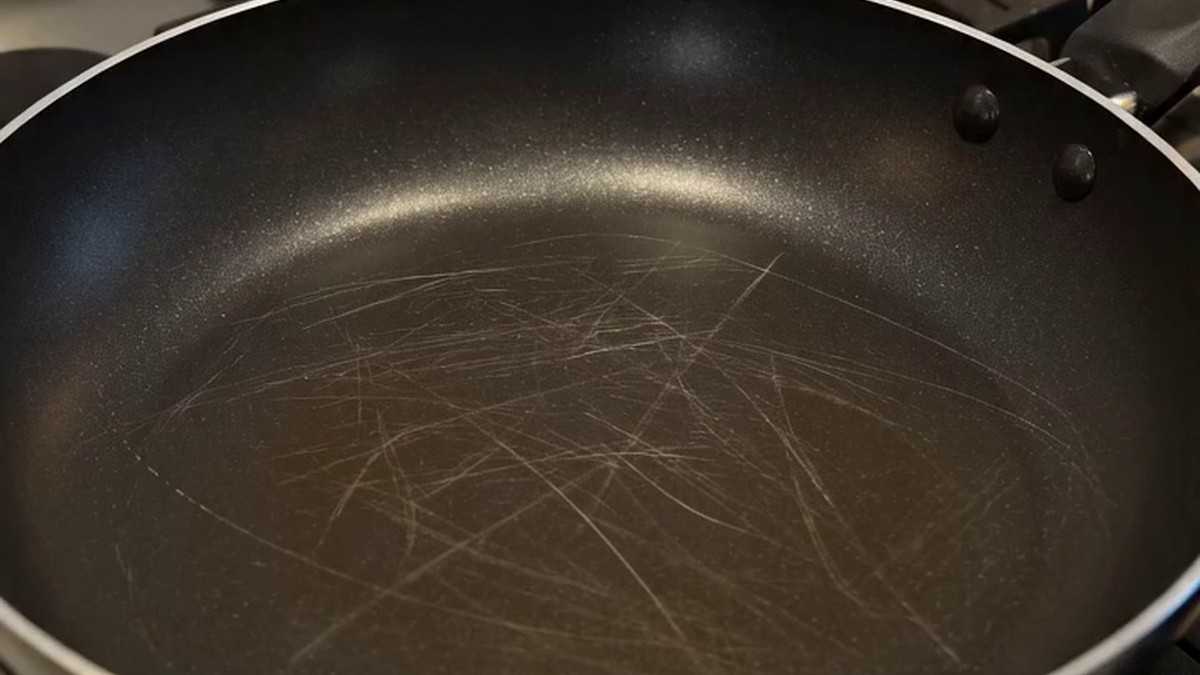
The scene was breathtaking, and not in a good way. Nina Fyodorovna stood at the stove in a floral house robe, enthusiastically scraping a metal spatula across the surface of an expensive non-stick pan. Aunt Raisa perched at the kitchen island, crumbling a bread loaf directly onto the countertop. No plate. Just crumbs, everywhere.
“Good evening,” Ksenia said.
Both women startled. Nina Fyodorovna dropped a wet dish towel into the sink, wiped her damp hands along the edge of her robe, and spread into a wide, blooming smile.
“Ksenechka! There she is! We were wondering where you’d gotten to — it’s nearly eight!”
Raisa swiveled on the barstool, taking her time. She looked Ksenia up and down the way a customs inspector eyes a suspicious package.
“So this is the wife,” she said, not to Ksenia, but to her sister, as though the person standing three feet away was a photograph on the wall. “Slim. Pale. Does she eat?”
“I eat,” Ksenia said evenly.
She set her keys on the counter — her counter — and looked at the pan. The beautiful Beka non-stick she’d spent three weeks saving for. The one with the instructions printed right on the box: *No metal utensils. Ever.* The surface now looked like a topographic map of somewhere hostile and unforgiving.
“Nina Fyodorovna,” Ksenia said, “where is Oleg?”
“He had to work late, sweetheart. He called, did he not call you? He said he’d be home by ten.” Nina Fyodorovna waved the spatula gently, as if dispersing a small cloud of worry. “We weren’t going to just sit in a hotel. What kind of family does that?”
*There was no hotel discussed. There was no plan discussed. There was nothing discussed.*
“You must be tired from the road,” Ksenia said. Her voice came out pleasant and smooth, the way ice on a river looks solid from the bank. “When did you arrive?”
“Around noon,” Raisa announced. She tore another piece from the loaf. Crumbs fell in a soft cascade onto the countertop. “We rang and rang. Neighbor finally let us in downstairs. Nice old man. Has a cat.”
“Pyotr Semyonovich,” Ksenia said automatically.
“Is that his name. He offered us tea.” Raisa chewed. “We didn’t take it. You never know.”
Ksenia turned and walked back to the entryway. She stood there alone for a moment, looking at the plaid duffel bags on her velvet bench. The rope. The dried mushrooms. She thought about Oleg — his voice last Sunday, easy and reassuring over the phone. *Just one weekend, Ksen. She needs to see a specialist. It won’t even feel like they’re there.* She had believed him. Or she had chosen to believe him, which is different.
She picked up her phone and texted him: *When exactly were you going to tell me Raisa was coming too.*
No question mark. He would feel the flatness of it.
The reply took four minutes. That was answer enough.
*I was going to explain everything tonight. Please don’t make it a thing. She had nowhere to go.*
Ksenia stared at the screen until the words blurred slightly at the edges. Then she put the phone face-down in her coat pocket and went back to the kitchen.
—
By nine-thirty, the kitchen looked like a different room. The good dish towels were soaking in something rust-colored in the sink. The pot of borscht Nina Fyodorovna had cooked — unasked, uninstructed — sat in the middle of the stove like a monument to good intentions gone structurally unsound. It smelled fine. The issue wasn’t the borscht.
The issue was the way Raisa kept opening cupboards. Just opening them. Looking in. Not taking anything, just looking, with this quiet expression of assessment, like she was filing away inventory.
“You don’t have buckwheat,” Raisa observed.
“No,” Ksenia said.
“I’ll get you some tomorrow. The good kind, not the packaged kind. You rinse it three times, people never rinse it enough.” She closed the cupboard. Opened the next one. “No sunflower oil either?”
“I use olive oil.”
Raisa turned to look at her with an expression that managed to be both blank and deeply skeptical. “For everything?”
“For most things.”
A pause. Raisa closed the cupboard.
“Hm,” she said.
*Hm.* That single syllable landed like a small stone dropped into still water, sending quiet rings out in every direction.
Nina Fyodorovna, who had the social instincts of a woman who had spent fifty years maintaining peace between large personalities in small apartments, drifted toward Ksenia and touched her arm.
“You sit, Ksenechka. You’ve been on your feet all day. We made dinner, let us feed you.”
“Thank you,” Ksenia said. “I’m not hungry yet.”
“You’re angry,” Nina Fyodorovna said quietly. Not an accusation. Just a fact, offered gently, with a kind of tired understanding in it.
“I’m not angry,” Ksenia said. “I’m surprised.”
“With Oleg.”
“With the situation.”
Nina Fyodorovna nodded slowly, and something shifted in her face — the performance of cheerfulness paused long enough to show something older and more honest underneath. “He should have told you. That’s on him.”
It was so direct and unexpected that for a second Ksenia didn’t know what to do with it.
“Raika had a falling out with her landlord,” Nina Fyodorovna continued, low. “She has nowhere to stay. It’s temporary. Two weeks at the outside.”
“Two weeks,” Ksenia repeated.
“Maybe less. She has a friend in Tula she might go to.”
Raisa, who had drifted toward the window during this exchange, turned back around. She had apparently been listening the entire time.
“I can hear you,” she said, without particular heat, as though announcing a fact about the weather.
Ksenia looked at her directly. It was the first time she had allowed herself to do that — to actually look, without the filter of composure over fury.
“Good,” Ksenia said. “Then I’ll say it plainly, Raisa. The pans in this kitchen are not for metal utensils. That’s not preference, that’s just how they work. The cupboards are organized the way I organized them. The counters aren’t a cutting board. These things aren’t negotiable.”
The room went still. Nina Fyodorovna’s hand, which had been reaching for a dish towel, stopped mid-air.
Raisa studied Ksenia for a long moment. Something moved in her expression — not quite offense, not quite respect, something in between, the look of a woman recalibrating.
“The pan was already scratched,” she said. “Nina used it before I could say anything.”
It wasn’t an apology. It wasn’t quite a deflection either. It was, Ksenia realized, probably as close as Raisa ever came to acknowledging the geography of blame.
“It wasn’t scratched this morning,” Ksenia said.
Another pause. Raisa let out a short, dry exhale through her nose.
“Fine,” she said. “I’ll stay out of the kitchen.”
“That’s not what I’m asking. You’re a guest in this home and you’re welcome to use the kitchen. I’m asking you to use it the way I use it.”
Raisa looked at her a moment longer, then gave a single, curt nod. She turned back to the window. The inventory tour of the cupboards, it seemed, was over.
The front door opened before anyone could speak again. Oleg came in trailing cold air and the defensive energy of a man who had spent an entire commute rehearsing a conversation and still wasn’t ready for it. He looked tall and slightly guilty in the entryway, jacket half-unzipped, hair messed from the wind.
He looked at Ksenia.
She looked at him.
“Hey,” he said.
“Hey,” she said.
Nina Fyodorovna took Raisa by the elbow with the efficiency of someone who has cleared a room before. “Raika, come, I’ll show you where we put your bag.” Raisa went without resistance, though she paused in the doorway just long enough to glance back at Ksenia once — assessing, still, but with something slightly different in it now. Then the hallway swallowed them both.
Oleg set his bag down. He looked at the borscht. He looked at the dish towels in the sink. He looked at the pan — really looked at it — and something crossed his face.
“The pan,” Ksenia said.
“Yeah.”
“Do not.”
“I wasn’t going to say anything.”
“Good.”
He pulled out a barstool and sat down, lacing his hands together on the counter. He had the posture of a man presenting himself for sentencing and trying to look like he wasn’t.
“She really had nowhere to go,” he said.
“I understand that now,” Ksenia said. “Your mother told me.”
“I should have called you.”
“You should have called me three days ago when you found out. Not texted me four minutes after I already knew.”
He nodded. He didn’t try to frame it differently or soften the edges. She gave him some credit for that.
“Two weeks,” she said.
“Two weeks. Less, maybe.”
“Oleg.” She waited until he looked up at her. “I need you to make the rules clear to them. Not me. You. Tomorrow morning, before I leave for work, I need you to have that conversation with your aunt. About the pans. About the cupboards. About — ” she gestured at the crumbs still scattered across the counter, visible and silent and somehow representative of everything else — “all of it.”
“Okay,” he said. “I will.”
“Not maybe-will. Not I’ll-try.”
“Okay,” he said again, and this time it landed differently. Solid. A promise shaped like a single word.
The kitchen was quiet for a moment. Outside, somewhere in the building, a door closed. The borscht made a small settling sound in its pot, cooling.
Ksenia pulled a bowl from the cabinet — not the nice ones, just the everyday stack — and ladled herself some borscht. She sat down across from him.
It was, in spite of everything, good. Rich and deep and slightly sweet from the beets. Nina Fyodorovna had always known how to cook.
“It’s good,” she said.
“It always is,” Oleg said, and reached for a bowl himself.
They ate together in the wrecked kitchen, in the apartment that smelled like someone else’s life had briefly moved in, and didn’t speak for a while. But the silence had changed quality. It was no longer the silence of two people standing on opposite sides of something.
It was just the ordinary quiet of a Wednesday night.
Down the hall, she could hear the low murmur of Raisa’s voice through the wall — telling Nina Fyodorovna something, probably at length, probably with opinions. That was fine. Raisa would have opinions about the olive oil and the blinds and the bowls and everything else, and those opinions would live down that hallway for two weeks and then travel with her to Tula, or wherever she landed. The woman wasn’t going to change. But she had looked at Ksenia in that doorway with something almost like acknowledgment, and that was enough for now.
The mushrooms in the duffel bag in the foyer could wait until morning. The pan was ruined, but pans could be replaced. The curtains Raisa wanted to hang could be declined, politely and then firmly if necessary.
Ksenia ate her borscht.
Two weeks.
She had survived worse.