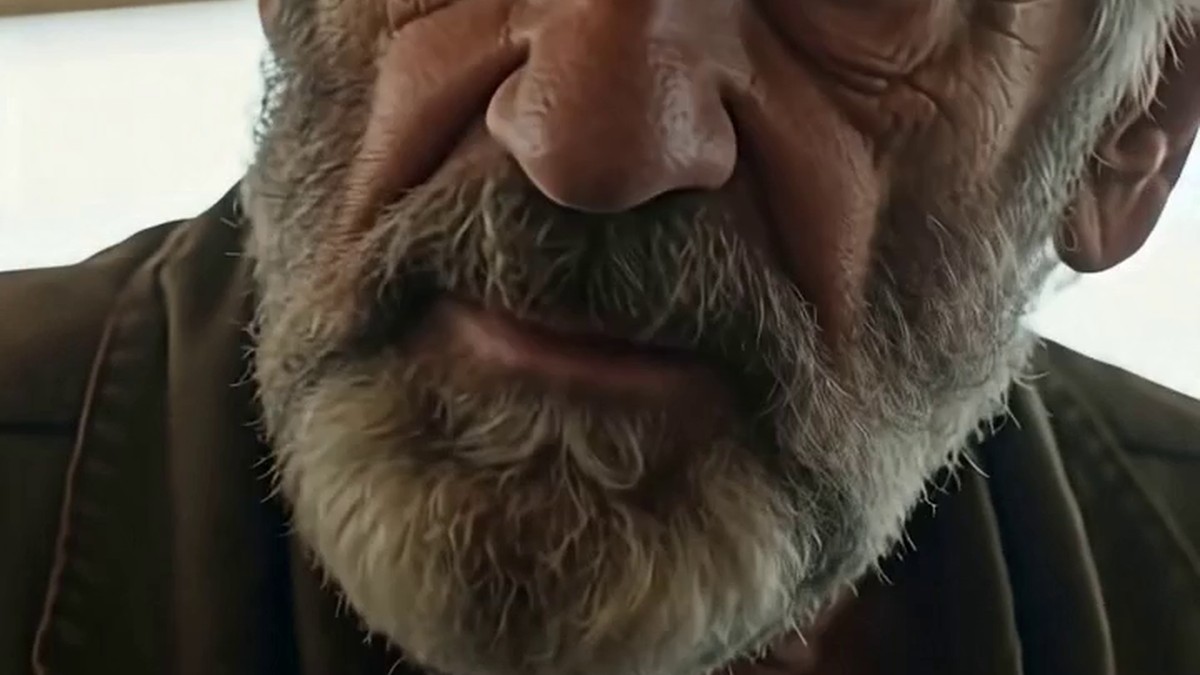
“Lily, let’s go — we have to leave. Now.”
“Grandpa… I just need to play it. One time.”
“These people aren’t interested in—” [music begins]
“…How does she know that?”
“Renata? You’ve lost all your color — what’s wrong?”
“That melody. That specific melody. I composed it. I wrote it for my daughter the night we brought her home from the hospital.”
“That can’t be right—”
“No one else has that song. It was never put to paper. I played it for her and her alone.”
“Renata, this child lives on the street — there’s no way she could—”
“What is your granddaughter’s mother’s name?”
“…Why would you ask me that?”
Full story in the first comment 👇👇👇
The old man’s jaw tightened. He pulled Lily closer, his hand pressing against her thin shoulder like a shield.
“That’s not a question I’m going to answer for a stranger,” he said.
But Renata wasn’t looking at him anymore. She was looking at the girl.
Lily had stopped playing. Her small fingers rested on the keys like sleeping birds. She was watching the woman with the white hair and the hollow eyes, and there was something in the child’s face that wasn’t confusion — it was recognition. The particular stillness of someone seeing a thing they had always known existed but never expected to find.
“Lily.” The old man’s voice came out cracked. “Lily, we’re leaving.”
“Her eyes,” Renata whispered.
“Don’t.”
“She has Marta’s eyes.”
The name landed in the room like something dropped from a great height. The old man flinched. Just slightly. Just enough.
His name was Teodor. He was seventy-three years old. He had raised Lily for four of her six years, since the morning the police came to his door and told him what had happened to his son and his son’s wife on the highway outside Gdańsk. He had packed a bag, driven eight hours, and carried the girl out of a hospital ward where she sat eating a cracker and asking for her mother in a voice so calm it had nearly destroyed him. He had brought her back to Warsaw, to his small apartment above the locksmith shop, and he had fed her and clothed her and walked her to school every morning with her hand in his until the school closed down and the money ran out and the apartment was lost and they had ended up here — moving, always moving, sleeping in doorways and in the back rooms of churches, playing music for coins in the lobbies of buildings they were always about to be thrown out of.
He had done all of this.
He had never once asked himself where the melody came from.
—
Lily had started humming it before she could form sentences. He had assumed it was something her mother used to sing. He had never pushed. Grief in a two-year-old looks like silence and then suddenly it looks like music, and you do not ask a child to explain her music. You are only grateful she has it.
But now he was standing in the lobby of a concert hall in Warsaw at eight o’clock on a Thursday evening, and a woman who composed music for a living was staring at his granddaughter like she was looking at a ghost.
“What was your daughter’s name?” he asked. His voice came out very quiet.
Renata pressed her hand flat against her sternum, like she was trying to hold something in.
“Marta,” she said. “Her name was Marta Kovalska. She was twenty-nine. She died in a car accident three years ago, on the road outside—”
“Stop.” Teodor sat down on the piano bench beside Lily. Not because he chose to. Because his legs stopped working. “Stop right there.”
The lobby had gone quiet. The two young musicians who had been standing near the door had moved closer without seeming to, the way people do when something real is happening. The lights overhead hummed faintly.
Lily looked up at her grandfather. “Dziadek,” she said softly. “It’s okay.”
He looked at her. This child he had carried. This child who hummed in her sleep and played piano on any surface she could find — tabletops, windowsills, the backs of bus seats. This child who never cried, not once, not since the hospital, and who sometimes stood very still in crowds as if she were listening for something only she could hear.
“Her mother’s name,” he said. “Her mother’s name was Marta.”
Renata made a sound that was not quite a word.
“My son met her at a concert,” Teodor continued. He was speaking to the floor, or to no one, or to the version of himself that had not known until this moment what he now knew. “He never told me much about her family. She was estranged from them, he said. Something painful. He didn’t press her on it and neither did I.”
“She left.” Renata’s voice was barely audible. “We had a — we said things. I said things I cannot take back. She left and I looked for her for two years and then I — I stopped. God forgive me, I stopped looking.”
“She didn’t know you were looking.”
“No. She wouldn’t have.”
Lily slid off the bench and stood in front of Renata. She was very small and very straight, the way children are when they are being brave on purpose.
“You wrote that song for my mama,” she said. It was not a question.
Renata went to her knees on the marble floor. It was not graceful. It was the movement of a woman whose body had simply decided that standing was no longer possible.
“Yes,” she said.
“She used to sing it to me.” Lily’s brow furrowed with the effort of memory. “When it was dark. She said it was the first song she ever knew.”
Renata reached out, very slowly, and Lily let her. The woman’s hands — the hands that had composed two hundred pieces of music and never once written down the lullaby she had made up in a maternity ward on a November night twenty-nine years ago — settled gently on the girl’s face.
For a long moment nobody spoke.
Teodor looked at this woman — this stranger, this not-stranger — kneeling on the floor of a concert hall lobby with his granddaughter’s face in her hands. He thought of all the years he had carried the child without knowing what he was carrying toward. He thought of Marta, who had been estranged and then found and then lost again, and who had somehow passed the only piece of her mother she still possessed — a song she never heard again except inside herself — down to a daughter she would not live to watch grow.
He thought: *the things we carry without knowing their names.*
“She’s going to need somewhere to sleep tonight,” he said. His voice came out rough. “We both are.”
Renata looked up at him. Her face was a wreck. It was the most honest face he had seen in years.
“Yes,” she said. “I know. I have a house. I have — there is a room.” She stopped. Started again. “There are many rooms. They’ve been empty for a very long time.”
Lily looked at her grandfather with a question in her eyes.
Teodor put his hand on the girl’s head. He was a man who did not trust easily and had not cried since his wife died eleven years ago, and he had grave doubts about the wisdom of what he was about to agree to.
“One night,” he said. “We’ll start with one night.”
—
They left the concert hall together, the three of them — the old man and the small girl and the woman who had stopped believing she deserved to find what she was looking for.
Outside, Warsaw was cold and lit gold and entirely indifferent to what had just happened in its lobby. Trams rang in the distance. Someone was selling roasted chestnuts from a cart near the corner.
Lily slipped her hand into Renata’s. Just like that, without asking. The way children do when they have decided something.
Renata looked down at the small hand in hers.
She did not speak. She did not have words for it yet — maybe she never would, not fully, not in any language. But she held on.
And for the first time in three years, she walked somewhere with the feeling that the destination was not arbitrary. That the city was not just a place she moved through but a place she lived in. That the rooms waiting at home were not a monument to absence but simply — rooms. Waiting to be filled.
Behind them, through the glass doors of the lobby, the piano stood silent in the light.
The melody hung in the air a little longer.
Then it, too, moved on.





