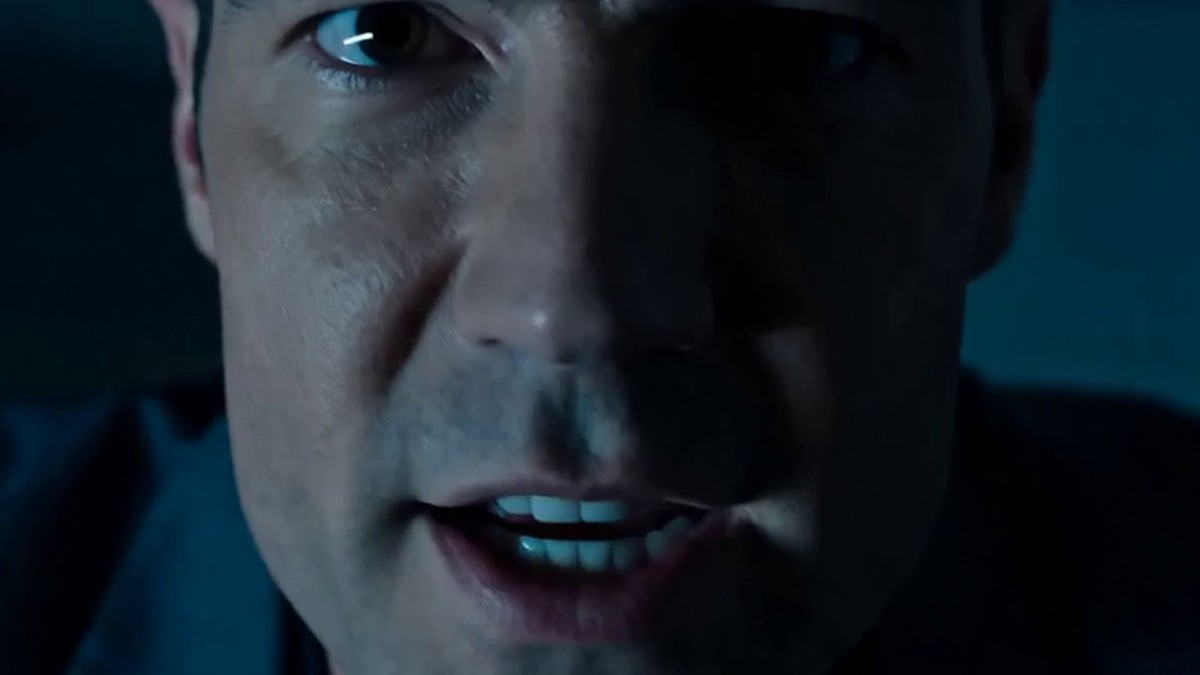
“Please don’t hang up. I believe I just listened to your ex-husband map out your public humiliation.”
My first instinct was that someone was pulling a cruel joke.
My four-year-old twins were sprawled across the living room carpet, ramming toy cars into a cardboard garage they’d constructed out of old boxes and sheer determination, while I stood at the kitchen counter doing the math on a grocery budget that had no good answers. The weight of everyday life was already pressing down hard enough. A stranger’s phone call rewriting the rules — that wasn’t even on the list of things I was bracing for.
But before that call, there had been the text.
Justin Fletcher.
My ex-husband.
The man who had a gift for making every scar feel like something I’d inflicted on myself.
His message was brief. Economical. The kind of short that’s really a weapon.
He insisted I come to his cousin’s wedding. Said it would be “good for me” to witness how far he’d climbed. He told me to bring the boys.
Like they were decorative. Like my children were furniture he could arrange to complete the picture.
I knew Justin too well to mistake this for kindness.
He wanted me standing in a corner somewhere looking threadbare while his relatives measured me with their eyes. He wanted murmurs passing behind champagne flutes. He wanted the visual contrast — my worn jacket beside his tailored suit, my exhaustion beside his polished ease. He wanted the room to confirm the story he’d been telling about me: that he had ascended while I had simply stayed behind, barely keeping my head above water.
And the worst part wasn’t even the cruelty.
It was how much he would enjoy it.
I told myself not to let it in.
It got in anyway.
The tears arrived before I had any say in the matter, and my boys caught it immediately the way small children always do. Mason looked up first. Then Toby, in that soft, careful voice he uses when he already suspects the answer, asked the question that split me open.
“Does Daddy not like us anymore?”
I sank to the floor and pulled them both into my chest so fiercely they let out little gasps of surprise.
“No, sweetheart,” I managed, fighting to hold my voice together. “Sometimes people lose sight of the most valuable things right in front of them. That’s their failure. It has nothing to do with you.”
That was the moment my phone rang.
Unknown number.
I nearly let it go.
Part of me wishes I had.
But something — instinct, exhaustion, sheer coincidence — made me answer.
The voice was measured. Steady. A man who had learned a long time ago how to keep himself contained.
“My name is Maxwell Kendrick,” he said. “Please stay on the line. I think you need to hear what your ex-husband has been arranging.”
Every nerve in my body went rigid.
He explained that he’d been seated downstairs in a restaurant when he heard Justin carrying on with a group of friends. Not piecing things together. Not reading between lines. He had simply heard the words, loud and unguarded, the way men speak when they’re absolutely certain no one worth worrying about is listening.
And according to Maxwell, Justin had been laughing.
Laughing about how wrecked I’d look walking into the reception. Laughing about how his relatives would react when they got a look at me. Laughing about the specific satisfaction of watching the moment I understood that every single person in that room felt sorry for me.
My stomach turned over completely.
Then Maxwell told me the part that was worse.
The house.
The home where my boys learned to walk. Where they pressed their small handprints into everything and made it ours.
The home Justin had sworn he was forced to sell because of financial trouble.
He had lied about that too.
I stood locked in place at my kitchen counter, fingers wrapped around the edge like it was the only solid thing left, while behind me my children kept playing, entirely unaware that the version of the past I’d built my survival on was fracturing at the seams.
Maxwell Kendrick was nothing to me at first. Just a wealthy stranger delivering information I wasn’t sure my body could process.
But then his voice changed.
“I saw your boys yesterday,” he said, and the words came out careful and low. “They looked like little kings.”
Something in me moved before I could think about it.
Because he didn’t sound entertained.
He sounded furious.
He told me he understood what public humiliation does — not just to the person it’s aimed at, but to every small witness standing nearby. He said men like Justin never account for the collateral damage. They’re too focused on the performance to see what it costs the children watching from the edges.
Then he came upstairs.
And sitting across from me, he laid out every detail he’d overheard, and didn’t spare me a single word of it.
Then he made an offer so staggering that the laugh came out of me before I could catch it.
Justin had built his whole evening around watching me arrive defeated.
But Maxwell was proposing something else.
He was promising me that when I pushed open those ballroom doors, not one person in that room would be looking at me with pity.
They would be watching me take it all back.
The laugh died almost as quickly as it arrived.
I looked at Maxwell Kendrick the way you look at something that doesn’t quite fit the landscape — trying to find the angle, the hidden cost, the thing you’ll regret later. He was sitting across from me at my kitchen table with his jacket folded over the chair and his sleeves rolled to the forearm, and he looked entirely too composed for a man who had just walked into a stranger’s life and offered to detonate it in the best possible way.
“Why?” I asked.
He didn’t hesitate.
“Because I have a daughter,” he said. “And I’ve spent the last twelve years making sure no man ever makes her feel the way your voice sounded when you answered that phone.”
That was all he gave me.
It was enough.
—
What followed was three hours that still feel slightly unreal when I replay them.
Maxwell made calls the way other people breathe — with the complete assumption that the world would respond. A stylist materialized at my apartment door with a rolling rack and the kind of quiet efficiency that makes you feel simultaneously rescued and embarrassed. Two women who barely looked at the price tags of anything pulled and pinned and assessed until I stopped seeing myself in the mirror as a woman drowning in a grocery budget and started seeing something else entirely.
The boys thought it was a carnival.
Mason tried on a fascinator and wore it for forty minutes. Toby gave everyone unsolicited feedback with the terrifying confidence of a four-year-old design critic. Maxwell sat on the couch between them, looking like a man who hadn’t expected to spend his Thursday evening watching twins argue about which shade of burgundy was, quote, “more mommy,” and somehow looking completely unbothered by it.
At one point I caught him helping Toby build a new section of the cardboard garage with the focused gravity of a man closing a real estate deal.
I didn’t know what to do with him.
I still wasn’t sure I trusted any of it.
But at seven forty-five, I was standing in front of the mirror in a deep navy dress that fit me the way expensive things do — like it was designed for my body specifically, like it had been waiting — and I didn’t recognize myself. Not in a bad way. In the way you feel when something you’ve lost so long you stopped grieving it suddenly comes back into view.
My neighbor Pam came to sit with the boys. I kissed them both with a ferocity that made Mason wipe his cheek and Toby grab my face in both small hands and say, very seriously, “You look like a queen, Mama.”
I had to stand in the hallway for a full minute before I could trust my face again.
—
The Alderton Grand wasn’t subtle about what it cost to get through its doors.
Everything was marble and candlelight and the particular kind of floral arrangement that exists to demonstrate the scale of someone’s ambition. The valet line was a slow parade of luxury vehicles, and through the tall windows I could already see the room filling — tailored suits, glossy updos, the warm amber glow of a party that had decided it was important.
Maxwell put his hand lightly at the small of my back as we came through the entrance.
“You don’t have to perform anything,” he said quietly, close enough that only I could hear. “Just walk like you already know the ending.”
I thought about Mason and Toby at home dismantling their cardboard garage and probably rebuilding it wrong and being perfectly happy about that.
I thought about the version of myself that had almost walked in here hollow-eyed and apologizing for existing.
I straightened my spine until it felt architectural.
And I walked through those doors.
—
I felt the moment Justin saw me.
I didn’t have to look for him. The shift in the room was subtle but seismic — that particular stillness that ripples out from a single point of disruption. He was standing near the bar with a cluster of his cousins, drink in hand, wearing the satisfied expression of a man who had already decided how the night was going to go.
And then he saw me.
I watched the expression move across his face in stages. The initial scan, the double-take, the recalibration — and finally something I had never quite seen from Justin Fletcher before.
Uncertainty.
I didn’t look away. I didn’t smile. I just let him look.
Maxwell stayed easy at my side, unhurried and utterly unbothered, and I could feel the collective assessment of the room adjusting in real time. Who is that with her. How does she look like that. Wait, is that Maxwell Kendrick.
Because apparently — and this was information I hadn’t fully absorbed until his phone wouldn’t stop buzzing in the car — Maxwell Kendrick was not simply a wealthy man with good instincts and a protective streak. He was the kind of name that made rooms rearrange themselves.
Justin started toward us.
I had wondered if he would. I had spent part of the car ride mentally rehearsing the version where I turned away, where I kept my distance, where I chose grace as a form of invisibility.
But I found I didn’t want to be invisible.
Not tonight.
He crossed the floor with that particular gait of his — the one that announced he believed he was moving toward something he owned. He’d had twelve years to perfect it. The cousins trailed him at a half-step like punctuation.
“Nora.” He said my name like he was doing me a favor. His eyes cut sideways to Maxwell, and the calculation in them was instant and ugly. “I didn’t expect—”
“I know you didn’t,” I said.
Quiet. Steady. The words landing exactly where I put them.
He glanced between us again, reassembling. “You look—”
“Justin.” I didn’t raise my voice. I didn’t need to. “I know about the house.”
The words went into the air between us and stayed there.
The cousin to his left shifted his weight. Justin’s jaw moved once without producing anything.
“I know you heard something,” he started. “I don’t know who’s been—”
“There was a buyer waiting,” I said. “The whole time. While you were telling me there was nothing left. While I was figuring out how to explain to two four-year-olds why we couldn’t go back to their bedroom.”
His neck was coloring above his collar. I could see it even in the candlelight.
“This is not the place to—”
“You built this evening around me walking in here defeated,” I said. “You wanted your family to see me struggling. You thought it would feel like something.”
Around us, the conversational hum of the party had quieted in a radius of about ten feet. People were not staring. People were doing that careful thing where they appear to be looking somewhere else while absorbing every single syllable.
“So I want you to understand something.” I let myself take one slow breath. “Mason asked me last week if you still loved him. He’s four years old and he’s already learning to brace for your answer. That’s what I want you to think about tonight. Not me. Not whatever story you’ve been telling. Him. Sitting on that carpet asking questions he shouldn’t have to ask yet.”
Justin’s mouth opened.
Closed.
He had never once, in the entire time I’d known him, been at a genuine loss. He always had a reframe, a redirect, a weapon he could repurpose on the fly. He had a response for everything I’d ever said to him before.
He didn’t have one for Toby’s voice.
He didn’t have one for Mason’s question.
Because you can’t argue your way around a child’s grief. You can’t make it stylish. You can’t turn it into a story that makes you the protagonist.
He looked, for just a moment, like someone who had finally located the exact weight of what he’d been carrying without noticing.
Then his cousin muttered something low, touched his arm, and they moved away.
Not loudly. Not dramatically. Just — away.
—
Maxwell handed me a glass of something sparkling and didn’t comment on what had just happened. He didn’t perform admiration or say something crafted to fill the space.
He just stood next to me and looked out at the room.
“You okay?” he asked eventually.
“I don’t know yet,” I said. Honest.
“That’s fair.”
We stood like that for a moment — two strangers who had arrived here by way of a stranger’s phone call and a cardboard garage and the question a small boy had aimed at his mother on a Thursday afternoon — and I felt something I hadn’t felt in so long I’d almost forgotten the texture of it.
The specific, solid weight of having said the true thing.
Of not having swallowed it.
Of standing in a room where someone tried to make you small and declining to become small.
The party continued around us. Music started somewhere across the ballroom. People drifted toward the dance floor. The bride and groom were luminous in that way people are when the whole room is loving them, and the night settled into itself and stopped caring about Justin Fletcher and his architecture of small cruelties.
Somewhere across the city, Mason and Toby were demolishing and rebuilding their cardboard world with the cheerful absolutism of people who don’t yet know that some things can’t be reconstructed once you’ve taken them apart.
I thought: I am going to tell them the truth. Not all of it. Not tonight. But piece by piece, year by year, the real version — that loss happens, and people fail you, and you still get to decide what you do with the space that leaves behind.
I thought: they are going to be okay.
I thought: so am I.
—
Maxwell drove me home just after eleven.
He walked me to my door the way someone does when they mean it as a gesture and not an expectation, and at the threshold we stood for a moment with the small sounds of a sleeping apartment building around us.
“For what it’s worth,” he said, “I’ve been in a lot of rooms with a lot of people who had every advantage possible. I’ve never seen anyone do what you just did with nothing but the truth.”
I looked at him.
“It wasn’t nothing,” I said. “My kids handed me that.”
He smiled. And it was the most unguarded thing I’d seen from him all evening — genuine and a little unsteady, the smile of a man who had been moved by something he didn’t fully expect.
He left me his number — written on actual paper, which charmed me despite myself.
I stood in the doorway until the elevator doors closed, then I leaned my back against the frame and tilted my head up and just breathed.
Inside, I could hear Pam moving around softly, the low murmur of the television, and underneath it the even, unconscious breathing of two small boys sleeping hard after an evening of architectural ambition.
I pushed off the doorframe and went in.
I kissed them each once, Mason first and then Toby, light enough not to wake them.
And then I sat down on the edge of the couch in my navy dress and the quiet of a night that had tried to be something devastating, and wasn’t — and I let myself feel the whole complicated, fragile, improbable weight of still being here.
Still standing.
Still theirs.