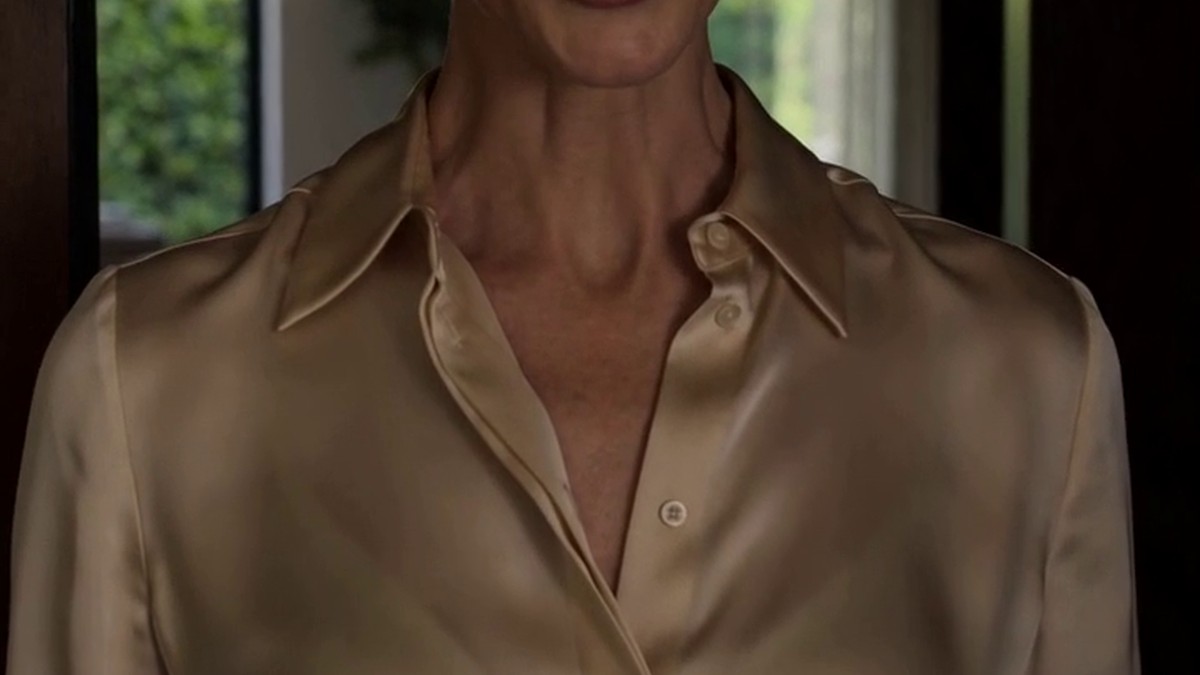
“If the old lady stops eating, all the better… she’ll stop being a problem a lot sooner.”
Mariana went rigid behind the kitchen door. The damp rag twisted between her fingers. Camila Aranda’s voice had been smooth, almost musical — and that made the words land harder, like a blade wrapped in silk. The air inside the Las Lomas de Chapultepec mansion felt suddenly unbreathable.
The Aranda estate was the kind of place that made strangers slow their cars to stare. White walls. Marble floors that reflected the light like still water. Floor-to-ceiling windows. A garden so immaculate it seemed artificial, as though no leaf would dare fall without permission. Everything about it said: a fortunate family lives here.
Mariana had been on staff for three weeks.
She already knew better.
Behind that perfection lived something else entirely.
Silence where there should have been laughter. A coldness that had nothing to do with air conditioning. A sadness that didn’t hang on the walls — it soaked into them.
Santiago Aranda, the man of the house, was the kind of millionaire whose face appeared in business journals and morning talk shows. He moved through the mansion like a guest — phone pressed to his ear, briefcase in hand, always arriving and disappearing as though home were just another appointment.
His wife, Camila, was stunning. Young, poised, the sort of woman who knew exactly how to smile for a room. In public, she was grace itself.
And then there was Doña Consuelo. Santiago’s mother. Seventy-nine years old, with white hair pinned carefully at the nape of her neck and dark eyes that must have once burned bright. When Mariana first saw her, the old woman looked like a portrait of someone who had already half-left the world.
Her clothes swallowed her. Sweaters hung off shoulders that had grown too narrow to hold them.
She rarely spoke.
Most days she sat in a green velvet armchair and watched the garden through the glass, as if she were waiting — not hoping, just waiting — for someone to come.
Mariana assumed it was her age. Grief, maybe. The slow erosion of years.
Then she started paying attention.
Doña Consuelo’s food came back to the kitchen almost exactly as it had left. Soup with one spoonful missing. Rice rearranged to look disturbed. Fruit turning brown at the edge of the plate, untouched.
And every evening, without fail, Camila would touch Santiago’s arm and say sweetly:
“She had a wonderful appetite today, love. She even asked for a second bowl of broth.”
The old woman would drop her eyes to the floor.
Santiago, worn down by another long day, would nod, press a kiss to his mother’s forehead, and reach for his phone before he’d even straightened back up.
Mariana watched from the kitchen doorway.
Still. Unnoticed.
Just the way Camila needed her to be.
One morning, dusting the living room, she slid her hand between the cushions of Doña Consuelo’s armchair and pulled out three crackers — crumbling, wrapped in a paper napkin. Tucked further in, a heel of bread, stale and hard, hidden like something precious.
Mariana stood there holding it.
Her eyes burned.
The woman wasn’t losing her appetite.
She was being starved.
After that, Mariana watched everything.
She noticed that Doña Consuelo’s medications lived in a locked box only Camila could open. She noticed that sometimes, alongside the prescribed pills, Camila would tip a few drops of something clear into a glass of water — no label, no explanation.
“It helps her rest,” she’d say.
After those glasses, the old woman would sleep for half a day. When she surfaced, her eyes were glassy and her mouth hung slightly open, like a door left ajar.
Mariana saw the bruises along Doña Consuelo’s forearms. Camila said she bumped into things.
She found damp bed sheets sealed inside plastic garbage bags and shoved to the back of a closet.
She found a stack of unopened envelopes in the trash — letters addressed to Doña Consuelo, every one of them from a sister in Puebla.
She watched Camila unplug the telephone in the old woman’s room.
She watched her cancel the physical therapist.
One quiet erasure at a time, Camila was removing Doña Consuelo from the house while the woman was still living in it.
On a Tuesday, Mariana made a decision. She peeled a guava, cut it into thin slices, and carried the plate to the armchair herself.
Doña Consuelo looked at the fruit the way a person looks at something they thought they’d never see again.
“Thank you, sweetheart,” she breathed. Her voice barely made it past her lips.
She managed two pieces.
Then Camila appeared in the doorway.
No raised voice. No theatrics. She crossed the room, lifted the plate from the old woman’s lap, and fixed Mariana with a look that measured and dismissed her in the same second.
“In this house,” she said evenly, “my instructions are what matter. A housekeeper does not decide what a sick woman puts in her mouth.”
Mariana looked down.
But something inside her didn’t.
That night, Santiago came home after everyone should have been asleep. Camila was waiting.
“She was peaceful today. Slept most of the afternoon.” A practiced pause. “She’s getting more confused, Santi. A little worse every week.”
From the armchair, Doña Consuelo gathered everything she had and raised one trembling hand.
“Santi—”
Camila’s fingers closed around her shoulder.
“Don’t wear yourself out, sweetheart,” she said — and the words were aimed at Santiago, not the old woman. “She barely knows what she’s saying anymore.”
He didn’t move closer. He didn’t kneel down. He looked at his mother from the doorway and nodded once, slowly, the way a man nods when he’s decided to believe something because believing anything else is too heavy to carry.
The fury that rose in Mariana was quiet and total.
The following afternoon, she was straightening Santiago’s office when a brochure slipped from between two folders.
*Santa Aurelia Residence — Specialized Care for Patients with Advanced Dementia.*
Doña Consuelo’s full name was written in the top corner. In Camila’s handwriting.
The picture clarified instantly, the way things do when you finally see the frame they’ve been building around you.
Camila didn’t just want the old woman sick. She wanted her certified as lost — documented, labeled, and shipped somewhere with locked doors and no one who would believe a word she said.
That same afternoon, Doña Consuelo caught Mariana’s wrist as she passed the armchair. Her grip was startling. Urgent.
“Don’t leave me alone with her,” the old woman whispered.
Mariana opened her mouth.
And from the hallway, clear and deliberate, came the sound of a key turning in a lock.
Camila had just locked Doña Consuelo’s bedroom door from the outside.
Mariana stood there in the silence that followed and understood one thing with cold certainty: if she did nothing, this woman would not make it to the end of the month.
She pulled out her phone.
Her hands weren’t steady. She made herself hold them still anyway.
The recording app opened. She pressed the red button. Slipped the phone into her apron pocket with the microphone facing out, and walked to the hallway.
“Señora Camila.”
Her voice came out level. That surprised her.
Camila appeared at the far end of the corridor like something summoned — composed, unhurried, the key still in her hand.
“I was just explaining to Doña Consuelo that she needs to rest,” she said. Pleasant. Impenetrable.
“She was asking for you,” Mariana said. A lie. She delivered it cleanly. “She said she feels dizzy.”
A flicker crossed Camila’s face — not concern. Calculation.
“She always feels something.” She turned the key over in her fingers. “That’s the disease, Mariana. I’ve explained this.”
“What disease, exactly?”
The corridor went very quiet.
Camila tilted her head. “I’m sorry?”
“Her diagnosis,” Mariana said. “I’ve never seen paperwork. I’ve never seen a doctor come.”
The temperature in the hallway dropped by several degrees. Camila’s smile didn’t disappear — it transformed. Thinned. Became something with edges.
“You’ve been here three weeks,” she said. “And you’re asking me for medical documentation.”
“I’m asking because she’s not eating.”
“She has no appetite. That’s common with—”
“I found the crackers,” Mariana said. “In the armchair. And the bread.”
Silence.
“She’s not forgetting to eat,” Mariana continued. “She’s hiding food because she’s afraid someone will take it from her. That’s not dementia, señora. That’s something else.”
Camila looked at her for a long moment. The look was quiet and thorough, the way a person examines a nail they’re about to pull from a wall.
“You should be very careful,” she said softly, “about the kinds of stories you decide to tell.”
She unlocked the bedroom door, stepped inside, and pulled it gently closed behind her.
Mariana pressed her back against the wall and breathed.
Her phone was still recording.
—
She did not sleep that night.
She sat on the narrow cot in the service room with her phone plugged in and her knees pulled to her chest, listening to the house settle around her. At two in the morning she played back everything she had recorded — the hallway exchange, her own voice shaking slightly at the edges, Camila’s voice not shaking at all. Then she went further back in her call log and found the recording from three days earlier. The one she hadn’t planned.
She had left her phone on the kitchen counter to charge. Camila had come in while Mariana was in the laundry room and hadn’t noticed it there — or hadn’t thought it mattered.
*”If the old lady stops eating, all the better… she’ll stop being a problem a lot sooner.”*
And then a laugh. Brief. Light. Like she was talking about a plant.
There was a second voice on the recording. A man’s voice Mariana hadn’t recognized at the time. She listened again. He said: *”The residence will take her within the week once you have the signature.”*
*”Santiago will sign anything I put in front of him,”* Camila had answered. *”He already thinks she’s gone.”*
Mariana sat with that sentence for a long time.
Then she opened her contacts and found the number for Licenciado Fuentes — the family lawyer whose card she had seen pinned above Santiago’s desk, and whose office number she had memorized the same way she had memorized everything in this house: carefully, without knowing yet why she would need it.
She sent a text message at two-fourteen in the morning. She did not expect an answer until daylight.
She had barely set the phone down when it rang.
—
Licenciado Fuentes was sixty-two years old and had a voice like old wood — dry, solid, the kind that didn’t bend in a conversation. He had represented the Aranda family for over twenty years. He had watched Santiago’s father build the business from a single cold-storage warehouse. He had held Santiago’s hand at the funeral.
He had also, it turned out, been receiving calls from a woman in Puebla for the past six months.
“Doña Consuelo’s sister,” he told Mariana. “She said the letters weren’t arriving. I assumed — I assumed there was confusion on her end.” A pause that carried the weight of a man understanding what he had not wanted to understand. “Send me the recordings. Tonight.”
“And then what?”
“Then you make sure the señora does not leave that house until I arrive in the morning.”
—
Morning came gray and close, the sky pressing down over the garden like a lid.
Mariana was in the kitchen when she heard Santiago’s shoes on the marble — the quick, purposeful stride of a man who had already mentally moved on to his first meeting. She stepped into the doorway before he reached the front door.
“Señor Aranda.”
He stopped. Looked at her with the polite distraction of a man who can’t quite place a face in context. “Yes—”
“Mariana,” she said. “I’ve worked here three weeks.”
“Of course.” A glance at his watch. “Is something—”
“Your mother hasn’t eaten a real meal since I arrived.”
The distraction in his eyes flickered. “She has a condition, Camila explained—”
“Camila is the condition,” Mariana said.
The words fell between them like something dropped from a height. Santiago looked at her the way people look at a stranger who has just said something unacceptable in polite company — the rigid, automatic outrage of a man whose world has rules.
“I think,” he said carefully, “you should remember your position here.”
“Your mother asked me not to leave her alone,” Mariana said. “Those were her exact words. Don’t leave me alone with her.” She pulled her phone from her apron. “I have a recording of your wife talking about how convenient it would be if Doña Consuelo stopped eating. I have a recording of her discussing a plan to have you sign documents you don’t know you’re signing. Your family’s lawyer has already heard both. He’s on his way.”
Santiago did not move.
He looked like a man who had stepped onto a bridge and felt it shift beneath him — not falling, not yet, but suddenly aware for the first time that the ground beneath his feet was not what it had seemed.
“That’s not—” He stopped. Started again. “Camila wouldn’t—”
The staircase behind him spoke.
“What is going on down here?”
Camila stood at the top of the stairs in a pale silk robe, her hair loose, one hand resting on the banister. She looked beautiful and unhurried and absolutely certain of herself. Her eyes moved from Mariana to Santiago with the speed of someone assessing damage.
Then she saw the phone in Mariana’s hand.
Something crossed her face. Something she recovered from almost instantly, but not quite.
Almost.
“I was just telling your husband about Doña Consuelo’s appetite,” Mariana said.
“We’ve discussed this.” The voice was warm. Aimed entirely at Santiago. “Santi, this woman went through your mother’s room without authorization, she’s been feeding her without asking me, and now she’s—”
“She’s hiding food in her chair,” Santiago said.
Camila blinked.
“Mariana told me.” His voice had changed. Something in it had settled, like silt dropping to the bottom of water that had finally stopped moving. “My mother is hiding food in her chair, Camila. Why would a woman with dementia hide food?”
“Because she’s confused—”
“A confused person forgets they’re hungry.” He took one step toward the staircase. “A frightened person hoards.”
The front door opened behind Mariana without a knock.
Licenciado Fuentes was a compact man with silver hair and a dark coat and the particular composure of someone who has seen enough of human nature that very little of it surprises him anymore. He carried a leather briefcase. Behind him, pausing on the threshold, was a woman in her mid-seventies with Doña Consuelo’s eyes — the same dark, watchful intelligence — and the expression of someone who had driven four hours from Puebla and intended to be answered.
“Señora Aranda.” The lawyer nodded at Camila without warmth. “I think we should all sit down.”
“This is my home,” Camila said. Her voice had taken on a new quality — a hardness underneath the silk, the texture of something that was being revealed rather than added. “You don’t walk into my home without—”
“Consuelo.” The woman from Puebla pushed past the lawyer and past Mariana and past everything else in the room as though none of it existed. Her name was Elena, and she had been sending letters to her sister for eight months and receiving silence in return, and she had no interest in anyone’s floor plan or anyone’s manners or anyone’s careful management of anyone else’s narrative.
She crossed straight to the staircase and went up.
—
They found Doña Consuelo in her armchair by the window.
She was awake. She had been awake for some time, Mariana suspected — sitting in the thin gray morning light with her hands folded in her lap, watching the garden, waiting with the patience of someone who has been waiting long enough that hope and waiting have become indistinguishable.
When Elena came through the door, Doña Consuelo turned her head.
For a moment she simply looked at her sister.
Then something in her face came apart — not dramatically, not in the way of movies, but quietly, the way a knot loosens when the right amount of steady pressure is finally applied. Her chin dropped. Her shoulders rose and fell once, hard.
“I thought you forgot me,” she said.
“Never,” Elena said. “Never once.”
She sat on the edge of the bed and took both of her sister’s hands, and the two old women stayed like that while the room filled with the kind of silence that is not empty at all.
—
Downstairs, it did not go smoothly.
Camila was not a woman who surrendered quietly. She was articulate and fast and she had clearly rehearsed for interrogations she’d anticipated before this one — she cited Doña Consuelo’s confusion, her wandering, her dangerous tendency to fall. She spoke about the physical therapist with professional regret, claimed schedule conflicts. She produced, from somewhere, the composure of someone who has decided that if the story must change, she will narrate the change herself.
But Fuentes had the recordings.
And he had something else: a signed statement from the doctor Camila had used to begin Doña Consuelo’s dementia assessment — a doctor who, when contacted at seven that morning and told that an attorney representing the family was reviewing the file, had become suddenly and very specifically forthcoming about the nature of his relationship with Camila, and with the man on the recording whose voice Mariana had heard and not recognized.
Camila’s brother. A physician. A business arrangement.
Santiago sat in the chair that had always been his father’s chair and did not speak for a long time.
When he finally did, he looked at his wife. Not with rage — with something worse. The face of a man seeing a familiar room and understanding for the first time that the walls were painted on.
“The papers,” he said. “The ones you said I needed to sign for the residence.”
“Santi—”
“Did I sign them?”
Silence.
“Did I sign them, Camila.”
She looked at him with those careful, beautiful eyes, and for the first time Mariana saw the calculation in them stripped of its cover — naked and cold and just slightly desperate.
“I was protecting you,” she said finally. “She was going to be a burden for the rest of your life. I was protecting us.”
“From my mother,” he said.
She didn’t answer.
He stood up. Slowly. With the deliberateness of a man making sure his legs will hold him before he trusts them.
“Fuentes,” he said. “Tell me what I need to sign to undo whatever she’s done.”
—
Camila left the house that afternoon with two bags.
She did not make a scene on her way out. That was the most frightening thing about her, Mariana thought — even in defeat, she was controlled. She walked to the car that came for her with her chin level and her keys in her hand, and she did not look back at the house. Whatever she felt, she would feel it somewhere else, in private, where it couldn’t be used against her.
Mariana stood at the kitchen window and watched the car until it was gone.
Then she turned back to the stove.
—
She made soup.
Not the thin, indifferent broth that had been arriving at Doña Consuelo’s armchair for weeks — real soup, with poblano strips and a good bone broth and the smell of it filling the kitchen like a declaration.
She carried it upstairs on a tray with a glass of juice and a small dish of sliced guava, because that was what the old woman had looked at like she’d thought she’d never see it again.
Doña Consuelo was still in the armchair. Elena sat on the ottoman beside her, the two of them talking in the low, continuous murmur of people with decades of catching up to do. Santiago sat on the edge of the bed, leaning forward with his elbows on his knees, listening to his mother the way he should have been listening for years — without his phone, without the distance, without the buffer of a woman who had made it too easy not to look.
Mariana set the tray down on the side table without a word.
Doña Consuelo looked at the soup. Then at her.
“You made this?” she asked.
“Yes, señora.”
The old woman picked up the spoon. Her hand trembled slightly — it was thin, the skin fine as paper — but it was steady enough.
She took a sip.
Closed her eyes.
“That,” she said, “is how it’s supposed to taste.”
—
Mariana gave her notice the following week.
She didn’t owe anyone an explanation, but Santiago asked for one anyway — not with the entitlement of an employer but with something more honest than that, sitting across from her in the kitchen while the house moved quietly around them, reclaiming itself.
“You could stay,” he said. “We’ll need help, while my mother recovers. Elena’s going to be here for a while, but—”
“I know,” Mariana said. “But I don’t think I’m built for this kind of quiet afterward.” She looked at her hands on the table. “I need to know something happened and then I need to go.”
He was quiet for a moment.
“It happened,” he said.
She nodded.
What she didn’t say — what she carried out with her two weeks later, folded into the small bag she’d arrived with — was this: she had come to this house believing that the worst thing about the world was cruelty. She left understanding that the worst thing was the way cruelty learned to wear patience. Learned to smile, and wait, and frame its victims before they knew the photo was being taken.
What she also carried out: the knowledge that sometimes the only thing standing between a person and erasure is someone who is supposed to be invisible. Someone with a damp rag and a phone in her apron pocket and the stubborn, quiet refusal to look away.
—
Doña Consuelo gained four pounds in the first month.
Her sister moved in through the spring. The physical therapist came back — a different one, one the old woman actually liked. The letters from Puebla stopped going into the trash.
Some mornings she sat in the green velvet armchair by the window, same as always. But the quality of the waiting had changed. She was no longer waiting for someone who might come. She was simply watching the garden — the actual garden, with its impractical beauty and its unnecessary birds and its light doing something different on the marble every hour of the day.
One morning Santiago brought his coffee and sat beside her.
He didn’t say anything. Neither did she.
But after a while she reached over without looking at him and patted his hand once. The way a mother does. The way you do when words would only make the thing smaller.
He turned his hand over and held on.
Outside, a leaf fell from the magnolia without permission.
The garden let it.