The rich man’s hand came down on her clipboard so hard it skidded across the hospital floor. At the same moment, his father’s heart monitor spiked.
“You did this to him!”
She didn’t flinch. Tears pressed against the corners of her eyes, but her voice came out level, quiet, unshakeable.
“No. I didn’t.”
On the bed, the old man drew a thin, rattling breath.
Against the far wall, the young intern had gone the color of chalk.
The rich man thrust a finger at her chest.
“You’re done here. Pack your things.”
The intern’s mouth moved first.
“Wait—”
She was already moving. The shouting meant nothing. Her hands went straight to the patient’s medicine bag, fingers working quickly — pulling bottles, reading labels, cross-checking each one against what should have been there.
Then her hands stopped.
Something shifted in her expression. Not panic. Certainty.
“These aren’t his medications.”
The words landed like a dropped weight.
The room held its breath.
Near the door, the assistant’s collar seemed to tighten on its own. A bead of sweat traced his temple.
“That can’t be right.”
She turned toward him. Slow. Deliberate.
“Who brought these in?”
The rich man’s rage fractured — cracked open by something he didn’t yet have a name for. He looked at the nurse. Then at his assistant. The anger curdled into something colder.
“Answer her.”
Silence stretched another second.
Then the assistant’s hand opened.
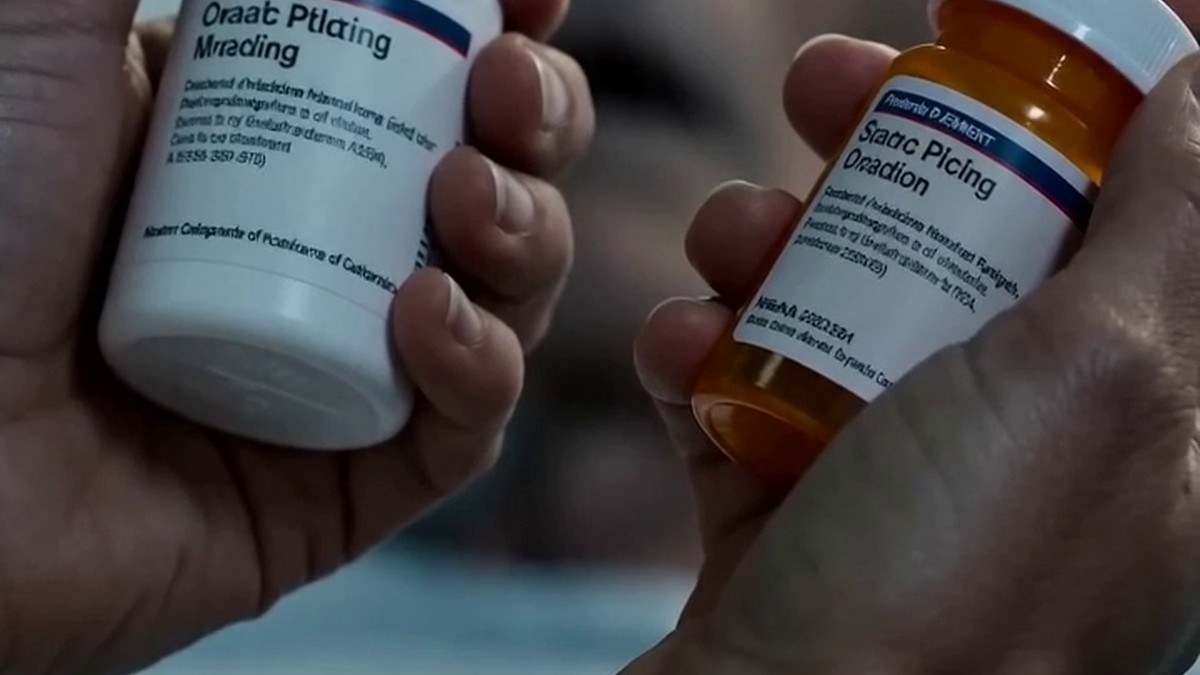
Resting in his palm was the real pill bottle.
The silence in that room had weight to it. Real weight, the kind you feel behind your sternum.
The assistant’s hand trembled, and the bottle caught the fluorescent light — white plastic, orange cap, a pharmaceutical label worn soft at the edges from handling. Someone had been holding it a long time. Someone who knew exactly what it contained and what the other bottles would do in its place.
The nurse stepped toward him. One step. Deliberate.
“How long have you had that?”
His mouth opened. Closed. His eyes cut to the rich man — a reflex, the kind of look that tells you everything about the architecture of a relationship. Who holds the fear. Who holds the power.
“Marcus.” The rich man’s voice had dropped to something she’d never heard from him before. Flat. Careful. The voice of a man who has just looked down and realized the floor beneath him is glass. “Marcus, answer the question.”
“I — I was going to put them back. I just—”
“You switched them.” The nurse didn’t make it a question.
The heart monitor spiked again. The old man on the bed made a sound — not words, barely breath — and his fingers curled against the white sheet like he was trying to hold onto something.
She was already at the IV line. Checking the drip. Checking the port. Her hands moved with the practiced economy of someone who has trained for exactly this, the crisis that announces itself too late, the harm that wears the face of routine.
“Get me Dr. Ellison. Now.” This to the intern, who was already moving, practically running, grateful to have somewhere to go.
“Is he—” The rich man’s voice cracked on the last word.
“I don’t know yet.” She didn’t soften it. He didn’t deserve softness right now. Neither of them did. “But I need you to stay out of my way.”
—
He didn’t leave.
She didn’t expect him to.
He stood at the foot of his father’s bed with his arms at his sides and his jaw set and his eyes doing something she recognized — that rapid, terrible recalculation that happens when the story you’ve been telling yourself turns out to have a different ending than you thought.
He had been so certain. So absolutely certain that she was the one who had done something wrong. The certainty had felt righteous. Clean. Easier than the alternative.
The alternative was standing four feet away with a bottle of pills and a temple slick with sweat and no more lies left to tell.
Dr. Ellison came through the door at a near-run, the intern at his heels. The nurse talked and he listened, and the two of them worked in that tight, wordless shorthand that develops between people who have stood together in rooms like this one before. The vitals stabilized. Slowly. Then more decisively. The heart monitor settled into something regular, something that sounded like a second chance.
At some point — she couldn’t have said exactly when — the rich man sat down.
It was such a small thing. He just sat down in the vinyl chair beside his father’s bed and put his face in his hands. The anger had nowhere left to live.
—
The assistant — Marcus — was still in the room.
That was the thing about guilt when it finally surfaces. It roots you to the spot. Makes you need to be seen.
The nurse stood across from him now. The emergency had passed and the room had reconfigced itself around the aftermath — quieter, cleaner, the worst of it suspended rather than resolved. Ellison was reviewing the chart. The intern stood near the window, pretending not to listen.
“Tell me why,” she said.
Marcus looked at the floor. Then at the old man. Then, finally, at her.
“He was going to change the will.” The words came out low and rough, like they’d been stored somewhere painful. “His father — he told Marcus three weeks ago that he was cutting the family trust. Restructuring everything. Marcus handles the estate accounts. Has for six years.” He stopped. Pressed his lips together. “He wasn’t going to lose his job. He was going to lose everything that made the job worth having.”
“So you decided to what?” She kept her voice even. “Speed things along?”
“I didn’t want him to—” Marcus stopped again. His eyes went red at the edges. “I wasn’t trying to — it was just the dosage. Just enough to slow things down. To give me time to—”
“To give you time.” She let that sit in the air between them. “He’s eighty-one years old.”
The rich man’s head came up from his hands.
“Marcus.” His voice was very quiet now. “Get out.”
“I can explain—”
“Get out of this room.” The rage was gone. Something worse had taken its place. “I’ll have someone call the police, or you can do it yourself. Those are your options.”
Marcus looked at him for a long moment. Searching for something — mercy, maybe, or the remainder of a relationship he’d spent years building. Whatever he was looking for, he didn’t find it. His shoulders dropped. He walked to the door without another word.
The door swung shut behind him.
The silence that followed was different from the one before. Softer. Exhausted.
—
The old man’s eyes opened sometime after eleven.
The room had emptied down to just the two of them — father and son, the nurse hovering at the edge of her professional discretion, charting vitals, giving them the distance the moment required while remaining close enough to matter.
The old man looked at his son for a long time without speaking. His eyes were very clear. Older than his face, somehow. The eyes of someone who has been listening from a great distance and has heard more than you’d like.
“You thought it was her,” the old man said.
His son didn’t answer right away.
“Yeah,” he said, finally. “I did.”
The old man made a small sound that might have been something other than a cough.
“She’s good at her job.”
“I know.”
“You should tell her that.”
The son looked at the nurse across the room. She kept her eyes on her chart. Her jaw was set in a way that suggested she had been listening to all of it and had made some private decision about how to receive it.
He stood. Crossed the room. Stopped in front of her.
She looked up.
“I was wrong,” he said. No preamble. No construction around it. Just the words, flat and direct, the way a man speaks when he has used up all his available defenses. “I was wrong, and I made it worse, and I’m sorry.”
She looked at him for a moment. Measuring. Deciding.
“Your father’s going to need consistent monitoring for the next seventy-two hours,” she said. “And a complete medication review first thing tomorrow. I’ll be here.”
It wasn’t forgiveness exactly. But it was a door left open.
He nodded. “Thank you.”
She turned back to her chart.
Outside the window, the city was still doing what cities do — indifferent, relentless, moving through the dark toward morning. Somewhere down the hall, a call button chimed. Somewhere else, a new shift was starting.
The old man closed his eyes.
His breathing was slow and even. Regular.
The monitor held its steady line, and the nurse stayed at her post, and the night continued the way nights in hospitals always do — one hour, one breath, one small, hard-won moment of stillness at a time.