The snow fell in no particular hurry, drifting down between the skyscrapers like frozen confetti, softening every hard edge the city had ever honed. It was the kind of snowfall that could almost make you believe the world was gentle.
The woman on the bench knew better.
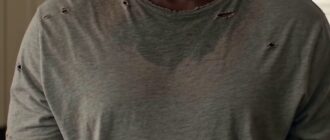
She was curled into the far corner of a park bench near the bus stop, her knees pulled tight to her chest, her hands buried in the sleeves of a gray coat that had long ago surrendered to the cold. The wool was thin at the elbows, the lining shredded, and the wind found every seam with a predator’s patience. Her fingers were raw, chapped a deep angry red, and her breath puffed out in short white bursts that vanished as quickly as they appeared.
Commuters streamed past her in a river of black wool and down jackets, their eyes fixed on phones or the middle distance, their bodies leaning forward as if the cold was something they could simply outpace. She was just another piece of urban furniture—a bundle of rags that registered on the retina but never quite reached the brain. Seen, but never witnessed.
Until the bright yellow coat stopped.
It was a small coat, impossibly bright against the muffled gray of the afternoon, worn by a little girl who couldn’t have been more than six. Her boots were dusted with fresh powder, a knitted hat pulled low over her forehead, and in her mittened hands she carried a small brown paper bag as if it held something priceless.
She stood directly in front of the bench, tilting her head slightly, studying the woman with the unnerving directness only children possess.
“Are you cold?” the girl asked, her voice barely above a whisper, yet it cut through the street noise like a bell.
The woman blinked, caught so completely off guard that for a moment she forgot how to speak. It wasn’t the question that startled her—it was the fact that someone, anyone, had actually asked.
“A little,” she managed, her voice rough from disuse. “But I’m okay.”
It was the kind of lie adults tell children when they don’t want their suffering to become someone else’s problem.
The girl didn’t buy it. Her brow furrowed, and she stepped closer, her boots crunching on the frozen ground. Without hesitation, she extended the paper bag and placed it gently into the woman’s reddened hands.
For a fleeting second, their fingers touched—one pair tiny and warm through wool mittens, the other so cold they ached at the contact.
“This is for you,” the girl said. “Daddy bought them for me, but you look hungry.”
The woman peered inside. The smell of warm bread, fresh from a bakery oven, rose up and wrapped around her like a blanket she hadn’t felt in years. Soft rolls, still steaming.
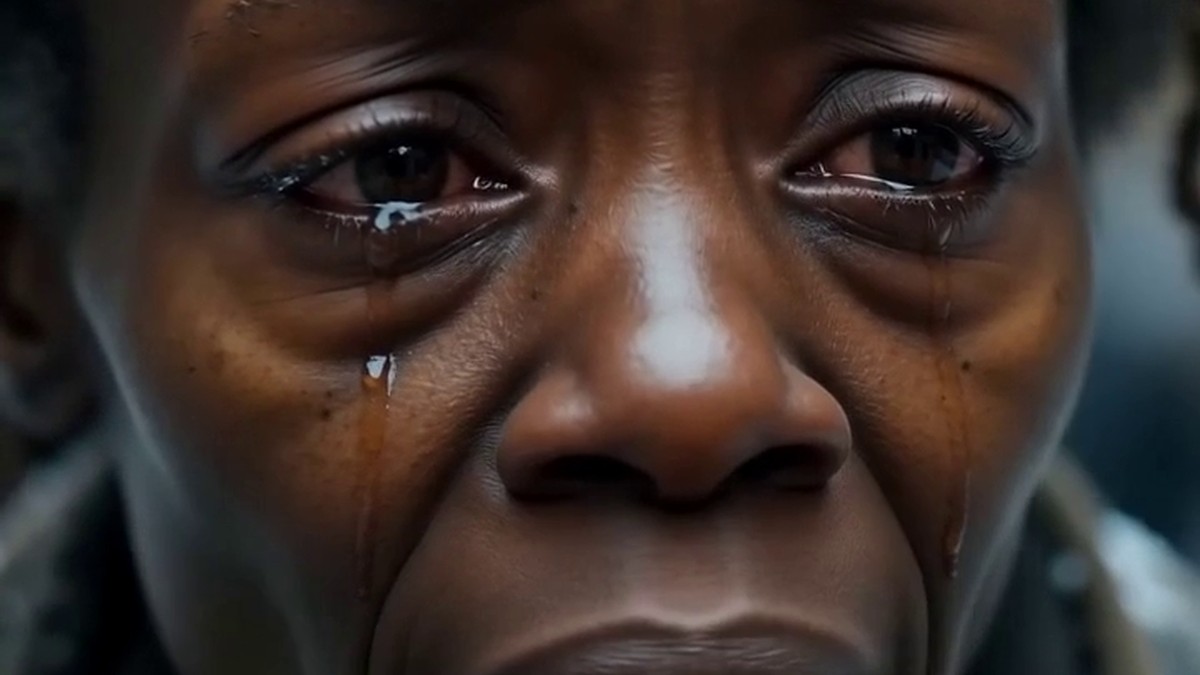
Her vision blurred. She blinked hard, but the tears came anyway, hot against her frozen cheeks. She hadn’t cried from anything but the wind in a long, long time.
“Did your mother teach you to be this kind?” she asked, her smile fragile as old glass.
The girl went quiet. The pause was heavy, the kind that settles into your bones and stays there.
Then she slowly shook her head.
“I don’t have a mom.”
The city seemed to mute itself. The traffic faded to a distant hum. Even the snowflakes seemed to hesitate in midair.
The woman’s throat tightened. “I’m sorry,” she whispered. “I didn’t know.”
“It’s okay.” The girl’s smile returned, small and sad and far too wise for her years. “Daddy told me my real mom left a long time ago.”
She paused, her dark eyes locking onto the woman’s with an intensity that felt almost unbearable.
“But he still keeps your picture.”
The words hit like a physical blow. The woman’s body went rigid, the warmth of the bread suddenly forgotten. A cold that had nothing to do with winter crawled up her spine and seized her heart.
“…what did you just say?”
The little girl didn’t flinch. She reached into the pocket of her yellow coat with the deliberate care of someone handling something sacred. Her small hand emerged clutching an old photograph, creased and worn at the edges, folded once down the middle.
She held it out.
The woman’s eyes dropped to the image.
The paper bag slipped from her fingers and landed softly in the snow, steam still curling from its open mouth.
She was staring at herself.
Younger. Happier. Her hair longer, her face fuller, her eyes bright with the kind of hope that only exists before the world has had its way with you. In the photo, she was laughing at something just off-camera, her head tilted back, sunlight catching her cheekbones. She remembered the day. She remembered the man who had taken the picture.
She remembered everything.
“His name is David,” the girl said, as if reading her mind. “He’s my daddy.”
The woman couldn’t breathe. Her lungs had turned to glass. Every nerve in her body screamed at her to run, but her legs were useless, anchored to the frozen bench by a decade of regret.
Before she could form a single word, a man’s voice cut through the cold.
“Lily! Lily, what did I tell you about wandering off?”
The sound of boots on pavement. Urgent, angry, terrified.
The woman looked up and saw him.
David.
He was older now, lines carved deep around his eyes and mouth, his hair shorter and threaded with gray. But his eyes were the same—that shade of deep brown she used to lose herself in, back when she still believed she deserved to be loved.
He was ten feet away, his scarf trailing behind him, his face tight with worry. When he saw Lily standing before the bench, his stride faltered. Then his gaze shifted to the woman sitting there, to the bread lying in the snow, to the photograph trembling in his daughter’s hand.
He stopped dead.
The three of them formed a frozen tableau, a silent scene inside a snow globe that no one was shaking. Pedestrians flowed around them like water around stones, oblivious.
David’s expression moved through confusion, disbelief, and then settled on something raw and jagged.
“Sarah,” he breathed.
It had been eight years since anyone had called her that. Eight years since she’d walked out of their apartment in the middle of the night, convinced she was doing the only merciful thing. She’d been sick—not in the way you could see, but in the way that hollowed you out from within. Depression had swallowed her whole, and she’d believed she was a poison to everyone she touched. So she’d vanished, thinking they’d be better off.
She never knew she was pregnant when she left.
Lily was seven years old. The math landed in her gut like a fist.
“Is she my mommy?” Lily asked, looking up at her father with those wide, unsettlingly perceptive eyes.
David didn’t answer right away. His jaw was clenched, a muscle twitching beneath his stubbled cheek. For a long, terrible moment, Sarah thought he would simply grab Lily and walk away, erasing this encounter as if it had never happened.
But then Lily did something extraordinary. She knelt down, picked the paper bag out of the snow, and carefully brushed the frost from its sides. She held it out to Sarah again, her mittens leaving damp marks on the brown paper.
“You dropped it,” she said softly. “You still need to eat.”
The gesture broke something open inside David. His shoulders sagged, and he let out a breath that seemed to carry the weight of eight years.
“I showed her the picture so she’d know what you looked like,” he said, his voice hoarse. “In case you ever came back. I didn’t… I never thought…”
Sarah shook her head, tears streaming now, freezing halfway down her cheeks. “I’m so sorry. I’m so, so sorry.” The words were pathetic, inadequate, but they were all she had.
David stared at her for what felt like an eternity. Then he looked at Lily, who was now holding Sarah’s hand as if it were the most natural thing in the world. The little girl’s yellow coat blazed like a beacon against the endless white.
“There’s a diner on the corner,” David said finally, the words scraping out of him like stones. “It’s warm. We can… we can talk.”
It wasn’t forgiveness. It wasn’t even close to absolution. But it was a door, cracked open just an inch.
Sarah looked down at Lily, who smiled up at her with a sweetness that shattered every wall she’d ever built.
“Okay,” Sarah whispered, and the word felt like the first true breath she’d taken in eight years.
She stood on legs that barely held her, the warm bread clutched against her chest. Lily took her father’s hand and Sarah’s hand in each of hers, linking them together, a chain of improbable hope.
They walked through the falling snow toward the diner’s neon glow, two adults carrying the wreckage of their past between them, and a little girl in a yellow coat who had decided, with the fearless clarity of a child, that love was worth giving away even when you had none to spare.
The snow kept falling, blanketing the city in white, but for the first time in longer than she could remember, Sarah didn’t feel the cold.