The day we buried my mother, I found myself standing in her kitchen at five in the morning, ladling beef stew into a Tupperware container so old the lid barely snapped shut. I hadn’t planned on doing it. But for twenty years, that had been her routine, and the silence in the house was so heavy I would’ve done anything to fill it.
Her name was Eleanor. To everyone else in Cedar Creek, she was just the quiet widow who lived in the faded blue house on Magnolia Lane and worked the early shift at the diner. But to me, she was the woman who never missed a single day of taking a hot meal to the homeless man who camped behind the old tool shed near the railroad tracks.
His name was Arthur. I’d never known his last name. He was just… Arthur. A stooped figure in a patched-up jacket who’d been there since I was a kid. In winter, his breath came out in white puffs from a shelter of tarps and plywood. In summer, he’d sit on an overturned bucket, carving little birds out of scrap wood. And every single day, rain or shine, my mother would walk down the gravel path with a tray wrapped in a dish towel.
Growing up, it drove me insane. I’d come home from school to a cold house because the heating oil had run out, and there she’d be, spooning mashed potatoes into a bowl for Arthur. I remember the time the bank sent the final foreclosure notice, printed on pink paper. I was sixteen. That morning the oil company had left a disconnect slip stuck to the front door—$312.48 overdue, payable by Friday or they’d cut the line. I threw it on the table next to the steaming casserole dish.
“Maybe if you stopped cooking for some stranger, we could afford to keep a roof over our heads, Mom.”
She turned around so fast the dish towel whipped the air. “Don’t you ever say that, Emma. Not ever.” There was a crack in her voice I’d never heard before, something raw and terrified. I stomped off to my room and slammed the door so hard a picture frame fell off the wall. I never mentioned Arthur again.
I left for college in Portland when I was eighteen, and after that, visits home got sparse. A Christmas here, a weekend there. Every time I pulled into the driveway, I’d see a foil-covered plate balanced on the back steps, waiting for her to deliver it. She never explained. I never asked.
Then came the call from the hospital. Pancreatic cancer, stage four. By the time I got there, she was already a shadow of herself, wrists like bird bones on the white sheets. Two days before she died, she beckoned me close. Her fingers were so cold they felt like river stones.
“Promise me something.”
“Anything.”
“Keep taking Arthur his meals. He has no one else.”
I wanted to scream. *Why him? Why him instead of me?* But the desperation in her eyes made my throat close up. I nodded. “I promise, Mom.”
She smiled, a faint ghost of an expression I’d known my whole life, and closed her eyes. Those were the last words she ever said to me.
The morning after the funeral, I woke up in her bed and couldn’t breathe from the stillness. So I did what she’d done for two decades. I made a thick beef stew—the meat was on sale, $5.79 a pound, I’d picked it up at Carson’s Grocery the night before—sliced a loaf of sourdough, and walked past the shed.
The shack was still there, but half the tarps were down. A beat-up Ram pickup with rust on the wheel wells was backed up to it, and a man in a faded brown work jacket was hoisting a plastic bin into the truck bed. He turned. Tall, gray stubble, a scar along his jaw I’d never noticed before. The watch on his wrist was a scratched Timex.
“I figured you’d come by sooner or later.” His voice was low and rough, like a radio not quite tuned in.
I stopped cold. “Where’s Arthur?”
He set the bin down. Dust swirled. “I’m Arthur.”
I almost laughed. The man I remembered was bent and shrunken, a shape in the dim. This man stood straight. I stared, and a train horn sounded in the distance, the same one that used to rattle my bedroom window as a kid.
“I brought you dinner,” I said, holding up the Tupperware. The words felt stupid.
He looked at the container—the same orange-stained one my mother had carried a thousand times—and his jaw tightened. “She knew you would.”
I didn’t know what to do with my hands. “Why… why are you clearing out?”
He pulled a folded piece of paper from his chest pocket. A note, my mother’s handwriting on the outside. He held it out. “She left this for you. Said I was supposed to give it to you after, not before.”
I took it. The paper was soft with age. I unfolded it.
*Emma,*
*If you’re reading this, I’m gone. There’s something I never told you. When you were three, the apartment we lived in caught fire one night. I was sick with the flu and sleeping on the couch. The smoke got so thick I couldn’t reach your room. A man who rented the unit downstairs broke through the door. He found you in your crib and carried you out. His arms and back were burned, and he passed out on the sidewalk right after the paramedics took you. That man was Arthur.*
*He spent two months in the hospital. His business failed, his wife left, he lost his home and his savings. I didn’t know what happened to him until I spotted him behind the train station. He wouldn’t take money. So I made a deal: I could bring him food. That’s all he’d let me do. I never told you because I didn’t want you to grow up carrying a debt that big. I just wanted you to see me show up for somebody. That’s it. Take care of him for me.*
*Mom*
I read it twice. Then I stood there, not crying, just staring at the letters until they blurred. I thought of every time I’d slammed a door, every muttered *why him*, the years I’d spent thinking she was choosing a stranger over us. I didn’t say anything. There wasn’t a word big enough.
Arthur leaned against the truck. “She never made it feel like charity, your mother. Just a hot meal and a person who saw you.”
“I didn’t know.” My voice came out scraped clean.
“She didn’t want you to.” He dug into his jacket pocket and pulled out a tiny wooden bird, freshly carved. A sparrow with a heart scratched into one wing. He set it on the overturned bucket between us. “She told me once you used to pick up every broken thing you found. This is for you.”
I picked it up. The wood was still warm from his hand.
We stood there until the morning chill bit through my sweater. Then I said, “Come inside. I’ll heat this up.”
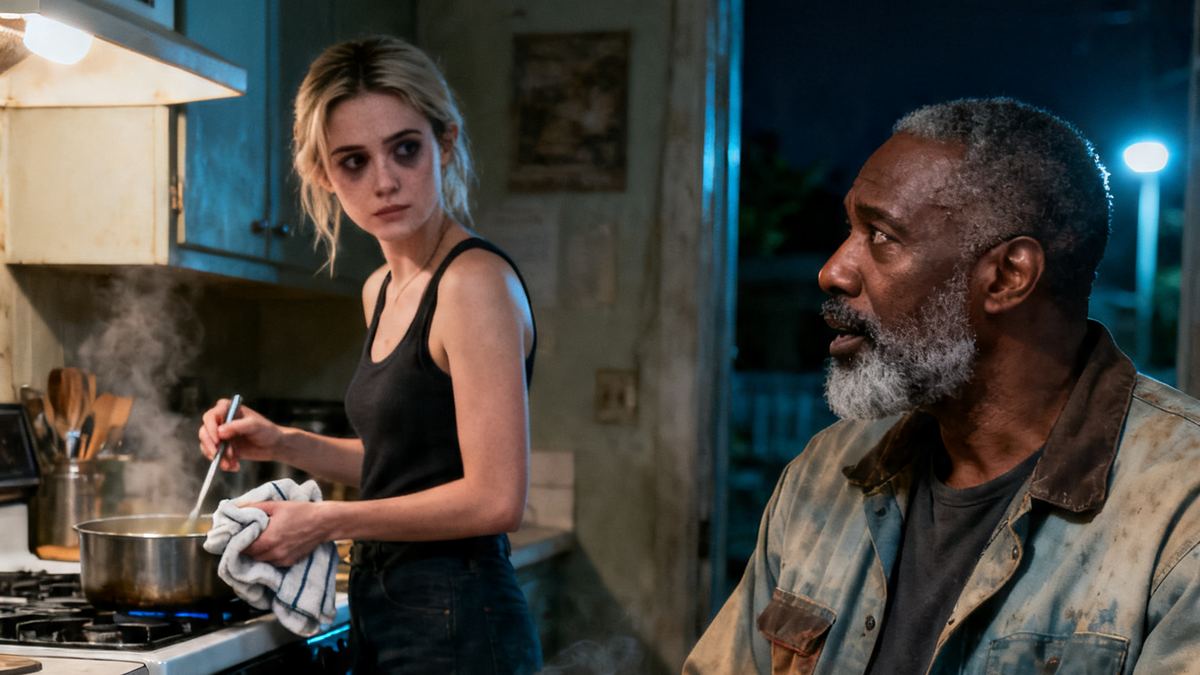
I carried the stew back to the house, and he followed. In the kitchen, I turned on the burner and poured the soup into my mother’s old chipped pot. He sat at the table, the one with the cigarette burn from 1987, and didn’t say much. While it simmered, I noticed a small silver locket hanging from a hook by the window, above the dish rack. The one I’d drawn a heart on with permanent marker when I was nine. She must have left it there years ago and never moved it. I took it down and slipped it into my pocket.
I ladled two bowls. We ate with spoons that didn’t match, not talking. After a long while, he reached into his coat again and slid a dented business card across the table. *Calloway Custom Millwork*, with a phone number and the address of a small shop two towns over. “I’ve been carving things for a living these last few years. It ain’t much. But I’m okay.”
I nodded. “Thursday?”
He looked up.
“Every Thursday. I’ll put a plate on the back steps. Same as she did.”
His spoon stopped halfway to his mouth. Then he nodded, and a little of the tightness left his shoulders.
I never got around to telling him thank you. The words felt too small. But after he left, I washed the dishes, dried my hands on the same threadbare towel my mother used, and set the little wooden sparrow on the windowsill next to the locket. The kitchen smelled like beef and onions and old coffee, and for a minute the silence in the house felt like something I could finally breathe inside.