Then the impossible happened.
A single scream tore through the cemetery’s quiet.
“She’s alive!”
Every head turned.
A small boy came sprinting between the gravestones, clothes soaked, face streaked with mud, lungs burning with desperation.
It was Noah.
The gardener’s grandson.
At first, nobody took him seriously.
“Miss Emily is alive!” he screamed again, louder this time. “Don’t bury her — please!”
A few guests exchanged uncomfortable laughs. Others moved to intercept him, to push him back, to make him stop.
But Noah kept running straight for the casket.
“You have to listen to me! She is not dead!”
Something inside Richard Lancaster went cold.
There was a rawness to the boy’s panic — something too desperate, too unscripted to be a child’s imagination.
“Why would you say that?” he finally asked.
Noah stood there gasping, chest heaving. Rain and tears ran together down his face in thin, broken rivers.
“Because yesterday — I heard Victoria on the phone…”
The entire cemetery seemed to hold its breath.
Across the grave, the stepmother went visibly white.
Noah raised his arm and pointed directly at her.
“She said tomorrow it would all be over. And then I saw her — I watched her put something into Emily’s tea.”
Victoria stepped backward.
“He’s lying. He’s just a child — he’s lying!”
But Noah wasn’t finished.
“This morning I came to say goodbye to Emily…”
His voice cracked and splintered at the edges.
“I walked up to the casket… and I heard something coming from inside.”
Richard felt his heart stop dead in his chest.
“What did you hear, Noah?”
The boy lifted his eyes slowly — and what he said next turned every person at that funeral to stone.
“I heard Emily. Knocking on the lid from the inside.”
The silence after those words lasted exactly three seconds.
Then Richard Lancaster was moving.
Not walking. Not stepping carefully between mourners with their polished shoes and their black umbrellas. Running — the way a man runs when everything he loves is on the other side of a locked door.
“Get it open,” he said. His voice had dropped to something barely human. “Get it open *now.*”
The funeral director, a thin man named Graves — the irony of it would hit Richard later, much later — raised both palms in protest. “Sir, I must strongly advise—”
Richard grabbed him by the lapels.
“Open the casket.”
Graves opened the casket.
The brass latches gave way. The lid swung upward. And the sound that came out of that box — small, rhythmic, barely there — was the most devastating sound Richard Lancaster had ever heard in sixty-two years of living.
Fingernails. Against polished mahogany.
“Emily—”
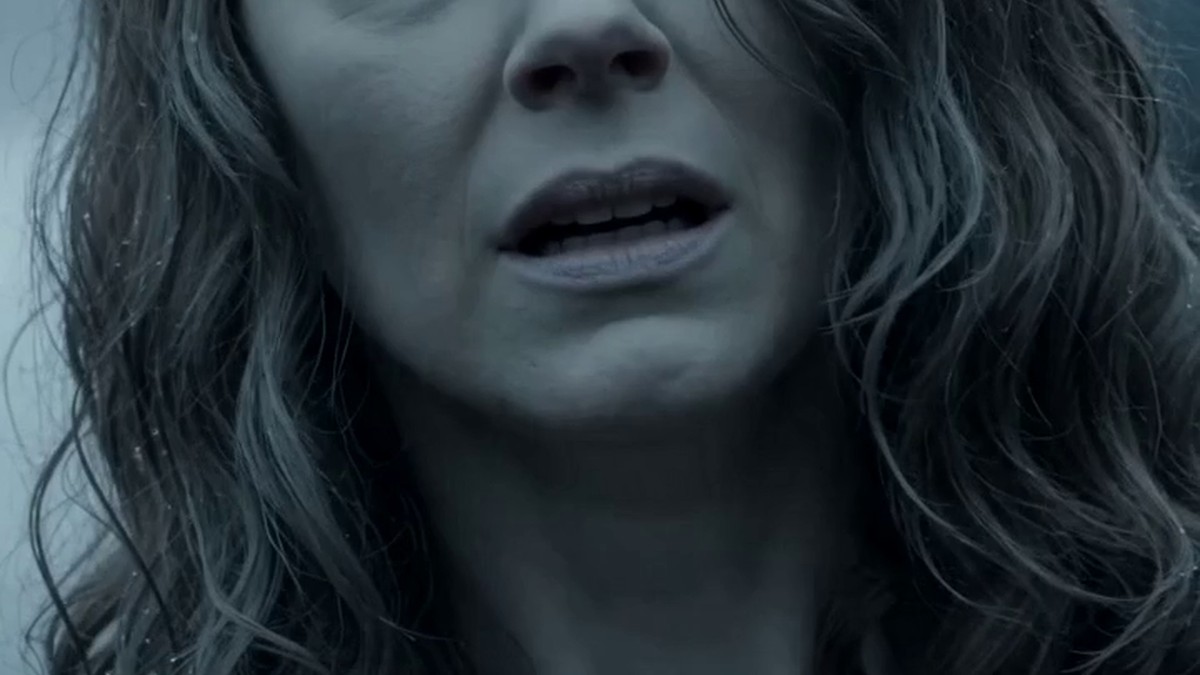
She was there. White dress, hands folded wrong now because she’d moved them, face the color of old paper, lips blue at the edges, chest rising in shallow, desperate increments.
But rising.
“She’s breathing!” someone shouted.
The crowd exploded. Umbrellas fell. Someone was on a phone already, screaming for an ambulance, screaming the address three times because their hands were shaking so badly they couldn’t trust themselves.
Noah stood completely still in all of it.
The storm moved around him. He watched Emily’s father gather her up — this massive, silver-haired man reduced to something small and shaking, pressing his daughter’s face against his shoulder, saying her name over and over like a prayer he’d forgotten he knew.
Noah had done what he came to do.
He turned to go.
—
Victoria didn’t run.
That surprised people afterward, when they replayed it. When it became the kind of story that gets told in hushed voices for years. Most people expected her to run.
Instead she stood perfectly still at the edge of the grave — her grave, the one she had engineered — and watched it all unravel with the particular stillness of someone who has already done the math and found the numbers unworkable.
The doctor who had signed the death certificate was the first domino. He’d arrived late to the service, was standing near the iron gates when Richard’s eyes found him across the cemetery. The look that passed between them required no translation.
A man who had been paid to look the other way now understood that looking away was no longer an option.
He pulled out his phone.
Victoria watched him do it.
She watched him step away from the group and speak in low, urgent sentences. She watched him glance back at her once — apologetic, afraid, calculating the distance between what he’d done and what could still be proven.
Far enough, his expression said.
She knew it wasn’t.
“Victoria.”
Richard’s voice. Behind her.
She turned slowly.
He was standing three feet away, and Emily was still in his arms — breathing now in longer pulls, color coming back into her lips one degree at a time, eyelids beginning to flutter with the slow, confused return of consciousness. Around them the mourners had parted. Nobody was pretending anymore.
“What did you give her?” Richard asked.
His voice was quiet. That was worse than shouting would have been. Shouting she could have deflected, could have met with tears and performance and the particular brand of theatrical innocence she had spent seven years perfecting inside the Lancaster house.
Quiet she had no answer for.
“I don’t know what you’re—”
“The boy saw you.” Still quiet. “Emily is going to wake up and tell me herself. The doctor is already calling someone. So I’m asking you one time, Victoria. What did you give her?”
She looked at him — this man she had married for his money and his name and the quiet security of his enormous house — and she felt something she hadn’t expected to feel.
Not fear. Not calculation.
Exhaustion.
Seven years is a long time to perform.
“Something botanical,” she said finally. Her voice came out flat and strange, emptied of its usual music. “A compound. Slows the heart. Mimics death closely enough that a cursory examination—”
“Closely enough,” Richard repeated.
“She wasn’t supposed to suffer. She was supposed to simply—” Victoria stopped. Looked down at the wet grass. “The dosage was precise. She should have been unconscious the entire time.”
“The dosage was off,” Richard said. “She woke up in the box.”
The words landed like stones.
Victoria said nothing.
A hand closed around her arm — firm, official, belonging to a man who had come through the cemetery gates thirty seconds ago in response to a call. Behind him, a second figure. Neither of them was dressed for a funeral.
Victoria looked at the hand on her arm for a long moment.
Then she looked at Emily — who had opened her eyes now, just barely, thin slits of dazed consciousness, looking up at her father’s face with the blinking confusion of someone surfacing from very deep water.
“She should have signed the inheritance over,” Victoria said. Almost to herself. “That’s all she had to do.”
Nobody answered her.
They walked her out through the iron gates, past the black umbrellas and the pale-faced mourners and the toppled flower arrangements, and the cemetery went quiet again except for the rain and the distant sound of an ambulance cutting through the morning.
—
Noah was almost to the road when Emily’s father caught up with him.
Not running this time. Walking. Carrying his daughter in his arms because she wasn’t ready to stand, and somehow managing to do it carefully, the way men carry things they almost lost.
“Noah.”
The boy turned.
Emily’s eyes were open. Fully open now, glassy and exhausted and trying to find their focus. When they found the boy standing in the rain with his mud-streaked face and his soaked clothes and his nine-year-old’s absolute certainty that doing the right thing was worth any cost — something moved across her expression that wasn’t quite a smile but was close to it.
“You came,” she said. Her voice was barely there — scraped raw, thin as paper.
Noah nodded.
“I heard you,” he said simply.
She reached out one hand — slow, imprecise, the arm of someone relearning the coordination of her own body — and Noah stepped forward and took it. Her fingers were cold. He didn’t let go.
They stayed like that while the rain came down around them.
Richard Lancaster looked at this boy — this gardener’s grandson in his ruined clothes, this child who had run through a cemetery screaming into the faces of adults who hadn’t wanted to listen — and he found he could not speak.
He tried.
He opened his mouth and the words weren’t there.
So instead he did the only thing that felt adequate.
He put one large hand on top of Noah’s head, very gently, the way you touch something that turns out to be more solid and more real than you were prepared for.
Noah looked up at him.
“Is she going to be okay?” he asked.
Richard looked at his daughter — her open eyes, her returning color, the slow steady rise and fall of her chest — and felt something in him, some locked and aching thing that had been sealed shut since the moment they told him she was gone, finally, carefully, come open.
“Yes,” he said.
And for the first time in what felt like a very long time, he was certain it was true.
—
The ambulance came. The statements were given. The doctor’s careful lies unraveled with remarkable speed once he understood that cooperation was the only arithmetic that worked in his favor now.
Victoria did not speak again that morning.
She sat in the back of a police vehicle with her hands folded in her lap and her eyes on some middle distance that nobody else could see, and whatever was happening behind her face, she kept it there.
Inside the hospital, in a room with thin curtains and the smell of antiseptic and the steady percussion of a monitor confirming over and over that her heart was doing what hearts are supposed to do, Emily Lancaster slept.
Real sleep, this time.
Safe sleep.
Her father sat in the chair beside her bed and did not move. A nurse brought him coffee he didn’t drink. Hours passed. The rain stopped. Late afternoon light came through the curtains in long horizontal bars, and somewhere in the middle of it Emily’s hand moved and found his without her waking up, the way the body sometimes reaches for what it needs before the mind knows to ask.
Richard held on.
—
Noah’s grandfather found him on the cemetery steps as the last of the police cars pulled away.
The old man took one look at his grandson — soaked through, trembling slightly, eyes carrying something too large for a nine-year-old’s face — and said nothing.
He simply sat down beside him on the wet stone steps.
They sat together for a while, watching the iron gates.
“I wasn’t sure anyone would listen,” Noah said finally.
His grandfather was quiet for a moment.
“Did they?”
Noah thought about Richard Lancaster’s hand on his head. Emily’s cold fingers holding on.
“Yeah,” he said.
“Then that’s all there is to it.”
Noah looked at the old man beside him. His grandfather who had worked these grounds for thirty years. Who knew every name on every stone. Who had, in his quiet and unhurried way, taught Noah that the people buried here had mattered — and that the ones still walking around mattered more.
“I was scared,” Noah admitted.
“I know it.”
“But I kept running anyway.”
His grandfather nodded slowly. Put a hand on his knee.
“That’s not something everyone can say,” the old man told him.
The cemetery settled around them — the wet grass, the dark stones, the smell of earth and rain and something that was almost like peace. Somewhere far off a bird began to call, high and clear, like the first note of something beginning.
Noah wiped the mud off his face with the back of his hand.
Got up.
And went home.