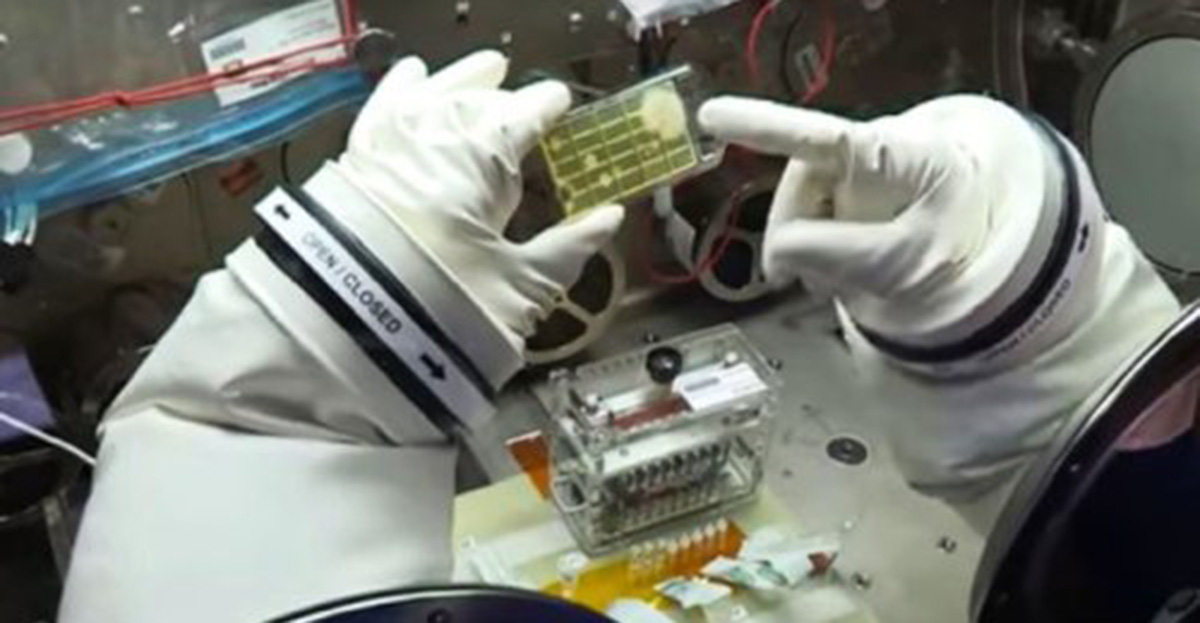
Work conducted by NASA astronaut Peggy Whitson and members of the Genes in Space-3 ground team has identified previously unknown to science microorganisms aboard the International Space Station (ISS). The work to identify these microorganisms was carried out using DNA sequencing technology adapted for use in microgravity or the absence of microgravity. All this will allow future astronauts to monitor the health of the crew in real time, without the need to bring samples of biological materials to Earth for analysis.
Note that NASA astronaut Kate Rubins performed the first DNA sequencing procedure in microgravity in 2016. But at the time, scientists already knew the results they would get, because samples for DNA analysis had been prepared on Earth and delivered into space. Last summer, members of the Genes in Space-3 group conducted similar experiments with samples collected in space to look for previously unknown microorganisms. The scientists’ work was hampered by Hurricane Harvey and the group was forced to relocate to NASA’s Marshall Space Flight Center in Alabama, where the scientists were able to continue their work in quiet conditions.
In order to study “space” microorganisms, scientists had to collect samples inside and outside the space station. These samples were placed in a nutrient medium in which large colonies grew. When DNA sequence data was analyzed, one species of unknown microorganism was first detected, and a little later, a second. “These are the kind of unusual things we find all the time on the space station,” says Peggy Whitson.
The samples with the unknown microorganisms were carefully sealed in special containers and sent back to Earth aboard the Soyuz spacecraft. After receiving them, members of the ground team conducted a DNA sequencing procedure using higher-precision equipment than that available aboard the ISS. A comparison of the two results showed them to be identical, indicating that DNA sequencing technology is fully functional in space.
“When people go to Mars and to the moon, they should be able to get a complete picture of their environment. This will allow them to identify dangerous local microorganisms, take appropriate protective measures and avoid the horror scenario we know from a lot of science fiction movies,” says Peggy Whitson.