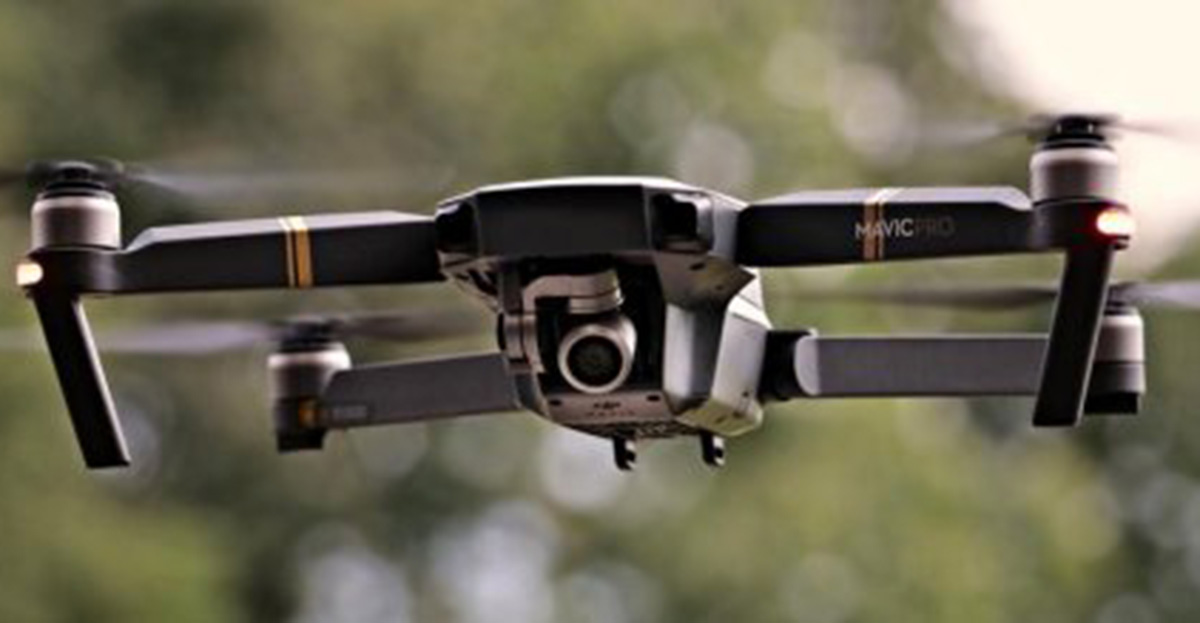
Drone racing, small unmanned aerial vehicles, is a relatively new type of high-speed, dynamic and spectacular sport. In all the competitions already held in such races, including last year’s World Championships in Dubai, humans have acted as drone pilots, but this situation will not last long. Soon humans will have a serious competitor in the form of specialized artificial intelligence systems.
Experts from NASA’s Jet Propulsion Laboratory (JPL) have been working on this artificial intelligence system for years. This work is partly funded by Google, and its ultimate goal is to create a visual navigation system that uses data from cameras and other sensors, able to effectively manage both the spacecraft and robot car.
This work culminated in a drone race of sorts on Oct. 12 of this year. Three drones (Batman, Joker and Nightwing) acted on the side of the “machines,” operating under the control of an artificial intelligence system developed by JPL specialists. And the honor of humans was defended by a young man named Ken Loo, who is a world-class drone pilot.
The custom-built drones can easily reach speeds of up to 130 kilometers per hour in a straight line, but they flew at speeds of 50 to 65 kilometers per hour on a challenging obstacle course built specifically for racing.
“We made our algorithms, which operate on strict calculations, compete with humans, who act on an intuitive level and honed reflexes,” says Rob Reid, JPL research team leader. “As you can see, artificial intelligence provides smooth and even flight control, whereas humans tend to accelerate, brake and perform other abrupt movements and maneuvers.”
Compared to the drone Ken Lu drove, the drones controlled by artificial intelligence moved somewhat slower, but more steadily and purposefully. In addition to the higher flight speed, Ken Lu demonstrated a number of sophisticated maneuvers bordering on aerobatics. But in the end, fatigue overcame the man, and after a while he was unable to control the drone with the same efficiency. “This track is the most difficult track I have ever flown,” says Ken Lu, “I was tired and lost my concentration after ten laps because of the constant exertion.”
Nevertheless, at the beginning of the race, the artificial intelligence and a human were running about the same time. But, after a few dozen laps, Ken Lu learned the course and got the hang of it, after which he began to control the drone more deftly, getting creative where needed. Ken Lu’s official time per lap was 11.1 seconds, while the artificial intelligence accomplished the task in 13.9 seconds.
Nevertheless, the artificial intelligence system showed high stability, while Ken Lu’s lap time could be quite different from his previous lap time.
“The race showed that our artificial intelligence systems are not far behind humans. However, they have enormous potential for further improvement,” says Rob Reed, “And in a short time, I hope artificial intelligence can catch up and overtake the best of human professionals.